


Updated: August 5, 2026
Portugal raised the Property Transfer Tax (IMT) for non-resident buyers under a new tax plan. Portugal’s IMT tax increase is part of the government’s program Build Portugal – Leasing and Simplification (Construir Portugal – Arrendamento e Simplificação).
Non-resident property buyers face a new 7.5% IMT flat rate, which entered into force on 25 May 2026 and applies to urban residential properties. The new IMT tax comes without the usual tax reductions, progressive tax brackets, or HPP exemptions (Habitação Própria e Permanente).
Here is all you need to know about the IMT tax in Portugal for 2026.
Portugal IMT Tax Increase: Key Takeaways
- A flat IMT rate of 7.5% applies to non resident buyers of urban residential properties in Portugal.
- Certain categories of buyers might qualify for relief, mainly Portuguese tax residents, qualifying long-term residential rentals, specific public officials, and buyers who become residents within two years.
- Eligible buyers may request a refund of the excess IMT paid with the Portuguese Tax Authority after meeting the basic requirements.
- This change is part of the Construir Portugal (Build Portugal) housing package and aims to improve access to housing and regulate foreign property investment.
What is the new flat 7.5% IMT tax for non-residents in Portugal?
 Under the Decreto-Lei n.º 97/2026, Portugal increased the IMT rate to 7.5% for a non-resident who buys urban residential property. The law was published in Diário da República, entering into force on 25 May 2026.
Non-residents paid the same IMT rates as Portuguese residents up until 24 May 2026.
For anyone buying a house in Portugal as a foreigner, such as an investment apartment, second home, or holiday property, before becoming a Portuguese tax resident, the Portugal IMT tax increase means higher acquisition costs.
The new 7.5% rule is based on your tax residency in Portugal, not your nationality. If you become a Portuguese tax resident within two years of purchasing the property or placing it into a qualifying long-term rental, you might be able to recover the difference. However, you still have to pay the flat 7.5% IMT rate upfront when making the property purchase.
The IMT tax in Portugal is a one-time tax paid at the time of the purchase. Also known as the Municipal Property Transfer (Imposto Municipal sobre as Transmissões Onerosas de Imóveis), the IMT is paid alongside the Stamp Duty (Imposto do Selo), before signing the final property deed (Escritura Pública).
The decree amended the Portuguese IMT Code (Article 17), creating a new rule that states all non-resident property buyers are subject to the flat 7.5% IMT, unless they qualify for an exception.
To learn more about one-time and annual taxes, such as standard IMT rates, read our ultimate guide to property taxes in Portugal by local experts.
The Main Exemptions to the new 7.5% Portugal IMT Tax
The Portugal IMT 7.5% rule doesn’t apply if you:
- Are a Portuguese tax resident under Article 16 of the IRS Code.
- Become a legal tax resident within two years of the purchase date, which means you might request a cancellation (anulação) or a refund of the difference between the 7.5% IMT paid and the ordinary IMT amount.
- Turn your property into a long-term residential rental. If you let the property under a qualifying long-term residential lease at a moderate rent (€2,300/month for 2026), plus it rented for at least 36 months (continuous or not) in the first five years, you could qualify for IMT relief.
- File the request in time. You can request a cancellation with the Portuguese Tax Authority (Autoridade Tributária e Aduaneira – AT), within six months of the qualifying event, according to 17.º n.º 12 CIMT. Missing the deadline can forfeit the refund.
- Work at a specific public function. In some cases, under the residency rules, if you work in public functions or commissions for the Portuguese State, you might qualify for IMT relief.
Which properties are affected by Portugal's IMT tax?
The Portugal IMT tax increase affects urban residential properties (prédios urbanos destinados a habitação). Commercial real estate, land, and rural properties are not affected and continue with the standard IMT rates for all buyers.
For example, if you are a US citizen and a non-Portuguese resident, but want to buy an apartment, house, villa, townhouse, or residential condominium for living or investment purposes, you would be subject to Portugal’s IMT tax of 7.5%.
For other types of real estate, such as office buildings, retail shops, hotels, vineyards, rural farms, or agricultural land, you would pay standard IMT tax rates.
Why is buying a property in Portugal now stricter for non-residents?
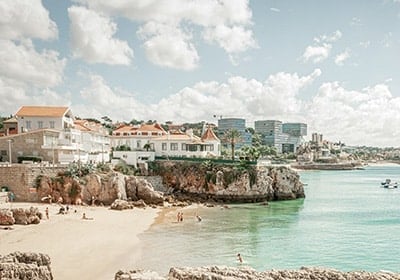
The Portugal real estate market and the local economy highly benefited from foreign direct investment. However, this also led to prominent issues with affordability, housing supply, and skyrocketing property prices.
Housing became an economic issue for many Portuguese residents and citizens, which caused domestic policy debates.
As a result, the Portuguese government created a series of measures that would rebalance the Portuguese housing market. Changes to the Portugal Golden Visa Program (i.e., removing real estate investments), restrictions on short-term rentals in some areas, and reforms to the Portugal IMT tax helped tackle these issues.
The new IMT tax increase in Portugal is designed to make housing more accessible to the local population, while still benefiting from foreign direct investment.
Learn more about the requirements for buying property in Portugal as a foreigner

How much more do non-residents actually pay in Portugal?
The 7.5% flat rate isn’t always a disadvantage — it depends entirely on the property price. Portugal’s standard IMT for residents uses progressive brackets with deductions for lower-priced properties, but switches to flat rates for expensive ones.
Portugal’s three price zones
For investment or secondary properties on Portugal’s mainland, many non-resident buyers often face the following scenario, which breaks the IMT framework into three different zones:
Zone 1: Under €633,931 | Zone 2: €633,931 – €1,150,000 | Zone 3: Over €1,150,000 |
Residents benefit from progressive IMT rates with deductions, with marginal rates ranging from 1% to 8% (effective rates are generally around 1% to 6%). | Residents pay a flat 6% IMT rate, while non-residents continue to pay 7.5%. | Both residents and non-residents pay the same flat 7.5% IMT rate. |
Non-resident buyers pay a flat 7.5% IMT rate from the start. | This creates a fixed difference of 1.5 percentage points, which equals approximately €9,500–€17,000 more in IMT, depending on the property price. | At this price level, the non-resident rate creates no additional tax cost compared with the standard IMT rate. |
The difference is greatest for lower-priced properties, where non-residents may pay around 6.5% more, while near the top of this zone the gap narrows to around 1.6% |
Portugal IMT Tax: Resident vs Non-Residents
Here is an example of how the IMT tax amount may look like for resident and non-resident property buyers in Portugal. This table outlines the potential IMT amounts for investment or secondary properties on the mainland.
The “difference” column shows the amount you would save if you were to become a Portuguese tax resident before buying property in Portugal, or what you could reclaim after you meet the eligibility criteria for the exemptions.
Property price | Resident IMT | Non-resident IMT | The difference paid by non-residents |
€200,000 | €4,606 (2.3%) | €15,000 (7.5%) | +€10,394 |
€300,000 | €11,606 (3.9%) | €22,500 (7.5%) | +€10,894 |
€400,000 | €19,300 (4.8%) | €30,000 (7.5%) | +€10,700 |
€500,000 | €27,300 (5.5%) | €37,500 (7.5%) | +€10,200 |
€700,000 | €42,000 (6%) | €52,500 (7.5%) | +€10,500 |
€900,000 | €54,000 (6%) | €67,500 (7.5%) | +€13,500 |
€1,100,000 | €66,000 (6%) | €82,500 (7.5%) | +€16,500 |
€1,200,000 | €90,000 (7.5%) | €90,000 (7.5%) | €0 |
€2,000,000 | €150,000 (7.5%) | €150,000 (7.5%) | €0 |
Tip: The new 7.5% IMT rule has the biggest impact for properties that cost about €200,000 and €700,000, which is the exact range for most international buyers seeking holiday homes or apartments in Portugal. In that case, you would pay roughly €10,000-€11,000 extra if you are a non-resident.
Common Pitfalls for International Buyers in Portugal
Payment deadlines: IMT is often paid before you sign the final deed, so you should budget for these additional costs beforehand.
Legal requirements: As a property buyer, you need a Portuguese tax number (NIF – Número de Identificação Fiscal) for all fiscal activities. If you cannot be physically present during the transaction, you may need to assign a Power of Attorney, which adds additional costs.
Currency exchange: When you transfer funds from non-euro currencies, you should account for exchange rate movements and transfer costs when planning your budget.
Goldcrest: How We Can Help You
Goldcrest is the first buyer’s agent in Portugal. We provide expert, impartial advice on real estate investments and how to buy property in Portugal. From scouting out the perfect property through to property acquisition, we have you covered throughout the process.
Unlike traditional real estate agents in Portugal who represent the seller, we are dedicated exclusively to protecting the buyer’s interests.
If you are looking to purchase property in Portugal, don’t hesitate to get in touch. Our team of skilled experts is available to solve all your real estate doubts, helping you with the property search and offering insightful expertise and strategic advice.
Why choose Goldcrest?
- Local knowledge: With offices located across Portugal, our presence nationwide allows us to assist you personally across the country.
- Independent service: As an independent buying agent, we do not represent any development or project. Our service is entirely tailored toward each individual client, providing you with everything you need to secure the perfect property at the best possible price.
- Streamlined process: Our real estate agents speak English and Portuguese, and our service is completely focused on providing you with a hassle-free buying experience, saving you time. We can also help you buy property remotely.
- Experienced team: Our expert real estate team has a vast local knowledge of the Portuguese property market. We have cutting-edge technology and metasearch tools at your disposal to provide full market coverage, ensuring the best investment choices and negotiated prices.
- Network of partners: We have a close network of partners, including lawyers, property management services, builders, architects, designers, and landscape gardeners, again saving you time and hassle by providing you with trusted experts in their field of work.
Frequently Asked Questions about Portugal IMT Increase
Is the new IMT rate in Portugal official?
Yes, Portugal’s IMT tax of 7.5% for non-residents has been published in the Diário da República under the Decreto-Lei n.º 97/2026, de 20 de maio, entering into force on 25 May 2026.
Does the 7.5% IMT affect all foreign buyers in Portugal?
No. The rule affects property buyers who are not Portuguese residents. If you are a foreign citizen and an active Portuguese tax resident, you are exempt from the 7.5% IMT rate. The rule is based on your residency, not your nationality.
Which properties does the IMT tax affect?
Portugal’s 7.5% IMT tax affects only urban residential properties. But it does not affect rural, commercial properties, or land for sale in Portugal. For those types of real estate, non-residents continue to pay the standard IMT rates.

