Home » Investment » Construction in Portugal 2026: Guide to Costs, Permits & Trends
Updated: July 7, 2026
In Q4 2025, construction costs in Portugal for new residential buildings went up by 4 percent year-on-year, driven by a 7.7 percent increase in labor costs and a 0.8 percent rise in material prices.
So, how much does it cost to build a house in Portugal? For basic housing, you can spend about €1,000 – €1,300 per square meter, €1,400 – €2,000 for mid-range projects, and around €1,400 – €2,000 for a luxury construction project. Rehabilitation and restoration projects cost roughly €1,800 – €3,500 per square meter.
In this guide to construction in Portugal, you can read about how long it takes to build a house, the average expenses, and recent changes to the local laws.
Building property from scratch is 20 to 30 percent more affordable than buying a new property in Portugal.
The average construction costs in Portugal are around €1,000 – €1,300 /m2 for basic housing projects, €1,400 – €2,000 /m2 for mid-range builds, and €2,000 – €3,000+ /m2 for premium houses.
In 2026, the taxable value (VPT) for the Municipal Property Tax (IMI) increased to €570.
Under the RJUE, the timeline for tacit approval is often 120 business days for properties up to 300 m2, 150 days for buildings 300 m2 to 2,200 m2, and 200 days for larger construction projects.
Construction in Portugal often takes 12–18 months for new builds (+2–6 months for permits), 6–12 months for structural renovations, and 2–4 months for cosmetic works.
Quick Facts: Construction Costs per m2 in Portugal (2026)
Project type
Average costs /m2
Includes
Timeline
Notes
New-build villa (standard)
€1,200–€1,600
Standard landscaping, basic finishes
12–18 months
Doesn’t include permits, land, or architect costs
New-build villa (luxury)
€1,800–€2,500+
Swimming pool, premium finishes, luxury materials, automation
14–24 months
Prime areas such as Lisbon and the Algarve
Full cosmetic renovation
€400–€700
Painting, changing the floors, kitchen, or bathroom, refurbishing, and electrical changes
2–4 months
Doesn’t include structural changes
Full structural renovation
€800–€1,500
Full interior renovation, floorplan reconfiguration, upgraded utilities, and structural changes
6–12 months
Often requires a building permit
Apartment interior finishing
€500–€1,000
New bathroom, kitchen, floors, plumbing, and electrical changes
3–6 months
Standard expense for pre-rental properties
Changing a property to commercial use
€700–€1,200
For example, turning a warehouse into an office, converting a shop into a restaurant, etc
6–12 months
Requires approval from the local council
Exterior renovation
€150–€400
Replacing windows, painting walls, adding insulation, and waterproofing
1–3 months
Often requires approval from the condominium association or the local municipality
Building a new pool
€15,000–€40,000
Digging, structural connections, finishing layers, and adding equipment
2–4 months
These are just general estimates and vary based on the type of pool, size, and terrain
Source: MAGOP data, IMPIC (Instituto dos Mercados Públicos, do Imobiliário e da Construção)
Introduction to Construction in Portugal
Construction in Portugal means building, renovating, and maintaining residential, commercial, industrial, and infrastructure projects.
Construction costs are the total price of building a property from the ground up. It covers everything from permits and raw materials to professional fees.
For foreign investors and expats, these costs shape the size, the style, and the return on investment. Understanding the construction expenses can help you control your budget and customize the entire layout based on your long-term goal.
For example, Portugal’s national average cost is around €1,000 and €1,300 per square meter for standard construction projects. The location, raw materials, type of property, and contractor choice will change this amount.
Portugal construction industry
Based on Global Data reports, the Portugal construction sector is estimated to grow by 2.3 percent in 2026, due to the increase in building permits, investments in energy and transportation projects, and export activities. The number of building permits issued in the country went up by 3.2 percent year on year (YoY) in the first 11 months of 2025. At the same time, the Portuguese government works to rebuild and repair the transport infrastructure, which was destroyed by Storm Kristin in mid-January 2026, thereby accelerating the growth rate of the Portugal construction industry.
Constructing property in Portugal
According to the FIEC Statistical Report, Portugal’s residential sector reached a new peak since 2008. Building permits for new dwellings went up by 4.9 percent in 2024, with a total of 34,117 units. Portugal’s North region dominates the 2025 landscape, claiming a 45 percent market share with over 15,500 licensed dwellings.
Key Drivers Behind Construction Growth in Portugal
Construction in Portugal is booming for a number of reasons. In February 2026, the Portuguese government announced a €2.5 billion support package to rebuild infrastructure and support families, businesses, the civil engineering industry, and the construction sector. Out of the total €140.3 billion, €17.2 billion goes to healthcare, €7.5 billion for education, €6.9 billion for infrastructure and housing, and €2.4 billion to environmental and energy projects.
Other key reasons include:
Urbanistic Simplex reforms (Decree-Law 10/2024): The goal of this new reform was to reduce the waiting period for starting construction projects in Portugal. If the council doesn’t respond within approximately 120 to 200 days, the project is automatically approved. You no longer need a physical “license” document. You simply receive a certificate stating that the deadline has passed, pay your fees, and start building.
EU funding: The European Union in focusing on expanding the Lisbon and Porto metro systems with high-speed rail links.
Tourism and hospitality: Revenues from tourism in Portugal reached 2.1 billion in March 2026, around 6.7 percent higher than the same period last year. This creates a high demand for luxury villas, traditional houses, modern apartments, and new boutique hotels.
Green building: Property owners are investing more in insulation, solar panels, and new windows to save more on energy costs.
Portuguese construction market outlook: Permits and production
Based on recent reports from Statistics Portugal (INE), as of December 2025, residential construction costs in Portugal increased by 4 percent year-on-year (YoY). While material prices rose by a modest 0.8 percent YoY, labor costs surged by 7.7 percent.
In the first half of 2025, cement consumption in Portugal fell by 2.2 percent year-on-year (YoY) to 1.97Mt, according to the construction industry association AICCOPN. At the same time, authorities issued 14 percent more building permits for residential construction and rehabilitation projects, bringing the total to 10,262. The number of new licensed housing units saw a spike of 26 percent, reaching a total of 20,613 new dwellings.
While these construction trends in Portugal may appear to be a standard case of post-pandemic inflation, a closer analysis reveals a strategic pivot that is reshaping Portugal’s real estate investments. Property investors are now focusing on value-added and income-generating properties.
That being said, the civil engineering industry in Portugal has a market size of €7.1 billion in 2026, with annual revenue growth of 2.3 percent, according to IBIS World. The industry includes general construction for civil engineering projects, such as repair, new work, additions, and alterations to heavy structures (i.e., bridges, roads, tunnels, to name a few).
How much does it cost to build a house in Portugal?
So, what is the cost of building a house in Portugal? One of the advantages of building your own home in Portugal is that older properties cost 25 to 50 percent less per square meter than new builds. Buying property in Portugal comes with no restrictions on foreign investors.
As of 2026, the current national average for a standard construction project is between €1,000 and €1,300 per square meter. The cost of building a house in Portugal varies based on the location, material, and property type.
Here is the average construction cost per m2 in Portugal:
Mid-range properties in high-demand areas: The construction cost per square meter in Portugal can reach €1,400 – €2,000+ in Lisbon, Porto, and the Algarve, due to intense competition for skilled labor.
Luxury new builds: Luxury real estate in Lisbon or the Golden Triangle of the Algarve can cost €2,000 – €3,000+ per square meter. These properties are high-end villas and designer homes with smart-home features, eco-friendly systems, and contemporary design.
Renovation and refurbishment: Older properties outside prime areas that require innovation can cost €1,800 – €3,500+ per square meter. These renovation costs include complex interventions and improvements of heritage structures.
The most affordable option for building a home from scratch is to buy land in Portugal. The price of land in the interior parts of the Algarve can go for as little as €100 and €300 per square meter. Land for sale in Portugal, especially in the center, north, or the Alentejo regions, can cost between €150 and €500 per square meter for plots with building feasibility. If you want a faster building process and lower costs, you can purchase prefab homes in Portugal.
Tip: When buying land in Portugal, make sure it is urban land (ready for building), not rustic land (protected or agricultural land). Although rustic land can go for as little as €5 to €50 per square meter, you need permission to build a residential home, which in most cases is difficult or impossible.
Construction costs in Portugal by region: (Luxury vs national average)
Construction costs in Portugal vary significantly by region and whether you are building a new luxury project or a renovation. The Lisbon Metropolitan Area is the most expensive, with new construction for luxury projects priced 20 to 30 percent above the national average. The table below shows how the different costs compare across Portugal’s main regions.
Location
New-build (luxury) in percentage
Renovation (luxury) in percentage
Lisbon Metropolitan Area
+20–30
+15–25
Porto Metropolitan Area
+10–15
+5–10
Algarve
+15–25
+10–20
Silver Coast
Baseline
Baseline
Alentejo (interior region)
-5–10
-5–10
Madeira and the Azores
+15–25
+15–25
Source: MAGOP project data, INE, IMPIC
What affects construction costs in Portugal?
Building a house in Portugal in 2026 takes more than calculating the price per square meter. Other factors that affect the total cost of construction include the competitive labor market, legal process, and location.
Here’s a simple example of how costs can look like for a 200 m² mid-range home in a non-central area, with an estimated total cost of €400,000:
Construction labor and materials are the biggest expense. They take about 70 to 80 percent of the project budget, or €280,000 to €320,000.
Architecture and engineering fees usually account for 5 to 10 percent of the total cost, or about €20,000 to €40,000.
Project management and contingency costs often fall between 10 and 15 percent, equal to €40,000 to €60,000.
Municipal and government fees, including taxes and inspections, typically make up 2 to 4 percent, which is around €8,000 to €16,000.
Tip: Watch out for VAT (Value Added Tax) on construction in Portugal. Although the standard rate for construction is 23 percent, a major policy shift in 2026 with the Construir Portugal(Building Portugal) plan allows many new builds and renovations to qualify for a reduced rate of 6 percent. On a €400,000 project, this alone can save you almost €68,000. So, verify your eligibility with a tax fiscal expert before you sign a construction contract.
Choosing a building plot in Portugal
Here is how to choose land in Portugal:
Check that the land is approved for building.
Make sure utilities (water, electricity, sewage) are available. In rural areas, you will need a borehole (furo) or septic tank, which requires separate permits.
Review the local zoning laws and building permits.
Consider the location, access to roads, and future development plans.
How to get a building permit in Portugal?
To obtain a building permit in Portugal under the 2024 Urban Simplex (Decree-Law 10/2024), you must first hire a registered architect and engineer to verify the land’s feasibility, often through an optional but recommended Prior Information Request (PIP), also known as Pedido de Informação Prévia.
The process is now divided into two main pathways:
Prior Communication (Comunicação Prévia), which applies to most urban plots and allows construction to begin almost immediately after submitting technical projects and paying municipal fees
Licensing (Licenciamento), which is mandatory for complex projects or those in historic zones.
A recent change in the new law eliminated the traditional “building permit” document. Instead, a receipt of payment for municipal fees serves as your legal authorization to proceed with the building project.
If the municipality fails to respond within the legal deadlines (ranging from 120 to 200 days depending on the project size), you receive a tacit approval to move forward with the project.
You submit a Notice of Completion, and your team provides the “as-built drawings” (Telas Finais) and a Term of Responsibility, signed by your technician, certifying that the work was done according to the approved plans. The building is considered authorized for use the moment these documents are submitted.
Type of process
Situation
Maximum legal deadline
Tacit approval
Prior Communication
Consolidated urban area / covered planning instrument
Immediately after preliminary assessment (15 days)
Possible rejection rather than “deemed approval”
Building permit
Construction project ≤300 m² gross construction area
120 business days
Yes
Building permit
Construction project 300–2,200 m² / classified buildings
150 business days
Yes
Building permit
Construction project >2,200 m² / urbanizations / allotments
200 business days
Yes
PIP (Prior Information Request)
Any urban project
20 to 45 days (general estimate)
No automatic feasibility guarantee
Source: RJUE (Regime Jurídico da Urbanização e da Edificação)
Tip: As of January 2026, you can obtain a building permit through the new electronic platform for Urban Planning Procedures (PEPU).
Check our ultimate guide to buying property in Portugal for foreigners
Starting construction projects in Portugal requires land zoning approval, hiring licensed experts, and submitting a project to the local city hall.
You then receive a construction permit, register the build with the tax office (Finanças), and work with certified contractors.
The required documents include:
Land registry certificate (Certidão Permanente)
Tax office document (Caderneta Predial)
Topographical survey (Levantamento Topográfico)
Architect project plans (Projecto de Arquitectura), such as design plans, elevations, layouts, and terms of responsibility
Engineering reports, such as stability, water and sewage networks, health and safety plan
Geotechnical study and soil survey
Execution project approval (Projecto de Execução)
Construction start communication (Comunicação Prévia)
Construction license request (Pedido de Licenciamento)
Hiring a construction company/construction experts in Portugal
Unless you have proven experience in construction, you’ll likely need to hire a builder to build your home.
A certified construction company in Portugal must be registered with the IMPIC (Institute of Public Markets, Real Estate and Construction, or Instituto dos Mercados Públicos, do Imobiliário e da Construção).
Choosing the right contractor is vital, but your success also hinges on your architect and project manager.
Top construction companies operating in Portugal
There are many different construction companies in Portugal. Below are some of the most popular options:
Grupo Casais: Best suited for residential complexes, sustainable, and turnkey projects
Teixeira Duarte: Perfect for those seeking a trusted, long-established company with flexibility for medium to large private construction works
Mota-Engil: Focused on major construction projects, though possible for high-end or luxury real estate projects
Martifer: Works with contemporary, steel, and glass, and eco-friendly architectural styles
Pros and Cons of Building a House in Portugal
Comparing the pros and cons of construction costs in Portugal can help you make an informed decision, especially if you are a property developer, retiree, or expat.
Advantages
Affordable prices: Construction is generally cheaper than in other Western European countries, especially in rural areas.
Green incentives: You can access tax breaks and grants for sustainable housing in Portugal. For example, there are reductions to the IMI (property tax) for energy-efficient homes and Fundo Ambiental grants for installing solar panels or improving insulation.
Higher value: Custom-built homes have better market appeal and higher rental potential than older, unrenovated properties.
Modern and efficient: New builds in Portugal comply with the latest energy and insulation laws, saving you money on future bills and renovations.
Disadvantages
Slow bureaucracy: Getting a permit can be complicated and slow, especially if you are trying to build a property in a coastal or protected region.
Resource shortages: Finding contractors at affordable prices can be difficult because of high demand in areas like Lisbon, Porto, and the Algarve.
Time and stress: Building a home from scratch takes longer than purchasing a finished product. You also have to work with multiple professionals, which can be a stressful experience.
Financial risk: Inflation and material shortages can cause unexpected price hikes during the project.
Building a House in Portugal: A Step-by-Step Guide
To build a house in Portugal, you will need to manage a legal process, a team of licensed professionals, and a budget of roughly €1,400 and €2,000 per square meter for mid-range properties in urban areas.
Here’s a step-by-step guide for the construction process.
Step 1: Assemble your team of specialists
In Portugal, you cannot “self-certify” a build. You must have a licensed team of architects and engineers with proven experience.
An architect designs your home and prepares plans that meet local regulations. This step is required in Portugal and is key to getting municipal approval and licensing.
We recommend you also consult with a real estate lawyer to handle the land deeds and keep in close contact with the builders to avoid delays, lack of materials, or weather problems.
Stage 2: Lay the foundations
Laying the foundations is crucial for the stability and longevity of the structure.
In Portugal, there are different foundations that you can use, and your construction company can offer detailed insight. Large properties use deep foundation, while smaller properties with a smaller environmental impact often use shallow foundation.
This stage typically includes site preparation, excavation, pouring concrete footings, and laying the foundation walls. Ensuring proper drainage and waterproofing is crucial, especially in regions prone to heavy rainfall or high moisture levels.
Tip: Make sure the land is classified for construction with approved building rights. Always check zoning regulations, building restrictions, and access to utilities before purchasing.
Stage 3: Infrastructure construction: Structural framing and roofing
Once the foundations are in place, the next step is to put up the framework of the house, including the walls, floors, and roof.
While timber framing is growing (especially for eco-builds), the overwhelming standard in Portugal is reinforced concrete columns and beams filled with ceramic bricks (tijolo térmico). Many standard builds use traditional clay tiles, while modern projects opt for under-tile insulation.
In 2026, construction projects in Portugal often use “sandwich panels” (metal with built-in insulation) underneath the aesthetic clay tiles for superior thermal performance. However, your construction company can offer the best advice about which type of materials to use.
Stage 4: Plumbing, electricity, and insulation
Once the structure and roof are in place, you can then begin to consider the plumbing, electricity, and insulation.
While Portugal boasts a mild climate, it can get cold in the winter months, and you’ll want to ensure you have proper insulation in place. A licensed plumber and a licensed electrician can set up the essential services correctly.
Stage 5. Interior design and landscaping
Yes, you’re pretty much there. Your house is truly beginning to take shape, and it’s just interior finishes, such as wall treatments, painting, flooring, and so on, to suit your individual preferences. Now is the time to create the perfect interior that suits your exact preferences.
In Portugal, natural materials are widely embraced, including stone, ceramic tiles, and wood, which create a timeless and rustic charm within the house. Outside, you can collaborate with landscape gardeners to create the perfect garden and outdoor space tailored to your needs.
Construction methods and build quality in Portugal
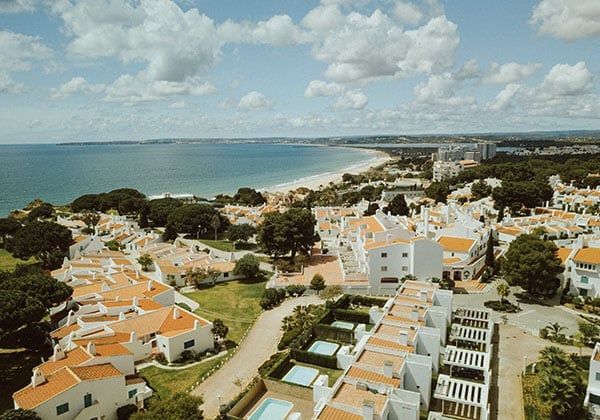
Homes in Portugal often use brick and reinforced concrete. They have thick walls and clay roof tiles, unlike the wood framing and asphalt shingles often found in the United States. This style is well-suited to the local climate and is renowned for its durability.
Many builders offer turnkey homes that combine traditional materials with modern features, such as sound insulation, double-glazed windows, and energy-efficient systems. This helps meet newer building rules and keeps energy costs lower.
Understanding Taxes and Additional Expenses
As with any type of property, there are taxes that you will need to pay to purchase land in Portugal. Here, we have outlined some of the costs to be aware of.
Property taxes
Understanding property taxes is crucial, both during the purchase process and on an ongoing basis. Initial taxes include Property Purchase Tax (IMT) and Stamp Duty, while recurring taxes encompass Municipal Property Tax (IMI). For a more comprehensive exploration, you can refer to our article: Property Taxes in Portugal.
In 2026, the median construction cost per square meter for the Municipal Property Tax (IMI) increased from €532 to €570, as outlined by the Ordinance No. 471/2025/1 of 26 December. This 7.1 percent jump affects the taxable property value (VPT). The VPT is for IMI purposes, mainly new constructions, major reconstructions, and reassessed properties.
Notary and legal fees
The Notary is the private entity that facilitates official certification of ownership documents like the Promissory Contract (CPCV) and final deed (Escritura). Notary fees typically amount to around €500 to €1,000. Legal fees vary depending on your chosen legal representation but generally range from €2,000 to €5,000.
Upon completion of the Final Deed, the contract is forwarded to the Land Registry, incurring a public fee of €250. It’s advisable to obtain multiple copies of the stamped Escritura from the Notary beforehand.
Additional fees
Additional considerations include various expenses like real estate agent fees, potentially hiring a surveyor, project manager, and unforeseen costs such as extra materials required by builders. Clear communication with builders beforehand helps establish a transparent agreement.
Current Challenges in Portugal’s Construction Industry
The biggest challenge to the construction sector in Portugal is finding workers. Skilled builders are in short supply, as veterans are leaving the industry, and there is a lack of new recruits.
Vocational training programs are way behind the curve, so builders offer services at much higher prices. This worker shortage is here to stay, and it’s making new builds way more expensive and less profitable for investors. You can also read our article on having a builder’s warranty in Portugal, which can be a good way to protect yourself and minimize risks.
Navigating Construction in Portugal
Navigating Portugal construction starts with understanding how financing works. Most buyers apply for a construction mortgage or a bank loan. Portuguese banks check the land value, project plans, and the borrower’s income. You can read more about it in our guide on how to get a mortgage in Portugal for foreigners.
In mainland Portugal and the autonomous islands of Madeira and the Azores, the construction process is similar. However, island projects may face stricter conditions due to logistical challenges and higher construction costs.
Banks, other entities, and local authorities are often involved, mainly when projects include public works or infrastructure connections. Planning, budgeting carefully, and working with experienced professionals helps reduce delays and keep Portugal construction projects on track.
Tip:While you no longer need a Usage License for the final deed of sale, banks in 2026 still require the Notice of Completion and Term of Responsibility before they will fund a mortgage for a potential buyer.
Goldcrest: How We Can Help You
Goldcrest is a buyer’s agent with extensive knowledge in the Portuguese property market. We provide the latest market insights, access to off-market properties, and rental services for long-term rentals, as well as negotiating prices on your behalf.
Whether you are looking for land for sale, a modern apartment with sweeping ocean views, or a mansion in the countryside, contact us today, and we can help you discover your dream property in Portugal.
If you are thinking about moving to Portugal and want to know what it’s really like, check out our article: Portugal Reality vs Expectations.
Frequently Asked Questions about Construction in Portugal
How much does it cost to build a house in Portugal in 2026?
The cost to build a house in Portugal is as follows:
Basic housing: €1,000 – €1,300 /m2
Mid-range housing: €1,400 – €2,000 /m2
Luxury housing: €2,000 – €3,000+ /m2
Restoration & rehabilitation construction project: €1,800 – €3,500 /m2
Add an additional 30 to 45 percent to your costs for construction in Portugal to cover quality assurance for engineering, architecture, taxes, and contingency costs. Labor costs increased by 7.7 percent year on year in Q4 2025, according to Statistics Portugal (INE).
What is the Construir Portugal program, and how does it affect my build?
The Construir Portugal program is a national government housing strategy that offers 30 measures to address Portugal’s housing shortage. Launched in 2024, it targets to deliver 59,000 homes by 2030 and provides qualifying private builders under the Urban Simplex reforms:
Lower construction costs through reduced VAT of 6 percent (instead of 23 percent)
Faster building permits and licensing
Incentives for rental housing, such as potential tax exemptions or reductions
How long does it take to build a house in Portugal?
Construction in Portugal lasts differently for every project, but overall, you can spend 12–18 months to build a standard house or a villa, 2–4 months for cosmetic renovation, and 6–12 months for a complete structural renovation. Getting a building permit in Portugal can take up to 120–200 business days.
Can foreigners get building permits in Portugal in 2026?
Yes, foreigners can obtain a building permit in Portugal without restrictions. The process begins by hiring a registered architect and an engineer, you then submit your plans to the local council, and pay the municipal fees. To obtain a building permit, you need a Portuguese tax number (NIF), which is one of the main legal requirements for starting construction in Portugal.
Is it cheaper to build or buy a property in Portugal in 2026?
Building a home is about 20 to 30 percent cheaper than buying property in Portugal, especially if it is a newly built one outside a major urban center. However, the costs for construction in Portugal have increased by 4 percent year on year, especially with the 7.7 percent rise in labor costs and 0.8 percent increase in material costs.
What are the biggest risks when building in Portugal?
When doing construction in Portugal, you can face three main risks as a self-builder:
Budget overruns: Material and labor inflation can add 15 percent to construction costs
Strict rules: Portugal has zoning laws, permit categories, protected areas, and other variances that can affect what and where you build
How to find a good construction company in Portugal?
Ask for their license number and verify it on the IMPIC website, and check if their “Class” matches your construction project in Portugal. For example, a Class 1 license only allows for works up to €200,000, while major construction projects require a higher class.
Related Articles
Nobu Is Coming to the Algarve With a New Monte Rei Resort
We use cookies to ensure that we give you the best experience on our website. Our Terms and Conditions
Functional
Always active
The technical storage or access is strictly necessary for the legitimate purpose of enabling the use of a specific service explicitly requested by the subscriber or user, or for the sole purpose of carrying out the transmission of a communication over an electronic communications network.
Preferences
The technical storage or access is necessary for the legitimate purpose of storing preferences that are not requested by the subscriber or user.
Statistics
The technical storage or access that is used exclusively for statistical purposes.The technical storage or access that is used exclusively for anonymous statistical purposes. Without a subpoena, voluntary compliance on the part of your Internet Service Provider, or additional records from a third party, information stored or retrieved for this purpose alone cannot usually be used to identify you.
Marketing
The technical storage or access is required to create user profiles to send advertising, or to track the user on a website or across several websites for similar marketing purposes.














 Construction methods and build quality in Portugal