

 Barbara Queiróz
 Updated: March 6, 2026
Portugal has evolved from the perfect holiday destination into one of the top-choice countries for long-term stability. As weather patterns shift globally, understanding how climate phenomena can impact your property purchase is essential to futureproof your investment and for peace of mind.
In a changing climate, finding a resilient home in Portugal can be conveniently split into evaluating three primary environmental pillars: Fires, floods, and water security.
Here, we provide you with a rundown of the key impacts for buyers and the reason why it’s essential to choose your location carefully – and commit to due diligence – when buying property.
Why Climate Risk Matters for Property Buyers
Location has always been essential to buying property, as investors take into account return on investment potential (ROI) and families may consider practical needs, such as proximity to schools for their children. With a changing climate, understanding which locations may be more – or less – impacted by climate change effects means that wisely choosing the right location becomes even more essential.
Most common climate impacts
 Portugal, as with all Southern European countries, is exposed to climate impacts due to its geographical makeup, climate patterns, and its 1,794km coastline.
Impacts can include:
- Coastal erosion, river flooding, and urban flash floods
- Hotter average temperatures and higher extremes in the summer months
- Increased drought frequency
- More intense wildfires
- Extreme rainfall, storms, and flooding
These risks are not evenly distributed and vary significantly depending on the region. The variation is exactly what creates smarter buying opportunities. Therefore, it’s important to consider environmental issues when deciding on where to buy property in the country.
Key implications for property buyers
If you’re seeking to buy property in Portugal, this has implications for:
- Home insurance
- Property maintenance costs
- Lifestyle comfort during extreme weather events
- Long-term resale value and capital appreciation
Flooding Risks
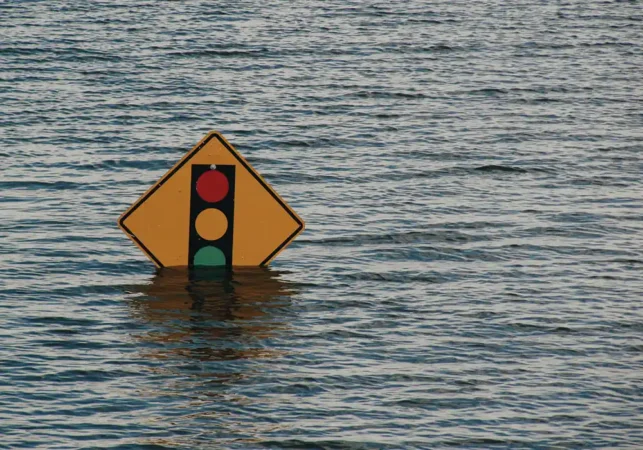 The two main types of water risks in Portugal:
- River flooding in urban basins due to heavy rainfall
- Coastal erosion
Urban flash floods in cities due to heavy rainfall, such as in Lisbon, Porto, and low-lying areas such as the Tagus, can be susceptible during periods of heavy rain.
Some key areas affected:
- Tagus (Tejo) River: The River Tagus has seen much higher levels in recent years, which can lead to flooding by Lisbon’s waterfront and in other riverside communities.
- Central Portugal: Coimbra, with the Mondego River running through the city, and Montemor-o-Velho, remain highly susceptible to inland flooding. Leiria also struggles with drainage during high-intensity rainfall and was badly impacted by recent storms.
- Setúbal Area: Alcácer do Sal is prone to heavy flooding during prolonged rainfall across the country.
Coastal erosion in areas on the Silver Coast and in parts of the Algarve is exacerbated by rising sea levels and Atlantic storms that can erode cliffs and cause flooding risks. You also have risks of rockfalls and falling debris when storms hit.
Maria da Graça Carvalho, the Minister for Environment and Energy of Portugal,
has recently stated that the Portuguese Environment Agency (APA) is concluding an inspection of the entire Portuguese coastline to protect against future rockfalls and coastal erosion.
Bottom line: It’s essential to carefully analyse whether the area you are interested in buying property has a history of flooding risks. If it has, this is not necessarily an issue, but you’ll want to make sure the property has mitigation and adaptation features should flooding occur. Working with local experts and checking historic data is essential to choosing a low-risk area.
Drought and Water Scarcity
The south of Portugal, the Alentejo and the Algarve, can experience very hot temperatures in the summer months, with the highest temperature officially recorded in Portugal being in the Alentejo region, which reached a high of 47.4 Degrees C (113 Degrees F) in Amareleja on 1 August 2003.
Water scarcity can be a serious issue when temperatures reach record highs and when there is a lack of rainfall for a prolonged period of time.
If you are buying a property in the Alentejo with a large garden or agricultural land, check the water table and dam levels. If you are considering investing in a vineyard in Portugal, the Alentejo is a top choice. However, it’s essential to plan for potential water shortages and future droughts.
The North of Portugal is typically greener but has also been experiencing more erratic rainfall in the past few years.
Initiatives underway
Last year, the Minister of Environment and Energy, Maria da Graça Carvalho, stressed the importance of being prepared. “All the data we have from the last eight years shows that the amount of rain in the south of the Iberian Peninsula, namely Andalusia, Algarve, and the Alentejo, has been decreasing, and that is what we have to be prepared for in the future.”
However, initiatives are underway to alleviate the problem, namely, with reducing water losses through the intake of water from Pomarão, on the border of Spain in the Beja district, to the Algarve, the Albufeira desalination plant, and the water connection between the western and eastern Algarve.
Alongside this, there has been increased communication and collaboration on the community level to spread awareness amongst residents.
Bottom line: Buying property in the Algarve or the Alentejo means investing in a beautiful location that will appreciate over time. While there are increased risks of water scarcity, drought, and heatwaves, initiatives and future-proof construction methods will help ensure your property is protected in the long run.
Wildfires
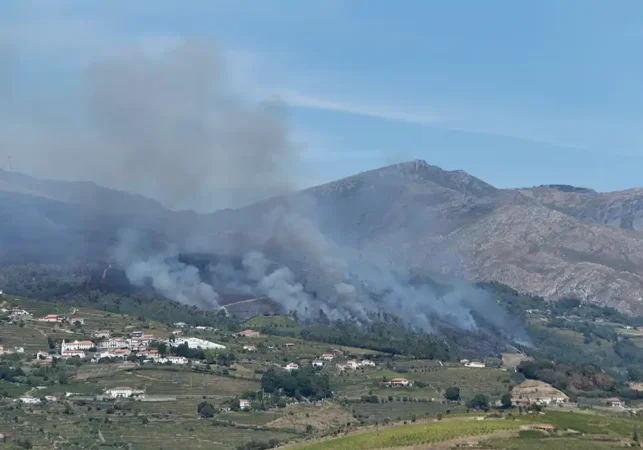 Wildfires are one of the most pressing climate risks in Portugal as a result of high temperatures and vegetation patterns.
More inland areas in the center and north are more exposed, with dense forest or areas where there are many eucalyptus or pine trees. Typically, coastal zones are less impacted due to the humidity of the Atlantic.
Areas such as Castelo Branco, Guarda, and Viseu come with a higher risk. While the south registers hotter temperatures, the longer summers are also felt further north. Properties that lie close to unmanaged forests are the most vulnerable.
Under Portuguese Law, property owners need to clear vegetation within a 50 meters radius of the property, which is known as Defensible Space. You can find out more on the Safe Communities Portugal website.
Species such as native oaks and cork trees are more resilient to wildfires and are naturally more fire-resistant than eucalyptus or pine trees.
- Reduce risks: If you are buying a property in a rural area, particularly in Central Portugal, it’s worth having at least two evacuation routes in case of an emergency. Property design also matters, as construction materials can reduce your vulnerability significantly.
- Bottom line: It’s essential to carefully consider the location and whether the area is prone to wildfires. Check past records, work with experienced local agents who have experience with which areas are more susceptible to wildfire outbreaks, and only commit to a property once you’ve fully committed to due diligence.
How to choose a low-risk, climate-resilient area?
It’s inevitable that there will also be some risk attached to property purchases, but when climate changes enter the discussion, investing in property in low-exposure areas that have strong infrastructure will significantly reduce risk levels.
You should consider:
Location-dependent factors | Property-dependent factors |
Elevation and terrain | Construction quality and building materials |
Vegetation density and vegetation type | Access to road |
Prine to flood risk; high water level | Local planning regulations |
Accessibility and emergency response times | Surrounding land management |
Water infrastructure reliabilit | Efficient drainage systems |
Regional climate patterns | Age of property (old properties may be more prone to leaks from heavy rain) |
Climate Resilient Property Can Boost Property Value
Climate resilience of properties is becoming increasingly important in discussions about resale value. Properties that are in lower-risk locations and those where construction materials and mitigation measures have been put in place to minimize risk will be more valuable over time.
- Stronger long-term demand
- Easier insurance coverage
- Lower maintenance costs due to better construction
- Greater peace of mind and buyer confidence
For international buyers in Portugal, particularly those seeking to relocate permanently or for a long-term investment, long-term environmental stability is becoming an important step in the decision-making process.
Selecting the Right Property
Portugal has long offered exceptional opportunities for real estate buyers and looks set to continue to attract buyers from across the globe. Climate change does, however, add another layer of strategy when it comes to deciding on the property and location.
The best way to proceed with your property journey in Portugal is to ensure that you are informed about which areas and property types are more resilient to climate change. You will need to think beyond the immediate lifestyle and consider the location over a longer time horizon. Will the property continue to increase in value, or will environmental factors negatively impact your investment?
This is where Goldcrest comes in. As the first buyer’s agent in Portugal with years of experience navigating the local market, we can help you identify the best properties based on climate projections and environmental considerations. Even if you are thinking about buying a home in Lisbon, we can discuss the best neighborhoods where flooding is rare, or which parts of the Silver Coast you are most protected from storms.
Goldcrest: How We Can Help You
Goldcrest is a buyer’s agent that is based in Lisbon. We provide expert, impartial advice on real estate investments and how to buy property in Portugal. From scouting out the perfect property through to property acquisition, we have you covered throughout the process.
If you are looking to purchase property in Portugal, don’t hesitate to get in touch. Our team of skilled experts is available to solve all your real estate doubts, helping you with the property search and offering insightful expertise and strategic advice.
Why choose Goldcrest?
- Local knowledge: With offices located across Portugal, our presence nationwide allows us to assist you personally across the country.
- Independent service: As an independent buying agent, we do not represent any development or project. Our service is entirely tailored toward each individual client, providing you with everything you need to secure the perfect property at the best possible price. As an impartial advisor on the market, we work solely on behalf of our client and provide a service tailored to your needs and requirements.
- Streamlined process: Our real estate agents speak English and Portuguese, and our service is completely focused on providing you with a hassle-free buying experience, saving you time.
- Experienced team: Our expert real estate team has a vast local knowledge of the Portuguese property market. We have cutting-edge technology and metasearch tools at your disposal to provide full market coverage, ensuring the best investment choices and negotiated prices.
- Network of partners: We have a close network of partners, including lawyers, property management services, builders, architects, designers, and landscape gardeners, again saving you time and hassle by providing you with trusted experts in their field of work.

