

 Barbara Queiróz
 Updated: January 26, 2026
As Portugal’s property market matures in 2026, navigating the legal requirements – and specifically Portugal’s Energy Performance Certificate (EPC) – is vital for a successful sale or rental. The EPC (Certificado Energético), issued by ADENE, the Agency for Energy, is a mandatory certificate (as of December 2013) that evaluates the energy efficiency of a property and is required to sell or rent out property.
In this article, we provide a clear breakdown of what this certificate is, how to get one, and why its A+ to F rating can significantly affect your property’s value.
We will cover:
- What is an energy certificate?
- When is an Energy Performance Certificate required in Portugal?
- Why do I need to get an Energy Performance Certificate in Portugal?
- What does the EPC assessment consider?
- How to Get an Energy Performance Certificate in Portugal
- How much does an Energy Performance Certificate cost?
Key Aspects of Portugal's Energy Performance Certificate
- Mandatory certification: The Energy Performance Certificate (EPC) is a legal requirement to sell or rent out properties in Portugal, issued by ADENE (Agency for Energy).
- Property evaluation: Properties are assed for energy efficiency on a scale of A+ (exceptional) to F (poor).
- Market value: Properties will a strong energy efficiency rating (A+ or A) have stronger market value and marketability.
- Cost saving recommendations: Each certificate includes tailored recommendations to reduce long-term utility and energy bills and lower environmental impact.
- Validity and price: The EPC is valid for ten years for residential properties, costing around €100-€250 (flat fee to ADENE and expert assessment).
What is an energy certificate?
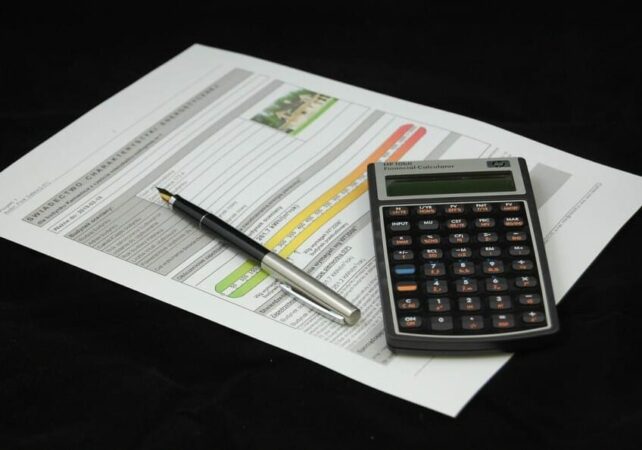 The Energy Performance Certificate (EPC) measures the property’s energy performance and is a necessary document that you will need to have to sell your home or rent it out in Portugal.
The SCE (Sistema de Certificação Energética) is Portugal’s mandatory Energy Certification System for Buildings, under Decree-Law 101-D/2020. This document, issued by the Agency for Energy (ADENE), certifies a property’s energy efficiency through a thermal analysis based on a standardized system. It assigns an energy classification to the property, ranging from energy class A+ (highest energy performance) to energy class F (lowest energy performance).
In short, the EPC sets out the following:
- Energy rating scale (A+ to F)
- Estimated yearly energy consumption
- Property’s CO2 emissions
- Total estimated energy costs (heating, cooling, hot water, and electricity)
- Recommended improvements, such as insulation upgrades, heating and cooling systems improvement, window replacement, and solar and renewable options.
- Indicative costs versus savings estimates for the recommended improvements
Certificates must be issued by a licensed expert (perito qualificado). An EPC is valid for ten years, although some commercial properties may have a shorter validity period.
When is an Energy Performance Certificate required in Portugal?
The Energy Performance Certificate (EPC) became mandatory by law in December 2013 for all properties (new and old), whether a property is sold or rented out. This is a requirement to assess the property’s energy performance. The EPC is a direct indicator of the property’s energy efficiency and comfort, with this performance certificate significantly influencing how a property is perceived and its market value.
To break this down, an EPC is required:
- When advertising a property, either for sale or rent (such as on online portals, agencies, or brochures)
- When selling or leasing a residential or commercial property
- For major renovations that require planning approval by the local council (Câmara Municipal)
- If requested by your city council as part of building or licensing procedures
- When applying for environmental funds or energy-efficiency incentives.
Why do I need to get an Energy Performance Certificate in Portugal?
 Although Portugal benefits from great weather most of the time, extreme temperatures, both hot and cold, can cause headaches for real estate owners. The majority of homes are not well equipped to handle extreme temperatures, leading to increased energy usage due to the reliance on heaters, air conditioning units, or fans.
Given the current focus on sustainability and the escalating daily energy costs, it is crucial to assess a property’s energy efficiency level and explore ways to enhance it, thereby benefiting both the environment and reducing household expenses. Maybe the property needs double glazing or could benefit from renewable energy such as solar panels.
An EPC can:
- Help property buyers and tenants compare properties based on energy costs and running costs
- Encourage energy efficiency and sustainable renovations, leading to lower energy bills
- Support Portugal’s drive towards its emission reduction goals
- Improves long-term property value and marketability
- Can be required to secure tax benefits, energy-efficiency programs, or grants
Such improvement measures (solar thermal panels creating domestic hot water) can increase your property’s thermal efficiency, whether you’re looking at improving residential buildings or commercial property. An energy certificate should then reflect your energy consumption and show the correct energy classification, with energy efficient homes having better market value.
As mentioned above, obtaining an Energy Performance Certificate is a prerequisite for selling a property in Portugal. You will need the EPC for both newly constructed and pre-owned buildings, namely, before you put them up for sale or rent.
What does the EPC assessment consider?
The EPC considers a property’s energy consumption for heating, cooling, and hot water, alongside the property’s insulation (walls, roof, and floor), double glazing, and renewable energy use.
Based on the property’s performance, the property will be assigned a rating from A+ to F, with A+ being the best and F the worst. The EPC provides effective recommendations for improvement, with A+ being the highest standard for new buildings.
Feature | Key Details & Factors Assessed |
Property location | Where the property is located and its climate zone |
Building | Year of construction and building standard |
Thermal insulation and building envelope | Insulation (walls, roof, floor), windows and glazing, and thermal breaks in doors. New for 2026: Assessments consider "Passive Cooling" to prevent overheating in summer |
Renewable energy | Presence of renewable energy sources (e.g. solar panels) |
Energy systems | Efficiency of heating and cooling systems and hot water production systems |
Key metrics | Annual energy use ($kWh/m^2$), $CO_2$ emissions, and renewable share |
Recommendations | Cost-effective upgrades with estimated payback periods |
Issued by | Must be issued by an ADENE expert before the home is listed for sale/rent |
Validity | 10 Years for residential homes; longer for large commercial properties |
How to Get an Energy Performance Certificate in Portugal
Getting an EPC is a straightforward and inexpensive procedure, but it’s essential to have the EPC in place before your property is listed on the real estate market. Below are the steps you need to take to get your EPC.
1. Contact a qualified surveyor
It’s of the utmost importance that you contact a certified and qualified surveyor who has a minimum of five years’ experience and is officially recognized by ADENE. Only a certified surveyor has the expertise to evaluate and accurately determine the energy efficiency of a property. By consulting the right expert (Perito Qualificado), you can ensure that you’ll get a reliable and valid energy performance certificate for your property.
2. Request a quote
The fees for registering and getting an energy certificate vary based on factors such as the size of the property and the purpose of its spaces (whether residential, commercial, or for services). Additionally, there will be charges for the services provided by the surveyor. It’s advisable to inquire about a detailed quote for the energy certification that encompasses all these elements before proceeding with the certification process.
3. Schedule a visit
Once you have selected a surveyor to carry out the assessment, they will need to visit the property to conduct a thorough analysis and evaluation. During this visit, the expert will make an effort to collect as much relevant information as possible to accurately assess the energy efficiency of the property. Their goal is to provide you with the appropriate energy performance certificate based on their findings from the visit.
4. Gather the necessary information
Before the visit, you must put together all the documents relating to the property. This includes a copy of the property’s floor plan, the certificate of registration of the property (caderneta predial urbana), and the technical file, which must include the technical specifications of the property’s materials and systems. This will speed up the process of getting your energy certification.
5. Consult the initial draft of the report
You must request to review and verify the initial version of the report, ensuring the accuracy of the data in the document. Before the official EPC is issued, the surveyor can provide a preliminary copy, which doesn’t hold legal validity.
This allows you, as the property owner, to confirm that the information aligns with the findings from the assessment visit. This step helps to ensure that the final certificate accurately reflects the property’s energy efficiency.
It also means that you have the chance to take improvement measures, maybe increase the thermal efficiency of your home and install some renewable energy, helping to reduce the overall energy consumption and increase the energy class of your property. Improvement measures are welcomed by the government energy agency, so it’s always a good thing to consult a professional energy analyst.
How much does an Energy Performance Certificate cost?
 The fees for registering and obtaining an EPC energy certificate for residential properties in Portugal are subject to variation.
The cost for an EPC will vary depending on the expert, although there is an additional cost of Energy Performance Certification, which is a flat fee that you will pay directly to ADENE.
ADENE flat fee:
- A T0 to T1 will cost €28
- T2 to T3 will cost €40,50
- T4 to T5 will cost €55
- T6+ will cost €65.
You will also need to pay +23% VAT. It’s important to note that these fees for the energy certification do not include the charges by the chosen surveyor, which can vary significantly depending on the technician and the property.
Generally, prices for the energy certificate for apartments start around €100, while houses and villas may have a starting price of around €250. It’s crucial to bear in mind that paying these fees upfront helps to avoid substantial penalties for non-compliance.
Fines for not having an EPC
Fines for not having a valid certificate for individuals can be as high as €3,740, with fines for agencies generally falling between €2,500 and €45,000.
In Summary: The Energy Performance Certificate
 If you want to sell your house in Portugal, you must provide an energy certificate (EPC) before you list the property on the real estate market. Failure to do so could result in significant fines. In addition to this, getting an up-to-date EPC energy certification is a great way to make improvements to your home, which could lead to you being able to ask for a higher selling price for your property.
If you are buying property, make sure you have this document from the buyer. A Portugal real estate lawyer can help you ensure you have all the documents.
Fortunately, getting your energy certificate is straightforward and affordable. From finding a registered surveyor who is acknowledged by ADENE to booking the appointment and approving the draft of the energy certificate, the process is easy, necessary, and absolutely worth it.
Goldcrest: How We Can Help You
Goldcrest is a buyer’s agent that is based in Lisbon. We provide expert, impartial advice on real estate investments and how to buy property in Portugal. From scouting out the perfect property through to property acquisition, we have you covered throughout the process.
If you are looking to purchase property in Portugal, don’t hesitate to get in touch. Our team of skilled experts is available to solve all your real estate doubts, helping you with the property search and offering insightful expertise and strategic advice.
Why choose Goldcrest?
- Local knowledge: With offices located across Portugal, our presence nationwide allows us to assist you personally across the country.
- Independent service: As an independent buying agent, we do not represent any development or project. Our service is entirely tailored toward each individual client, providing you with everything you need to secure the perfect property at the best possible price. As an impartial advisor on the market, we work solely on behalf of our client and provide a service tailored to your needs and requirements.
- Streamlined process: Our real estate agents speak English and Portuguese, and our service is completely focused on providing you with a hassle-free buying experience, saving you time.
- Experienced team: Our expert real estate team has a vast local knowledge of the Portuguese property market. We have cutting-edge technology and metasearch tools at your disposal to provide full market coverage, ensuring the best investment choices and negotiated prices.
- Network of partners: We have a close network of partners, including lawyers, property management services, builders, architects, designers, and landscape gardeners, again saving you time and hassle by providing you with trusted experts in their field of work.
Frequently Asked Questions about Portugal’s Energy Performance Certificate
Is it worth getting an Energy Performance Certificate?
Not only is it worth it to get the Energy Certificate (EPC), but it is also necessary if you want to sell your property in Portugal. Without it, you could be liable for hefty fines.
How do I get an Energy Performance Certificate?
Getting the energy certification is straightforward and affordable. You will need to choose a certified surveyor who will then survey who deals with energy certificates and analyze your property. Following this, you will have the chance to sign off on the draft before it becomes a legal document.
What is a good EPC score?
A+ is the best score, indicating exceptional efficiency, while A and B are also considered good, with a falling scale down to F (very poor). Higher scores closer to A+ mean lower energy costs, making the property’s value higher.
Is an EPC mandatory in Portugal?
Yes, the EPC has been mandatory in Portugal since December 2013.
How long is an EPC valid in Portugal?
The EPC is valid for 10 years for residential properties.
Does the EPC affect property value?
Yes, the EPC significantly affects property value. Higher ratings, such as properties with A+ or A, attract buyers and command higher prices, with lower ratings decreasing the attractiveness to buyers. The EPC is a key factor in modern real estate and can have a big impact on both property sales and rentals.

