


Updated: July 30, 2026
Portugal’s lakes and lagoons are as diverse as the landscapes that surround them. Across the country, dramatic volcanic crater lakes in the Azores give way to vast inland reservoirs and calm coastal lagoons shaped by the Atlantic.
This variety makes Portugal a standout destination for anyone drawn to the outdoors — whether that means hiking along elevated caldeiras, swimming in clear freshwater, kayaking at sunset, spotting migratory birds, or capturing expansive natural scenery through a lens.
From the twin lakes of Sete Cidades and the misty heights of Lagoa do Fogo to the immense scale of Alqueva, the sheltered waters of Óbidos Lagoon, and the unspoiled calm of Azibo, these lakes reveal a quieter, more elemental side of Portugal that often surprises even seasoned visitors.
In this article, we take a look at some of the best lakes and hidden beauty in Portugal, stunning lagoons to cool off in the summer heat, and scenic river beaches to catch some sun.
Quick Summary
- Volcanic activity in the Azores formed crater lakes such as Sete Cidades and Lagoa do Fogo, both sitting inside dormant calderas.
- Alqueva is the largest artificial lake in Western Europe, created by the Alqueva Dam on the Guadiana River.
- One of the best lakes for birdwatching is Pateira de Fermentelos.
- Coastal lagoons in Portugal include Óbidos, Ria de Aveiro, Ria de Alvor.
Best Wetlands and Natural Lakes in Portugal
Pateira de Fermentelos
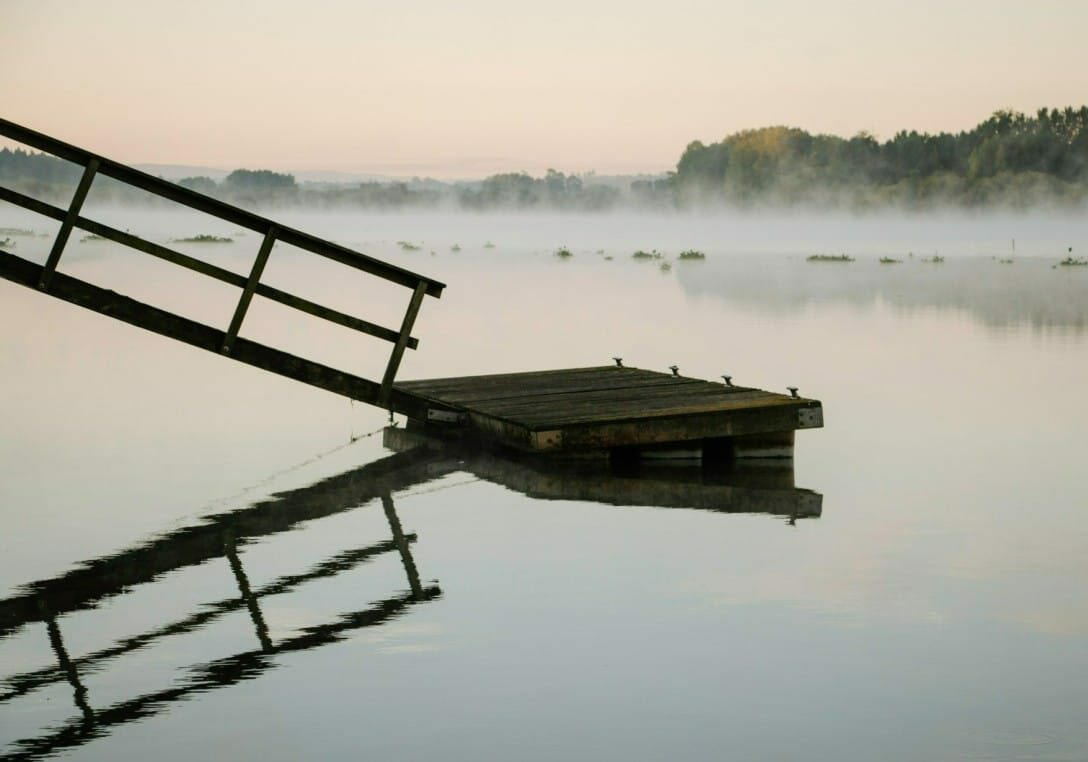 Pateira de Fermentelos is the largest natural freshwater lake in mainland Portugal. More accurately, a wetland system, it plays a vital role in flood control and biodiversity. The surrounding reed beds and shallow waters make it one of the country’s most important bird habitats.
Known for: Rich birdlife and ecological importance, expansive reed beds and flat horizons
Best activities: Birdwatching, cycling, and walking trails
Why it’s unique: Portugal’s largest natural inland freshwater ecosystem.
Lagoa de Santo André
Although close to the coast, Lagoa de Santo André functions as a freshwater lake for most of the year, separated from the Atlantic by a sandbar. Seasonal openings to the sea help regulate water levels and support fish migration.
Known for: Seasonal link between freshwater and saltwater systems, strong ecological protections
Best activities: Birdwatching, walking, and nature photography
Why it’s unique: A dynamic lake that shifts between freshwater and brackish conditions
Paul de Arzila
The tranquil waters of Paul de Arzila is a protected wetland near Coimbra, shaped by the slow flow of the Mondego River. It is one of central Portugal’s most significant wildlife reserves, particularly for migratory birds, amphibians, and aquatic plants.
Known for: High biodiversity, conservation, and environmental research
Best activities: Birdwatching, educational nature walks
Why it’s unique: A rare example of a well-preserved inland marsh ecosystem
Explore Our Ultimate Guide to Investing in Vacation Homes in Portugal

Best Volcanic Lakes in Portugal
Lagoa do Fogo
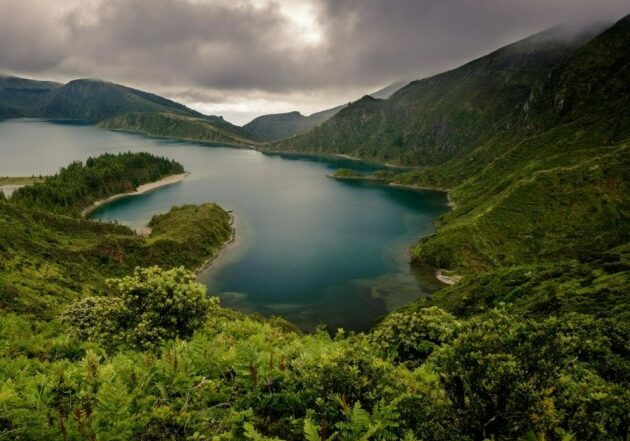 Set high in the interior of São Miguel, Lagoa do Fogo is one of the Azores’ most iconic volcanic lakes. Formed inside a stratovolcano caldera, it sits within a protected nature reserve, surrounded by steep slopes and native vegetation. Access is regulated to preserve its fragile ecosystem, which adds to its sense of remoteness and purity.
Known for: dramatic crater setting and pristine water quality, frequently shifting mist and cloud formations
Best activities: Hiking and viewpoint photography, nature observation
Why it’s unique: Largely untouched by development and fed almost entirely by rainfall
Lagoa do Congro
Lagoa do Congro is a lesser-known volcanic lake hidden within dense forest on São Miguel Island. Reached by a short woodland trail, it feels intimate and secluded compared to the Azores’ more famous lakes.
The calm, enclosed basin reflects the surrounding greenery, creating a quiet, almost meditative atmosphere.
Known for: Seclusion and minimal tourist traffic, lush forest surroundings
Best activities: Short hikes, quiet nature walks and photography
Why it’s unique: One of the Azores’ most tranquil crater lakes, rarely affected by wind.
Furnas Lake
Located within the Furnas volcanic complex, Furnas Lake sits in a geothermally active area famous for hot springs and fumaroles. The lake plays a central role in local culture, particularly in the preparation of cozido das Furnas, a traditional stew cooked underground using volcanic heat.
Known for: Geothermal activity and cultural traditions, surrounding botanical and thermal areas.
Best activities: Lakeside walking trails, birdwatching and cultural visits.
Why it’s unique: One of the few lakes in Europe directly linked to geothermal cooking traditions.
Best Reservoirs in Portugal
Alqueva Lake
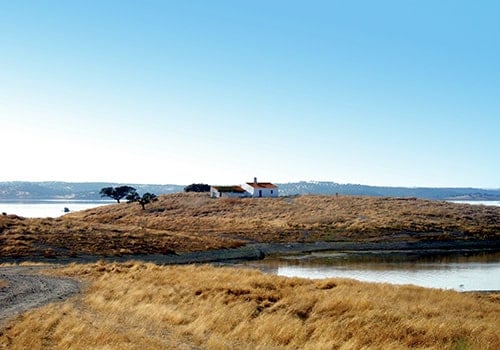
Created by the Alqueva Dam on the Guadiana River, it fundamentally reshaped the Alentejo interior, transforming a historically dry, sparsely populated region into a landscape defined by water, agriculture, and low-density tourism.
The reservoir spans more than 250 square kilometers and reaches into multiple municipalities, with gently rolling hills, whitewashed villages, and fortified towns like Monsaraz overlooking its vast shoreline.
Beyond its sheer scale, Alqueva Lake is a strategic national infrastructure project. It provides water security for agriculture, supports hydroelectric power generation, and acts as a long-term buffer against drought in southern Portugal.
At the same time, its calm waters and minimal urban development have allowed a new form of slow tourism to emerge — one focused on nature, silence, and space rather than crowds or resort density.
Known for: Being the largest artificial lake in Western Europe, irrigation and water security for the Alentejo, and one of Europe’s premier dark-sky destinations for great views of the cosmos.
Best activities: Sailing, kayaking, and houseboat stays, stargazing, and astrophotography.
Why it’s unique: A reservoir that functions simultaneously as critical infrastructure, an ecological buffer, and a low-impact tourism destination. Home to the Alqueva Dark Sky Reserve, where minimal light pollution offers some of the clearest night skies in Europe.
Vilarinho das Furnas
Located within Peneda-Gerês National Park, Vilarinho das Furnas is a reservoir with a submerged history. When water levels drop, the ruins of a former village emerge, revealing stone houses and old pathways abandoned during dam construction.
Known for: Submerged village ruins, dramatic mountain scenery
Best activities: Hiking, landscape photography<
Why it’s unique: A visible reminder of displaced communities beneath reservoir waters
Barragem da Bravura
Set in the western Algarve’s hills, Bravura Reservoir provides irrigation water for agriculture while offering a peaceful contrast to the region’s busy coastline. The surrounding landscape is rugged and lightly developed.
Known for: Quiet inland Algarve scenery, agricultural importance
Best activities: Fishing, scenic drives, and walking
Why it’s unique: One of the Algarve’s most tranquil inland water bodies
Best Coastal Lagoons
Óbidos Lagoon
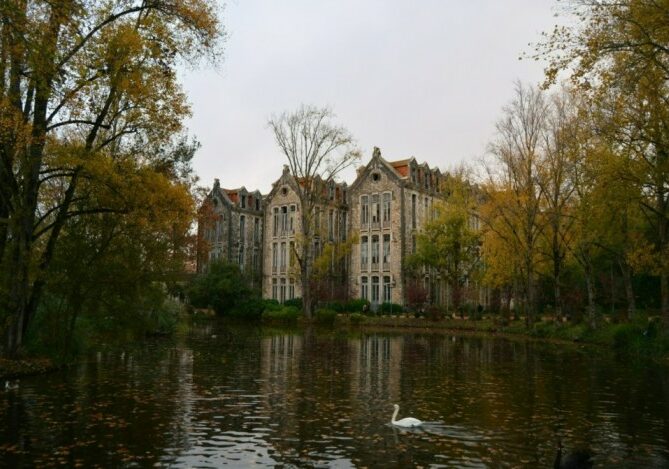 Óbidos Lagoon is Portugal’s largest coastal lagoon, located on the Silver Coast. Sheltered from strong Atlantic waves, it offers calm waters and a strong connection to local fishing and shellfish harvesting.
Known for: Shallow, calm waters, traditional shellfish gathering
Best activities: Paddleboarding and kayaking, family-friendly swimming
Why it’s unique: One of the safest and most accessible lagoons for water sports in Portugal
Ria de Alvor
Ria de Alvor is a tidal lagoon system near Portimão, combining salt marshes, mudflats, and channels influenced by the Atlantic. It supports rich marine life and serves as a key nursery for fish species. Portimão is known as having one of the best yacht marinas in Portugal, but it is also home to stunning natural beauty.
Known for: Biodiversity and tidal landscapes, traditional fishing communities
Best activities: Kayaking, birdwatching<
Why it’s unique: One of the Algarve’s most ecologically balanced lagoon systems
Ria de Aveiro
Often called the “Venice of Portugal,” Ria de Aveiro is a vast lagoon network shaped by tides, canals, and barrier islands. It supports salt production, fishing, and distinctive local architecture. The city of Aveiro is nearby, perfect for seeing the colorful boats and unique canals surrounded by beautifully tranquil Aveiro Portugal Real Estate options.
Known for: Moliceiro boats and canals, salt pans, and fishing heritage
Best activities: Boat tours, cycling, and photography
Why it’s unique: A living lagoon where industry, nature, and culture coexist
View Our Complete Guide to Buying Property in Portugal
Best Portuguese Lakes for Swimming
Lagoa da Vela
One of Portugal’s most popular lakes, Lagoa da Vela, is in proximity to the nearby town of Figueira da Foz.
Frequented by Portugal tourism enthusiasts seeking adventure, the lake is the perfect place to go kayaking and canoeing in the scenic dam and explore the biking and hiking trails surrounding the reservoir.
In the area surrounding Lagoa da Vela, you’ll find several hiking trails in the surrounding hills that are perfect for anyone looking to immerse themselves in nature. Nearby, Figueira da Foz is a seaside resort in the Coimbra district.
There is also the opportunity to invest in Coimbra Portugal Real Estate and live surrounded by this area’s natural beauty.
Known for: Still waters and wide-open horizons, local fishing and traditional leisure use.
Best activities: Swimming, kayaking, and canoeing.
Why it’s unique: A rare natural freshwater lake on Portugal’s central coast.
Lagoa de Albufeira
Located south of Lisbon near Sesimbra, Lagoa de Albufeira is a shallow coastal lagoon popular with locals during the warmer months. Sheltered from Atlantic swells and with sandy access points, it offers some of the safest inland-style swimming near the capital.
Known for: Warm, shallow water in summer, Easy access from Lisbon
Best activities: Swimming and paddleboarding, family-friendly beach days<
Why it’s unique: One of the few lagoons near Lisbon suitable for relaxed, non-tidal swimming
Furnas Lake
While swimming directly in Furnas Lake is less common due to cooler temperatures, nearby geothermal-fed pools and controlled lake access points make the area a standout for freshwater bathing experiences in the Azores.
Known for: Geothermal surroundings, volcanic landscape
Best activities: Cold-water swimming (seasonal), thermal bathing nearby
Why it’s unique: Swimming within an active volcanic environment
Best Lakes for Photography
Sete Cidades
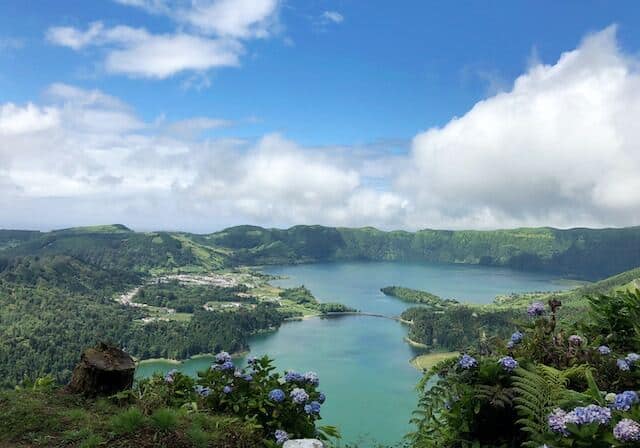
Their contrasting colors are the source of both scientific explanation and local legend. The blue and green tones result from differences in depth, light reflection, algae concentration, and wind exposure, which affect how sunlight interacts with the water.
Weather plays a decisive role: on clear days, the color contrast is vivid and dramatic; under cloud or mist, the lakes take on softer, almost monochrome shades, reinforcing the sense of scale and enclosure created by the caldera walls.
Sete Cidades is also deeply embedded in Azorean folklore. According to legend, the lakes were formed from the tears of a princess and a shepherd who fell in love but were forbidden to be together — one cried blue tears, the other green.
Known for: Contrasting lake colors, caldera viewpoints
Best activities: Landscape and drone photography, sunrise and fog shots
Why it’s unique: One of Europe’s most visually striking volcanic lake systems
Lagoa do Fogo
Lagoa do Fogo is defined by atmosphere as much as form. Clouds frequently roll in and out of the crater, reshaping the scene minute by minute and rewarding patient photographers with layered compositions.
Known for: Mist, clouds, and dramatic light, untouched natural setting.
Best activities: Wide-angle landscape photography, minimalist nature shots.
Why it’s unique: A lake that rarely looks the same twice.
Vilarinho das Furnas
When water levels drop, the remains of the submerged village of Vilarinho das Furnas emerge from the reservoir, creating haunting compositions of stone ruins against mountain backdrops.
Known for: Submerged village remains, mountain reflections
Best activities: Documentary-style photography, autumn, and low-water landscape shots
Why it’s unique: A reservoir where history physically reappears in the landscape
Goldcrest: Who We Are and How We Can Help You
Goldcrest is a buyer’s agent based in Lisbon, Porto, and the Algarve. Equipped with local knowledge, exclusive networks, and international experience, we provide expert, impartial advice on real estate investments and how to buy property in Portugal. From scouting out the perfect property to property acquisition and beyond, we have you covered throughout the process.
Why choose Goldcrest?
- Local knowledge: With offices located throughout Portugal, our presence nationwide allows us to assist you personally.
- Independent service: As an independent buying agent, we do not represent any development or project. Our service is entirely tailored toward each client, providing you with everything you need to secure the perfect property at the best possible price. As an impartial advisor on the market, we work solely on behalf of our client and provide a service tailored to your needs and requirements.
- Streamlined process: Our real estate agents speak English and Portuguese, and our service is entirely focused on providing you with a hassle-free buying experience, saving you time.
- Experienced team: Our expert real estate team has a vast local knowledge of the Portuguese property market. We have cutting-edge technology and metasearch tools at your disposal to provide complete market coverage, ensuring the best investment choices and negotiated prices.
- Network of partners: Lawyers, property management services, builders, architects, designers, and landscape gardeners, again saving you time and hassle by providing you with trusted experts in their field of work.
Frequently Asked Questions About Lakes and Lagoons in Portugal
What are the major lakes in and around Portugal?
Portugal is home to many fantastic lakes and lagoons. Some of the best in Portugal include Lagoa da Vela, Lagoa de Óbidos, Pateira de Fermentelos, Lagoa do Fogo, and Lagoa das Sete Cidades.
How many lakes does Portugal have?
Portugal has many lakes, both on the mainland and on its islands. However, the majority of these bodies of water are native to the Azores. Many of the lakes on mainland Portugal are artificial due to damming, and most of the mainland’s natural lakes are located in Serra da Estrela.
Can you swim in Portuguese lakes?
Yes, there are swimming lakes, such as Lagoa de Óbidos. When visiting the country’s lakes, it is important to check whether you are allowed to swim in them or not.
What is the main lake in Portugal?
There is no main lake in Portugal. However, the Alqueva Dam is the largest artificial lake in Portugal and Europe. Located in the Évora district of the Alentejo region in the south of Portugal, it features a 250 square kilometer wall surrounding the reservoir and more than 1,100 km of shores.
What is the biggest lake in Portugal?
The biggest lake in Portugal is Alqueva Lake. It spans over 250 square kilometers and was created by the Alqueva Dam on the Guadiana River. Alqueva is the largest artificial lake in Western Europe and provides irrigation, hydroelectric power, and tourism opportunities.
Are Portugal's lakes good for swimming?
Many of Portugal’s lakes are good for swimming, especially in the interior regions. Alqueva Lake, Lagoa Comprida, and Barragem do Maranhão have clean waters and designated swimming areas. Water quality is regularly monitored, and conditions are generally safe during summer months. Several of Portugal’s lakes in the Serra da Estrela region are also great for swimming, exploring hidden coves or simply unwinding.
Are there natural lakes in the Portugal countryside?
Portugal has several natural lakes, mostly located in mountainous regions like Serra da Estrela and Peneda-Gerês. These lakes, such as Lagoa Comprida and Lagoa do Marinho, were formed by glacial or tectonic activity and offer scenic landscapes, hiking, and seasonal swimming.
Which lake in Portugal is the most beautiful?
Lagoa das Sete Cidades is widely considered the most beautiful lake in Portugal. Located in the Azores on São Miguel Island, it features twin lakes—one green and one blue—set inside a volcanic crater. The striking colors and lush surroundings make it a top scenic destination.

