

 Barbara Queiróz
 Updated: January 23, 2026
Braga was named the Best European Destination in 2021, reflecting its combination of historic charm, liveability, and emerging international appeal, and continues to be a standout location moving into 2026. The European Commission has previously revealed that 94 per cent of residents of the Braga municipality consider Braga to be a good place to live.
This means that living in Braga, Portugal, is an increasingly popular choice for expats. The city offers a high quality of life, and it is more affordable to live in compared to larger Portuguese cities, such as Lisbon or Porto. This ticks the boxes for retirees, families, and digital nomads seeking a quieter place to call home.
We’ll cover:
Living in Braga At a Glance
- Location: Braga is a beautiful historic city in Northern Portugal close to Spain and around 45 minutes from Porto by train.
- Vibe: Braga is a compact city, that is walkable and renowned for its high quality of life and high levels of resident satisfaction, with a relaxed feel compared with Lisbon and Porto.
- Cost of living: A single persons monthly costs are around €634 and for a family of four around €2,285, excluding rent.
- Safety: Portugal ranks as the seventh safest country in the world (in the 2025 Global Peace Index), with Braga noted for its low crime rates and strong community atmosphere.
- Perfect for: Families, retirees, remote workers, tech professionals, and students seeking an affordable, authentic, and quiet city.
Where is Braga and what is it known for?
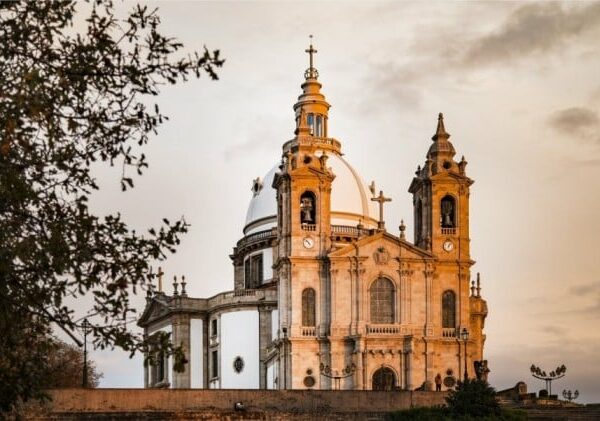 Located about a 45-minute drive northeast of Porto, you’ll find Braga, an ancient city, which is often regarded as the historical and religious center of the country, with many architectural masterpieces to explore and a colorful culture to experience.
The city is known for its high lifestyle quality and as being the vibrant capital of the Minho region in Portugal, well known for its delectable Vinho Verde wine.
In close proximity to the Spanish border, Braga is a convenient springboard for a weekend visit to Spain or to uncover the natural delights of the north of Portugal, such as the stunning Peneda-Gerês National Park, the only national park in Portugal. In the city itself, you also have the Jardim de Santa Bárbara, a beautiful city nestled in the heart of the city.
How to Live in Braga as a Foreign Citizen: Residence Permits and Visas
Living in Braga as an expat is the reality for many foreigners from all walks of life and nationalities. Depending on your country of origin, there are different routes to Portuguese residency.
 Living in Braga as an EU citizen
 Living in Braga as an EU citizen
 As a European citizen, the freedom to travel, live, and work within the member states is yours. Moving to another member state of the European Union (EU) is relatively straightforward, and you won’t need a visa to remain in the country.
After three months (before which you are technically a tourist), you must apply for residency to stay longer in the country. You can get a residency card from any local town hall, given that you have your national ID card or a passport for identification.
You also have to get your national tax identification number (NIF) for financial and tax purposes.
Living in Braga as a non-EU citizen
As a non-EU citizen, you are subjected to more bureaucracy and some administrative steps before a Portuguese residency card can be yours. This will take a little longer and may seem complicated, but there is plenty of expert advice available to make your route to residency seamless.
Three popular options are the Portugal Golden Visa (for investors), D7 Visa (for retirees), and Digital Nomad Visa (for digital nomads), which we expand on below.
Our residency and citizenship division, Global Citizen Solutions, has experts who can help you realize your dream of living in Portugal and answer all your questions before you start the relocation process.
The Portugal Golden Visa
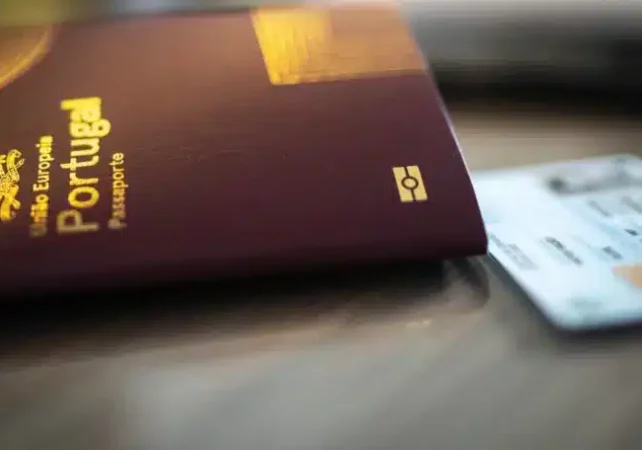 Portugal has one of the most attractive Golden Visa programs with exceptional opportunities for eligible candidates, with its residency-by-investment scheme being one of the most popular investment programs in the international market. The following investment options are available for eligible expats:
- Investment funds (from €500,000 or $586,322)
- An investment of €250,000 ($293,161) in support of the arts or the reconstruction of cultural heritage
- A contribution to scientific research (from €500,000 or $586,322)
For a full list and more details of Golden Visa options, you can consult our guide on the Portugal Golden Visa.
The D7 Visa (retirement visa)
Making a substantial investment may not be a viable option for some, so Portugal’s D7 Visa is a great alternative for non-EU, non-EEA, and non-Swiss citizens. Through this visa, you will gain access to residency in Portugal as long as you have enough income to live independently.
You will need to prove that you earn at least €870 ($1,020) per month in passive income, although this income doesn’t need to come from employment in Portugal. Passive income can include pensions, making it a popular option for retirees.
Our comprehensive article and guide on Portugal’s D7 Visa will give you more details about this residency route.
The Digital Nomad Visa (D8 Visa)
Portugal’s Digital Nomad Visa allows remote workers to relocate to Portugal, provided they earn four times the Portuguese minimum wage of at least €3,480 ($4,081) per month and that it comes from a non-Portuguese company or that they are self-employed.
You can find out more in our guide to the Portugal Digital Nomad Visa.
How much do you actually need to live in Braga?
Expenses in Portugal are lower than in most other countries in Western Europe. And even by Portugal’s standards, the cost of living in Braga is considered low, particularly when compared with Lisbon and Porto.
The estimated monthly costs for a family of four is €2,28 ($2,684), while a single person can get by on €635 ($745), both excluding rent, highlighting Braga’s affordability.
Accommodation
 Accommodation
Braga’s accommodation prices are reasonable and cheaper than in other major Portuguese cities. The rental of a one-bedroom apartment is around €800 ($938) per month in the center of Braga and €610 ($715) per month outside the center. In 2026, prices per square meter for buying real estate in Braga average at €2,214 ($2,593) in the center and €1,722 ($2,019) outside Braga’s city center, according to Numbeo.
Food
 Food
FoodIn Portugal, the cost of groceries is cheaper than in many other European countries. Of course, it depends on an individual’s or family’s lifestyle and requirements.
The table below gives an overview of prices of basic food items:
Item | Price |
Milk (1 litrer) | €0.92 ($1.08) |
Bread (500g) | €1.64 ($1.92) |
Rice (1kg) | €0.73 ($0.85) |
Eggs (12) | €2.77 ($3.25) |
Chicken (1kg) | €12.82 ($15.01) |
Apples (1kg) | €2.05 ($2.40) |
Water (1.5 liters) | €0.92 ($1.08) |
Best Neighborhoods in Braga
Living in Braga as a foreigner can offer an exceptional quality of life with many captivating places to live. Although it’s difficult to narrow it down, here are the best neighborhoods in Braga, Portugal.
University Quarter
 University Quarter
Home to the excellent University of Minho, the University Quarter, a neighborhood of Braga that has been growing in popularity in the last few years, is home to many students and professionals alike. It’s a vibrant district with many hip bars, restaurants, and cafes. It’s perfect if you want to live in a lively and ever-changing environment.
Bom Jesus do Monte
 Bom Jesus do Monte
Steeped in its Christian roots, Bom Jesus do Monte (Good Jesus of the Mount) is one of the main Braga tourist attractions located on a hill outside Braga’s city center. This is an ancient pilgrimage church, which you can also get to easily by public transport or by car, to enjoy the breathtaking views across Braga and the rolling green hills of the surrounding countryside.
Close by, you also have promising properties. You can find bigger and more luxurious real estate, and life close to Bom Jesus do Monte is for those who enjoy a slower and quieter pace of life.
Maximinos, Sé e Cividade
 Maximinos, Sé e Cividade
A relatively young neighborhood, born in 2013 through the merging of the two quarters, Maximinos and Sé e Cividade, this area of Braga is home to many historical buildings and houses. Many of them have been renovated, making this neighborhood a perfect location to set up a new home.
Briteiros, Vila Verde and Espinho
 Briteiros, Vila Verde and Espinho
Located outside Braga’s city center, Briteiros, Vila Verde, and Espinho provide everything their residents need, meaning it’s ideal for families and those who don’t want to be in the middle of a busy city. However, good public transport links, one of Portugal’s strengths, ensure you can reach Braga’s center in no time.
Is Braga safe to live in?
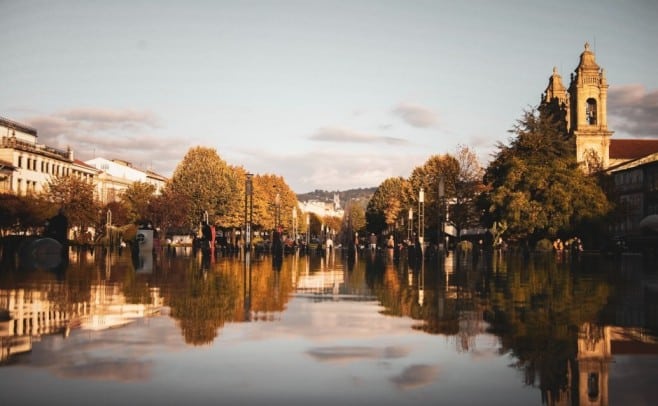 Portugal, as a country, is well-known for its friendly citizens and welcoming locals.
It’s also listed as number seven in the Global Peace Index 2025, making it one of the safest places to live in the world. In comparison, the UK clocked in at number 34, and the USA ranked in 129th position on the list. Living in Braga as an American or a UK citizen can be considered to offer a safer lifestyle.
Crime in Braga, Portugal, is low, although, as with every European city, common sense for personal safety is always recommended.
You’ll find the charming city of Braga to be as welcoming and tolerant as Portugal’s other cities, with a community feel to it, and the city is far less dangerous than many European cities.
Buying or Renting a House in Braga as a Foreigner
Whether you’re after a rental in Braga or are looking for houses for sale, you’ll have plenty of options available for any budget.
Buying a home in Braga
 Buying a home in Braga
You can buy reasonably priced real estate in Braga, be it an apartment, a townhouse, or a bigger family home. Luxury properties and villas are also available, and you can read more in our article, Braga, Portugal Real Estate.
Buying property in Braga follows the same rules for foreigners as in the rest of Portugal, and we recommend working with a buyer’s agent and real estate lawyer for a streamlined buying process.
Renting a house in Braga
 Renting a house in Braga
For a less permanent living solution, there are plenty of places to rent in Braga and its beautiful neighborhoods. Check out Airbnb to find a place if you’re staying short-term and want to get used to Braga. If you are seeking a longer-term rental property, you’ll find some bargains with rental prices, with renting property in Braga considerably cheaper compared to Lisbon (45 percent lower) and Porto (31 percent lower).
Daily life in Braga
How is life in Braga, Portugal? Below we delve into the practical aspects of living in this charming, historic city.
Getting around
 Getting around
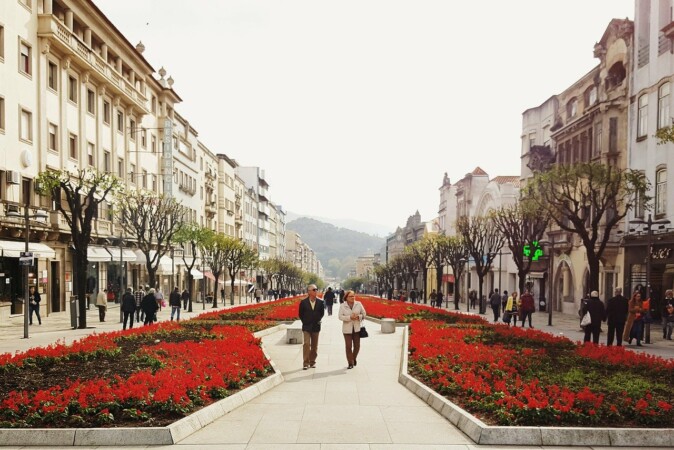 Getting around Braga is relatively straightforward. Due to its size, you can get to most places in the city on foot, but you can also take buses that run frequently, and both one-way tickets and monthly passes are affordable.
Braga’s intercity connections are also reliable and cheaper than in most European countries.
You can get to Porto by train in under 45 minutes, and connections with other cities are equally efficient. The train station in Braga is close to the city center.
It also has good bus connections, which are even cheaper than train tickets.
Schools
 Schools
 Expats looking to relocate with children will be pleased to know that Portugal’s education system is excellent and that there are both public and international schools available to choose from.
In Braga’s district of Gualtar, you can find schools and a university, and one international school, the Braga International School. The latter follows an English curriculum and caters to children between three and eighteen years of age.
Braga is not only the perfect city for families, but it’s also a great place for young people. Braga is a popular university town and therefore has a great international scene. Everyday life is exciting in northern Portugal, with affordable and good transportation links and Porto Airport (Francisco Sá Carneiro Airport) close by, making Portugal’s oldest city a desirable place for many young people.
Eating out
 Eating out
Portugal’s cuisine is known for being of exceptional quality, but fresh and wholesome food doesn’t mean an extortionate price tag. This is especially the case in the north of Portugal, where prices are generally lower than in the south, and you’ll find large portions.
Meals at inexpensive restaurants start from €8 ($9), and you can enjoy a three-course meal at a mid-range restaurant for €15 ($17) per person. A regular cappuccino costs around €1.65 ($1.93), and a pint of beer costs around €3 ($3.52)
Shopping
 Shopping
Braga is a great place to shop, whether you’re looking for high street brands or authentic Portuguese market stalls. Braga is a treasure trove for small independent and local shops and boutiques where you can find anything from handmade goods to food and drink.
We’d recommend the Mercado Municipal, a traditional market in the north of the city, where you can experience Portugal in all its authenticity.
Language
 Language
English is widely spoken in Portugal, and, in general, Braga is no exception. As Braga is a university city with around 20,000 students, you’ll find it easy to communicate, as the younger generations speak excellent English. Braga’s expat community has also increased in the past few years, so you should find it quite easy to meet fellow English speakers.
Of course, nothing beats speaking the Portuguese language to impress the locals and to allow for a more authentic experience as an expat. If you are learning Portuguese, many locals will go out of their way to help you with your pronunciation and help you with your learning. You will also find many language centers to take Portuguese lessons, alongside online 1-on-1 classes.
Festivals and attractions
 Festivals and attractions
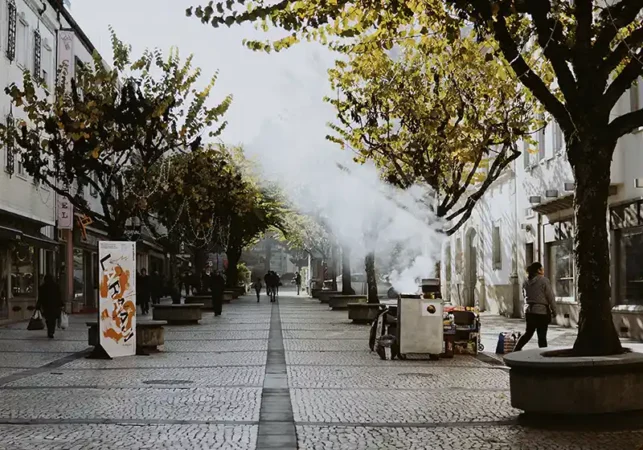 Braga’s rich cultural heritage means that there are lots of festivals, attractions, and events throughout the year. Whether you’re interested in traditional and cultural events, theatre, art exhibitions, music, or religious occasions, Braga has something for everyone.
- Semana Santa is an annual occurrence over the Easter festivities, commemorating religious events. It’s a great time to visit Braga’s many churches and cathedrals and enjoy the beautiful decorations around the city.
- Braga Romana festival remembers Braga’s historic Roman roots and is marked by a Roman market every year at the beginning of June.
- Towards the end of June, you can enjoy the impressive São João street party in honor of St John the Baptist and celebrate the arrival of mid-summer.
- In July, theatre lovers will enjoy Mimarte, Braga’s theatre festival, and amongst traditional performances on stages, you can also expect street theatre and improvised performances.
- Throughout the year, you can attend music events and festivals; some of the most notable are the Braga Jazz Festival and International Music Day.
Healthcare in Portugal
 Portugal’s healthcare is considered one of the best in Europe, and, as a resident, you’ll have easy access to it at a minimal cost.
Alternatively, you may want to get private health insurance, which is cheaper than in most other European countries and is also excellent.
You will have a range of healthcare centers and services. If you are seeking a private hospital in the city, you have the Hospital Privado de Braga, while the public option is the Hospital de Braga.
For more in-depth information on Portuguese healthcare, including healthcare centers and the difference between private and public healthcare, read our article on Portugal Healthcare.
Transportation in Braga
Transportation in Portugal is excellent and an affordable way to get from city to city and across the country, with the city having good transport links. Braga’s local public transport system is well-connected with other major cities, too, and you’re only a train ride away from Porto, where you also find the nearest international airport.
Although Braga is a smaller city and you can walk to most places, buses are readily available, and a monthly pass costs only around €20 ($23).
Weather in Braga
Braga’s northern location means that summers are short and hot, but winters can be cold and wet. Generally, annual temperatures vary between 6 degrees C and 27 degrees C (42 degrees F and 80 degrees F), so make sure you take appropriate clothing for each season.
Pros and Cons of Living in Braga
So, is Braga a good place to live? As with every city, there are advantages and drawbacks. Below, we give a brief overview of the pros and cons of living in Braga.
Advantages
 Advantages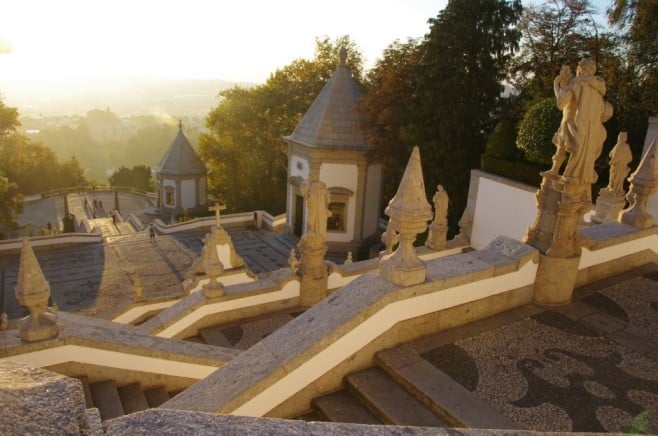
Braga is an exciting and vibrant city with plenty to offer for people from all walks of life. Some of its biggest advantages are:
- High standard of living at an affordable cost in Portugal’s oldest city
- A variety of business opportunities, also for foreign language speakers
- A thriving job market with job opportunities in tech and innovation, and with a growing economy
- A versatile place with historical monuments and modern properties alike
- A safe and friendly city
- Less busy than big cities such as Lisbon and Porto
- A good climate with warm summers and cooler winter months
- A wide variety of cultural events and festivals
- An authentic hub of Portuguese culture
- Committed to innovation, such as with INL (International Iberian Nanotechnology Laboratory)
- Resident access to the national health service (Serviço Nacional de Saúde) or affordable private healthcare
Drawbacks
No place is perfect, and there are some realistic but manageable cons to living in Braga, Portugal:
- Bureaucracy can be time-consuming
- Fewer choices than in bigger cities
- Winter months can be cold and wet compared to Southern Portugal
- Some rental properties and real estate don’t have central heating for those colder months
Braga vs Lisbon vs Porto: Which is better to live in?
Whether Braga, Lisbon, or Porto is better for you will depend on your lifestyle and preferences, with each of these major cities offering a different vibe when it comes to living on the Iberian Peninsula.
- Lisbon: The capital city is buzzing with a vibrant culture, strong expat communities, excellent international schools, and incredible beaches nearby. The cost of living is, however, much higher (35 higher in Lisbon compared with Braga, including rent).
- Porto: Portugal’s second largest city is for history lovers, where you’ll find beautiful architecture and a more community feel compared with Lisbon. Porto is around 15 percent higher than Braga, including rent.
- Braga: The most affordable city of the three, with a rich history, high quality of life, and excellent gastronomy. Braga has fast become a thriving tech hub and has a strong IT industry, plus the city offers lower labor costs and a highly skilled workforce. Braga and Porto are in Northern Portugal, and the climate is cooler than in Lisbon.
Frequently Asked Questions about Living in Braga Section
Is Braga a good place to live?
Braga is an excellent place to live for people from all walks of life and all ages. It has plenty to offer for everyone, whether you’re a digital nomad, a student, a family, or looking to retire. You will also find many job opportunities in tech, innovation, software development and the IT sector.
What is living in Braga like?
Braga is a vibrant and lively city without the hustle and bustle of a capital city. If you prefer a relaxed and calmer way of life, then Braga is the ideal place for you.
Is Braga cheaper than Porto?
For most aspects of daily life, life in Braga is cheaper than in Porto. Renting is around 31 per cent cheaper in Braga, and real estate prices can be up to 53 per cent cheaper.
Where do most American expats live in Portugal?
American expats tend to favor Lisbon, Porto, and the Algarve. Those seeking a quieter or more authentic living experience are increasingly choosing cities such as Braga, Coimbra, or Aveiro, with the Silver Coast also becoming a more popular option.
Is English widely spoken in Braga?
Portugal is the 6th most proficient country in English in 2025, with the language widely spoken in Braga, particularly amongst younger people. Older generations may not speak English as well, with locals in more interior areas also not being so adept at the language.
Is Braga good for digital nomads and remote workers?
Braga has established itself as a key tech hub in Europe and a perfect place for digital nomads. You’ll find a low cost of living, top co-working places, and a rich history, with the city renowned for its relaxed and high-quality lifestyle. The Digital Nomad (D8) Visa makes it very easy to relocate to Portugal and work for a remote company.

