Home » Living » Portugal Retirement Visa: D7 Visa Requirement 2026 Guide
Updated: July 30, 2026
Thinking about retirement in Portugal? Many foreigners are drawn to Portugal’s golden beaches, warm climate, world-class golf courses, and affordable living expenses.
The Portugal Retirement Visa, also known as the D7 Visa or Passive Income Visa, offers non-EU nationals, including UK and US citizens, a two-year residency permit.
To qualify, you must have a steady stream of passive income. As of 2026, the minimum passive income requirement starts at €920 per month.
In this Retirement Visa Portugal guide, you can learn about the documentation, processing times, application process, and more.
The Retirement Visa in Portugal is a long-term residency program for retirees and expats with stable passive income.
As of January 1, 2026, the Portugal D7 Visa minimum passive income requirement is €920 per month or a total of €11,040 per year. This income can be from pensions, intellectual property, transferable equity, financial investment, or real estate.
The minimum passive income requirement for the D7 Visa increases by 50 percent for the spouse or partner and 30 percent per dependent child.
The D7 Visa is initially valid for two years, but you can renew it for another three years, provided you continue to meet the Portugal D7 Visa requirements.
The minimum age requirement for the D7 Visa is 18+ and it it’s only available to non-EU/EEA/Swiss applicants.
What is the Portugal D7 Retirement Visa?
The Portugal Retirement Visa (D7), also known as the Passive Income Visa, is a residency permit for non-EU/EEA/Swiss nationals, including US and UK citizens. Launched in 2007, the D7 Visa in Portugal offers a two-year temporary residency permit that allows you and your dependent family members legal residence in Portugal.
The Portugal D7 Retirement Visa attracts seniors and expats with a stable passive income who want to reside in Portugal, while also boosting the local economy. D7 Visa holders can often work in Portugal while staying there.
The D7 Visa is a Portuguese residency visa for people with passive income from various sources, such as pensions, rental income, investments, remote income, and savings. To qualify, you must meet the Portugal D7 Visa passive income requirements, which the official website indexes according to the Portuguese minimum wage.
The D7 Retirement Visa is for expats who want to live in Portugal most of the time. Unlike the Portugal Golden Visa for retirees (where the residency requirements are minimal), the D7 Visa requires expats to stay in Portugal for at least 183 consecutive days per year.
Your initial residency permit lasts for two years, and you can renew it for an extra three years. After living in Portugal for five years, you can apply for permanent residence.
Portugal D7 Visa News: Changes to the Portuguese Nationality Law
On 3 May 2026, the Portuguese president approved changes to the revised Portuguese Nationality Law.
The new rules extend the citizenship timeline from 5 to 10 years (or 7 years for citizens from CPLP countries). The government only starts counting your required years of residence from the date your official residence permit is issued.
On that note, Portugal’s Lei n.º 61/2025 may now require the main applicant to complete two years of residency before they can sponsor eligible family members through some applications for family reunification.
These changes can affect D7 Visa holders who want to apply for Portuguese citizenship through the process of naturalization. To find out more, read our ultimate guide to the Portuguese Nationality Law.
Benefits of the Portugal Retirement Visa
Through Portugal’s Retirement Visa (D7), expats can enjoy various advantages, from the affordable cost of living to the universal healthcare and visa-free Schengen travel. Here is a quick look at the potential advantages:
Affordability: The cost of living in Portugal is quite affordable compared to other Western European countries and the USA. According to Numbeo, Portugal is 27.7 percent cheaper than France and 39.6 percent cheaper than the USA, with rent, groceries, leisure activities, and restaurant costs all less expensive, although this will be location dependent.
High quality of life: Portugal’s also one of the safest countries in the world (7th globally and 5th in Europe, according to the 2025 Global Peace Index) and has progressive legislation, which appeals to US nationals and global expats looking to relocate overseas.
Healthcare access: Portugal’s national health service is excellent, and Portugal D7 Visa holders will have access to the public service, with private options that are world-class and very affordable in comparison to other Western European countries and the USA.
Visa-free travel: With the Portugal D7 Visa, you can travel across the Schengen Zone without needing additional visas, up to 90 days for each 180-day period.
Pathway to permanent residency: Through the D7 Visa, you can qualify for permanent Portuguese residency after living five years in the country.
Who is eligible for a Portugal D7 Visa?
The Portugal D7 Retirement Visa, also known as the Passive Income Visa is for non-EU/EAA/Swiss residents with a stable, foreign-sourced income. Here is a list of the eligibility criteria for Portugal’s D7 Visa for the principal applicant and the eligible family members.
Main applicant
To qualify, you must:
Be 18 years or older
Be a non-EU/EEA/Swiss citizen
Have sufficient funds to support yourself (and your family members) while you stay in Portugal
Show proof of accommodation or residence address in Portugal
Keep a clean criminal record certificate
Live in Portugal for at least 16 months during your initial two-year period
Have a valid, private health insurance in Portugal
Meet the minimum D7 Visa passive income requirement: €920 per month (€11,040 per year)
Increase the monthly minimum bank balance per dependent: €5,520 (+50 percent) for a spouse and €3,312 (+30 percent) for each dependent child under 18 years
Dependent family members
The eligibility criteria below are for family members who qualify for family reunification under the Portugal D7 Retirement Visa:
Your partner or spouse
Your children under 18 years old or incapacitated children with serious conditions or disabilities
Your children over 18 who are financially dependent on you, are unmarried, or are studying at a school or university
Your parents or your spouse’s parents
Your minor siblings
Portugal Retirement Visa Income Requirements
One of the main requirements for the Portugal D7 Retirement Visa for the primary applicant is to have sufficient funds. You must be able to financially support yourself and your dependent family members with foreign-sourced income from passive sources.
Passive income requirements
Passive income is a type of income you earn by not committing a significant amount of time or labor. It must come from outside Portugal and at least match the Portuguese minimum wage (€920 per month) to qualify for the Portugal D7 Visa.
To live in a major city, like Lisbon or Porto, you may have higher Portugal Retirement Visa income requirements.
The type of passive income that is approved for the D7 Retirement Visa in Portugal comes from:
Rental properties
Pensions
Dividends from limited properties
Dividends from investments
Intellectual property
Royalties
Interest collected from savings accounts
Income requirements for families
D7 Visa applicants who want to sponsor family members have higher income thresholds to bring their family members to Portugal.
Portugal Retirement Visa income requirement increases by 50 percent per spouse or partner (+€5,520) and 30 percent (+€3,312) for each dependent child younger than 18 years.
To qualify for the Portugal Retirement Visa (D7), you must provide the necessary evidence and financial documents. Here is a detailed guideline of the Portugal Retirement Visa requirements.
Portugal NIF number
If you are moving to Portugal, you will need to have a Portugal NIF number (Número de Identificação Fiscal). This is your personal Portuguese tax identification number that you will need to carry out any significant financial transactions in the country.
Issued by the Portuguese tax office (Finanças) or remotely with the help of an attorney, getting your NIF is not difficult. If you are a non-EU national, you will need to have a tax representative to get your NIF.
Proof of accommodation
To meet the Portugal D7 Visa accommodation requirements, you need evidence of where you will stay in Portugal.
You can use a rental agreement that lasts for at least 12 months or a property deed if you buy property in Portugal and use it as a permanent residence.
If you plan to live in Portugal with family members or friends, you will need to present the Portuguese authorities with a signed declaration. This type of proof of accommodation must contain the duration of your stay, the address, and the contact details.
Minimum stay requirements for the D7 Visa Portugal
After the Portuguese immigration authorities issue your temporary residence permit, you must stay in Portugal for at least 183 days each year during the first two years. After your first renewal, you must spend at least 28 months in Portugal during every three-year period.
The Portuguese authorities can allow exceptions for work obligations or other specific circumstances. In those situations, you must inform AIMA (Agência para a Integração, Migrações e Asilo) and explain your absence before you leave Portugal.
You may also qualify for an exemption if you prove that you maintained residency in your home country while abroad through cultural, professional, social, or business activities.
Health and travel insurance
You need travel insurance when you apply for your Portugal D7 Visa application and a private health insurance by the time you meet with the AIMA (Portuguese immigration authorities).
There are various private insurance plans in Portugal at affordable prices. After you move to Portugal and become a legal resident, you can qualify for the Portuguese public healthcare system (SNS).
Clean criminal record certificate
Foreign nationals applying for a Portugal D7 Retirement Visa need a clean criminal record certificate from the country where they have lived during the past two years. For US citizens, this is very similar to an FBI background check certificate.
Portuguese immigration authorities often favor applicants with a clean criminal record. But that doesn’t mean a minor offense will automatically disqualify you as a potential applicant. If the crime carries a maximum sentence of less than one year under Portuguese law, you might still qualify for the Portuguese Retirement Visa.
If you are not sure whether you qualify for the Retirement Visa in Portugal, consult with migration specialists or immigration lawyers. They can streamline each aspect of the D7 Visa application process.
Opening a Portuguese bank account
We recommend having a Portuguese bank account when moving to Portugal, and the process of setting one up is relatively straightforward.
Many banks in Portugal work with non-residents with a Portuguese tax identification number, such as Millennium BCP, Caixa Geral Depositos, and ActivoBank.
You can open a local bank account online, often through a video call with proof of address or ID. In some cases, you need a minimum cash deposit of around €250-€300.
There are several banks that now allow you to set up a bank account online, although most typically will favor in-person visits for banking applications. To set up a bank account, you will need to have your Portuguese tax number (NIF).
Retiring in Portugal as a US Citizen
According to the latest Portuguese immigration data, there are over 20,000 US citizens living in Portugal, and about 71 percent of them are Social Security beneficiaries.
There are many advantages for US citizens in Portugal, mainly the Double Taxation Agreement (DTT) between the two countries, universal healthcare, and access to the EU visa-free travel. American citizens can stay in Portugal for up to 90 days without a visa.
The Portugal Retirement Visa for US citizens is a popular choice among those who want to pursue long-term residency and spend their golden years in Portugal.
Retiring in Portugal as a UK Citizen
Following Brexit, the Portugal D7 Visa is one of the best options for UK citizens seeking to relocate to Portugal. The cost of living in Portugal is generally much more affordable than in many UK cities, plus the excellent year-round weather, very good healthcare, and more relaxed pace of life are key pull factors.
The country is also just a short flight away from the UK and shares the same time zone, two further reasons as to why Portugal is one of the favored destinations for UK retirees.
Portugal D7 Retirement Visa: Document Checklist
Here is a detailed document checklist when applying for the Portugal Retirement Visa (D7):
Filled out Portugal D7 Visa application form
Proof of stable passive income
Six months of bank statements
Confirmation of Portuguese tax number (NIF)
Proof of accommodation (at least 12 months’ lease or a property deed agreement)
Clean criminal record certificate
Private health insurance coverage
Valid travel insurance
Valid passport
Two passport-sized photos
Motivation letter for D7 Visa application in Portugal
As part of your Portuguese Retirement Visa application process, you need a motivation letter that explains your plans to relocate to Portugal. In this letter, clearly outline why you want to move, how you plan to support yourself, and when you intend to relocate.
Here are a couple of tips that can help you write your motivation letter for the Portugal Retirement Visa (D7):
Introduce yourself and explain why you want to move to Portugal. Mention any personal, professional, or lifestyle reasons that influenced your decision.
Describe the source of your foreign income, such as pensions, rental properties, dividends, savings, or other regular passive income streams.
If you have already opened a Portuguese bank account, mention it in your letter, since this supports your eligibility for the program. You should also explain how you plan to maintain a regular income while living in Portugal and whether you qualify for any attractive tax benefits.
Go into detail about your accommodation plans in Portugal. State where you intend to live during the validity of your Portugal Retirement Visa. You can also strengthen your application by explaining how you plan to integrate into Portuguese life, whether through learning the language, participating in the local community, or contributing to society in other ways.
View Our Complete Guide to Finding Apartments for Rent in Portugal
The total Portugal D7 Visa cost varies based on the amount of applicants. Here is a list of the government fees:
Entry visa application: €90 at the Portuguese Consulate in your home country
AIMA appointment fee: Approximately €156
Portugal D7 application fee: Approximately €90
Portugal permit card fee: Approximately €160
Residence permit renewal fee: Around €180
Processing Time for the Portugal D7 Retirement Visa
The average processing time for the Portugal D7 Retirement Visa is 60 days at the Portuguese Consulate. You can receive your four-month visa in your country of residence.
When you obtain the D7 Visa, you also have an AIMA appointment, which the Portuguese Consulate schedules for you.
After the Portuguese authorities compile all the necessary documents alongside the biometric data, it takes around 3 weeks for your Portuguese residence card to be sent to your legal address in Portugal. The timeline for this is 90 days.
Portugal D7 Visa: Renewal Process
Once your Portuguese Retirement Visa is approved, your residence permit is valid for two years.
To keep living in Portugal after that, you must renew your permit before it expires. You can extend the temporary residence permit for another three years.
To renew your Portugal D7 Visa, you’ll need to meet a few requirements, such as:
Spend at least 16 months in Portugal in the first two-year residency period.
Continue proving that you have a reliable source of passive income that meets the required minimum threshold.
How to Apply for the Portugal Retirement Visa (D7): Step-by-Step Guide
To start the Portugal Retirement Visa application process, apply through the Portuguese Consulate or at a VFS Global center in your home country.
Many applicants work with a Portuguese immigration lawyer to help with the documents and increase their success rate. Here is a step-by-step guide to the application process.
1. Gather your documents
Collect all the necessary documents, or work with an immigration specialist like Global Citizen Solutions to do it for you.
For this particular application, you will need proof of passive income, bank statements, a Portuguese NIF number, proof of accommodation in Portugal, private health insurance, a clean criminal record certificate, and a valid passport, among other supporting documents.
2. Submit your application
Book an appointment with the Portuguese Consulate or VFS Global office in your country of residence. At this stage, you can submit your Portugal D7 Visa application and pay the application fee.
3. Wait for review and processing
The review process can take several weeks to a few months. At this time, the Portuguese authorities may request additional documents.
4. Receive your temporary residence visa
If your application is approved, the Portugal D7 Visa will be added to your passport. This temporary visa is often valid for 120 days, and you can use it to enter Portugal.
Your visa will also include the date of your AIMA appointment in Portugal and biometric data collection.
5. Get your Portugal residency permit
About three weeks after the AIMA appointment, you’ll receive a temporary residence card, also known as Título de Residência, which serves as your identity in Portugal. You can use it to travel anywhere in the European Union without extra visas. This temporary residence permit lasts for two years, and you can renew it for another three years.
After five years of living in Portugal as a legal resident, you could apply for a permanent residency permit, or in 10 years time (7 years for CPLP nationals), you could apply for Portuguese citizenship.
Paying Taxes on a Portugal Retirement Visa
When you move to Portugal with a D7 Passive Income Visa, you need to understand your tax responsibilities from day one. You officially become a Portuguese tax resident when you stay in the country for more than 183 days during a tax year or maintain a residence there by the end of the year. Once you qualify as a tax resident, Portugal can tax your worldwide income.
Before Portugal ended the original NHR (Non-Habitual Resident) regime in 2023, many expats used it to access reduced tax rates for up to 10 years.
Now, the Portuguese government has introduced a new version of the NHR program aimed at attracting highly skilled professionals.
Under the proposed system, you may qualify for tax advantages on certain foreign-sourced income. The new NHR 2.0 regime offers fixed or reduced tax rates for different types of income.
Portugal Retirement Visa Path to Citizenship
After you receive your Portugal Retirement Visa (D7), you can work toward obtaining a permanent residence or citizenship.
Here is how it works:
Residence duration: After five years of keeping a legal residence, you can qualify for permanent Portuguese residency. Residency is different than citizenship. As a citizen, you get a Portuguese passport. However, the citizenship timeline is now extended from 5 to 10 years (or 7 years for CPLP nationals).
Language proficiency: To qualify for Portuguese citizenship, you need to pass an A2-level language test. You must speak Portuguese, read, and write on a basic level.
Clean criminal record: Throughout your residency in Portugal, you must keep a clean criminal record and provide the necessary documents for good standing in your home country and in Portugal.
Application process: Collect the necessary documents for your Portuguese citizenship documentation and language proficiency.
Submit your application: Follow the application process Portugal offers to transition from a temporary residence permit to permanent residency or citizenship.
What are the pros and cons of the Portugal D7 Visa?
Pros
Cons
Full residency rights
You spend the majority of your time in Portugal
Healthcare access and education benefits
You need savings other than the monthly income
European Union access and Schengen travel
Your minimum savings threshold increases with each dependent family member
Path to permanent residency after five years
The popular NHR program has ended, and the new IFICI (NHR 2.0) regime doesn’t support D7 holders in most cases
Clear pathway to Portuguese citizenship through naturalization after 10 years (7 years for CPLP)
You need a Portuguese address before you enter Portugal
Other Portugal Retirement Visa Options
Portugal Digital Nomad Visa
The Portugal Digital Nomad Visa (D8) is for remote workers and freelancers who want to work and live in Portugal temporarily or permanently.
There are two different categories of the Digital Nomad Visa. You can apply for a temporary residence permit that you can extend for up to five years or a temporary stay visa that lasts for a year.
To be eligible for the D8 Visa, you need to earn at least four times the Portuguese minimum wage (€920 per month). As of 2026, the minimum monthly income requirement for the D8 Visa is €3,680 from sources outside of Portugal and at least €11,040 in your savings account.
Portugal Golden Visa
The Portugal Golden Visa for retirees is an ideal choice for investors or expats who want a five-year residency permit through investment.
Also known as the Portugal Investor Visa, the Golden Visa has a lower minimum stay requirement than the D7 Visa, but requires higher upfront costs.
To qualify for the Golden Visa in Portugal, you can choose:
Fund subscription: Make a contribution to Portuguese investment funds (such as private equity funds or venture capital funds) worth at least €500,000
Investment or donation in the arts or reconstruction of national cultural heritage, with a donation of at least €250,000
Scientific research: Science or Technology research contribution of at least €500,000
Creation of ten jobs: Creation and maintenance of ten jobs during the required period
Share capital and job creation: Venture capital funds for a commercial company in the national territory or reinforcement of a company’s share capital. This company must have its head office in the national territory. The minimum investment of €500,000 is combined with the creation of five or maintaining ten jobs (five of them permanent)
The Golden Visa investment fund route has proved to be particularly popular in recent years, particularly amongst American nationals.
Comparing the Portugal D7 Retirement Visa with the Portuguese Golden Visa
Whether you choose the D7 Visa or Golden Visa will depend on your personal situation. Below, we provide a clear comparison of the two visa options.
Criteria
D7 Visa
Golden Visa
Investment
Not required
Minimum €250,000
Proof of income
€920 per month (2026)
Not required
Proof of accomodation
Required
Not required
Application time
From approx. 4 months
8+ months
Time required in Portugal
16 months in first two years or 18 months consectively
Seven days per year
Family reunification
Yes
Yes
Application fee
€90 per family member
€842.80 for single applicant
Residency card fee
€160 (approx.)
€8,418.90 for single applicant
Looking to Find Your Ideal Rental for Your D7 Application?
Portugal’s healthcare system, known as the Serviço Nacional de Saúde (SNS), provides free healthcare to children under 18 and people over 65 while offering generally free basic health services to citizens and legal residents.
As Portuguese residents, minimal treatment costs are required by the National Health Service, with additional fees for procedures like X-rays and scans.
If you are over 65, you are eligible for completely free healthcare. Retirees and pensioners can benefit from the swift response times of the Integrated Medical Emergency System. You will also find many retirement homes that offer assisted living in Portugal.
As we’ve mentioned, health insurance coverage is mandatory for Portuguese visa applications, making Portuguese private health insurance essential. Affordable private insurance allows for quick appointments with English-speaking specialists, enhancing the accessibility and quality of healthcare in Portugal.
Some of the best retirement villages in Portugal can be found in Lisbon, alongside the Algarve. Retirement homes in Lisbon, Portugal, and in the Algarve usually have large English-speaking communities, making it easy to settle in and make strong connections.
Cost of living in Portugal for retirees
You can live in Portugal with your passive income, but you should understand the country’s cost of living and financial landscape before you move.
Careful financial planning helps ensure your income comfortably covers your everyday expenses. Your living costs will depend on the region you choose and the lifestyle you want. That’s why you should take a closer look at the specific area where you plan to live.
In general, though, the cost of living in Portugal is more affordable than much of Western Europe and the United States.
You should also pay attention to the Portuguese minimum wage, as it gives you a rough benchmark for local living costs. Creating an estimate for monthly expenses such as housing, utilities, groceries, transportation, and healthcare can also help you plan your budget more effectively.
Renting and buying property in Portugal
The average monthly rent for a one-bedroom apartment in Portugal is €700 to €900+, while a three-bedroom flat can cost anywhere from €1,100 to €1,500+.
House prices in Portugal are on the rise, but remain more affordable than in many Western European countries. For example, the median house price in Lisbon is €5,045, in the Greater Porto region is €4,052, and in the Algarve, properties cost €4,550 per square meter.
The Portugal real estate market is diverse with various properties for sale, from modern apartments to traditional houses, and luxury villas. Buying property in Portugal comes with no restrictions on foreign ownership, provided you have a Portuguese tax number (NIF).
Goldcrest: How We Can Help
Goldcrest is a buyer’s agent based in Lisbon, Porto, and the Algarve. Equipped with local knowledge, exclusive networks, and international experience, we provide expert, impartial advice on real estate investments and how to buy property in Portugal. From scouting out the perfect property to property acquisition and beyond, we have you covered throughout the process.
Local knowledge: With offices located throughout Portugal, our presence nationwide allows us to assist you personally.
Independent service: As an independent buying agent, we do not represent any development or project. Our service is entirely tailored toward each client, providing you with everything you need to secure the perfect property at the best possible price. As an impartial advisor on the market, we work solely on behalf of our clients and provide a service tailored to your needs and requirements.
Streamlined process: Our real estate agents speak English and Portuguese, and our service is entirely focused on providing you with a hassle-free buying experience, saving you time.
Experienced team: Our expert real estate team has a vast local knowledge of the Portuguese property market. We have cutting-edge technology and metasearch tools at your disposal to provide complete market coverage, ensuring the best investment choices and negotiated prices.
Network of partners: Lawyers, property management services, builders, architects, designers, and landscape gardeners, again saving you time and hassle by providing you with trusted experts in their field of work.
Frequently Asked Questions about the Portugal Retirement Visa
How much money do you need for a Retirement Visa in Portugal?
To qualify for the Retirement Visa in Portugal (D7), you need a yearly income of €11,040. If you apply with a spouse, the costs reach €16,560, while including one child in your application requires a minimum income of €19,872 per year.
Keep in mind that these are just basic income thresholds and can vary based on where you plan to live and retire in Portugal.
How do I get a Retirement Visa in Portugal?
To qualify for a Retirement Visa that allows you to retire in Portugal, you must meet the requirements.
This includes having sufficient funds to support yourself, having accommodation in Portugal, and having a clean criminal background. You will need to put together the necessary documents and submit your application at your nearest Portuguese Embassy or Portuguese Consulate.
Once your application has been approved, your visa will be attached to your passport, and you can enter Portugal, and you will need to attend an appointment with AIMA to get your residency permit.
How hard is to get the Portugal D7 Retirement Visa?
For many expats, the D7 Visa is often considered one of the more accessible residency visas in Europe, especially for retirees and remote income earners. The process can still feel complex because of the documentation, but with the right income requirements, you can have excellent chances of success.
Can I retire in Portugal as a US citizen?
Yes, a US citizen can retire in Portugal, but they must apply for Portuguese residency and have a legal residence permit. The Portuguese government makes it quite straightforward to retire to Portugal, with the Portugal D7 Visa (Passive Income Visa) being a popular option for retirees.
Portugal remains one of the most popular retirement destinations in Europe thanks to its warm climate, relaxed lifestyle, quality healthcare, and relatively affordable cost of living. Many retirees also appreciate the country’s safety, coastal towns, and strong international community.
Can I buy property in Portugal with a D7 Visa?
Yes, you can buy property in Portugal as a D7 Visa holder. However, owning property is not a requirement for the visa itself. Many applicants choose to rent first and buy later once they become more familiar with the country and different regions.
Will Portugal tax my US pension on a D7 Visa?
Portugal may tax your US pension if you become a Portuguese tax resident. However, the exact rules depend on the tax treaty between Portugal and the United States, as well as the type of pension income you receive. Because tax situations vary, it’s best to speak with a qualified international tax advisor before relocating.
What are the Retirement Visa income requirements?
To qualify for the Portugal Retirement Visa (Passive Income Visa), you must be able to prove a minimum monthly income of €920. The main applicant is also required to maintain a minimum balance of €11,040 in their bank account in Portugal, which will increase with additional applicants (50 percent for a second adult and 30 percent for each child).
Is health insurance a Retirement Visa requirement?
Yes, comprehensive health insurance is a mandatory requirement for the D7 Retirement Visa. It must cover medical expenses in Portugal. Once you become a legal resident, you may access the public healthcare system (SNS).
What are the disadvantages of a D7 Visa in Portugal?
Potential cons of retiring in Portugal on a D7 Visa can include bureaucracy, especially with administrative processes, and a slower pace of life that may take a while to get used to. Adjusting to a new culture and language can also be tricky for some.
Can I travel to other EU countries if I retire in Portugal?
Yes, holding a Portuguese residence permit through the Portugal D7 Visa allows you to travel freely within the Schengen Area for up to 90 days in any 180-day period without needing an additional visa.
Where can I apply for a Portugal D7 Visa?
You apply for the Portugal D7 Visa at the Portuguese Consulate or Embassy in your country of residence. After your initial visa is granted, you will apply for your residence permit at AIMA in Portugal. This residence permit provides you with legal residence in Portugal.
Related Articles
How to Boost Your Home’s Energy Efficiency for Under €5,000
We use cookies to ensure that we give you the best experience on our website. Our Terms and Conditions
Functional
Always active
The technical storage or access is strictly necessary for the legitimate purpose of enabling the use of a specific service explicitly requested by the subscriber or user, or for the sole purpose of carrying out the transmission of a communication over an electronic communications network.
Preferences
The technical storage or access is necessary for the legitimate purpose of storing preferences that are not requested by the subscriber or user.
Statistics
The technical storage or access that is used exclusively for statistical purposes.The technical storage or access that is used exclusively for anonymous statistical purposes. Without a subpoena, voluntary compliance on the part of your Internet Service Provider, or additional records from a third party, information stored or retrieved for this purpose alone cannot usually be used to identify you.
Marketing
The technical storage or access is required to create user profiles to send advertising, or to track the user on a website or across several websites for similar marketing purposes.



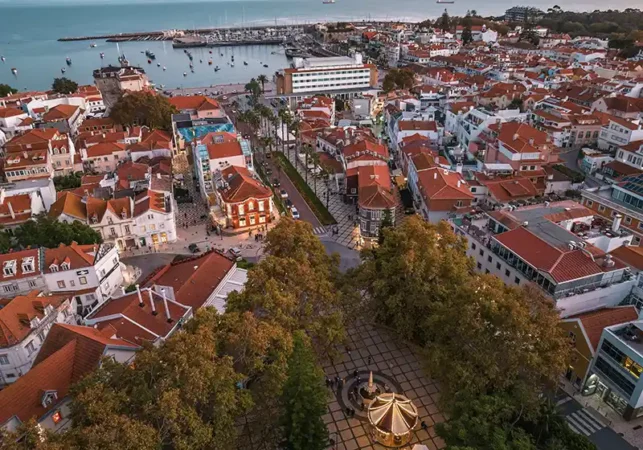 Thinking about retirement in Portugal? Many foreigners are drawn to Portugal’s golden beaches, warm climate, world-class golf courses, and affordable living expenses.


 Dependent family members





 Clean criminal record certificate





 Portugal’s healthcare system, known as the Serviço Nacional de Saúde (SNS), provides free healthcare to children under 18 and people over 65 while offering generally free basic health services to citizens and legal residents.