Home » Real Estate » Buying Land in Portugal: The 2026 Ultimate Guide
Updated: September 14, 2026
Buying land in Portugal is a great yet often overlooked opportunity for investors who prefer long-term value. Compared to finished properties, land lets you build from scratch, renovate, or build capital appreciation.
In locations like the Algarve, Lisbon, and Porto, where demand for properties is high and the supply of buildable plots is limited, buying land for sale can offer multiple advantages, from lower entry costs to lifestyle potential and capital growth.
In this article on land for sale in Portugal, we provide a step-by-step guide to the entire acquisition process, the best regions for investment, and average asking prices.
Purchasing land in Portugal can be a profitable investment because you are buying a tangible asset at lower entry costs, which holds its value and appreciates over time.
The average price of land for sale is roughly €800 – €1,500+ in Lisbon, €400 – €900+ in Porto, and €250 – €1,000+ per m2 in the Algarve.
Building costs can vary from €1,000 – €1,300 per m² for basic housing, €1,400 – €1,800 per m² for mid-range projects, and €2,000 – €2,800 per m² for luxury finishes.
Land under €10,000 is almost always rustic (agricultural or forestry), and you cannot use it to build a house. But the Portuguese government can offer some exemptions to public or affordable housing projects.
Portugal has no restrictions on foreigners, which is why non-residents are free to buy land or property with simple legal requirements, such as obtaining a Portuguese tax number.
If you want to buy land, you can finance it with a mortgage from a Portuguese bank. The maximum loan-to-value (LTV) ratio for non-residents varies from 60 to 80 percent, with average mortgage rates of 3 to 6 percent for foreign buyers.
Why buy land in Portugal?
Portugal’s real estate market continues to significantly outperform many European countries. With its golden beaches, warm climate, rugged coastline, and old-world charm, Portugal attracts foreign and local property investors.
According to Statistics Portugal (INE), the median house price reached €2,111 per square meter in Q3 2025 (+16.1 percent year-on-year). The most expensive municipalities were:
Lisbon: €5,000 /m2
Cascais: €4,713 /m2
Oeiras: €4,361 /m2.
Buying land in Portugal holds immense potential over purchasing an existing property. In addition to the lower entry costs, plots of land (terrenos) provide flexibility to develop custom houses, villas, businesses, or off-grid homesteads.
Benefits of buying land in Portugal
There are many benefits of buying land in Portugal, such as long-term appreciation, development flexibility, and lower entry costs than built properties. Land acquisition stands out as a smart way to capture long-term growth as areas develop.
Whether you are interested in premium plots or cheap land for sale in Portugal, there are plenty of options to suit any budget. The main advantages include:
Lower entry cost: Land is often more affordable than finished properties, which makes it more accessible for investors.
Long-term appreciation: Unlike a built home, land doesn’t wear out or depreciate. It gains value and becomes a strong long-term investment if you want to build wealth over time.
Hedge against market volatility: During periods of inflation or real estate uncertainty, land can be a tangible hedge investment. While house prices in Portugal fluctuate with construction costs and rental yields, land often retains its intrinsic value and appreciates as demand for usable space continues to grow.
Development flexibility: When you own land, you can build on it whatever you like, such as a luxury villa, a cottage house, apartments, or a business. You can use the land to respond to shifting market demand. For example, you can choose to develop the land after you buy it or hold it until conditions are favorable for selling.
Demand for renewable energy land: Portugal’s strong commitment to renewable energy is driving new demand for suitable land, particularly in rural and semi-rural areas. Large open spaces are becoming popular for solar farms, wind energy projects, and other green infrastructure developments. Find our more about the costs of solar panels in Portugal.
Potential for agritourism: Rural land and farms for sale in Portugal are in demand, especially in areas such as the Douro Valley (for wine tourism), the Algarve (for boutique tourism), Alentejo (for eco-retreats), and Central Portugal (for nature tourism). Investors use it to develop vineyards, eco-lodges, or farm stays, among other projects. This creates an extra rental income while boosting the land’s long-term value.
Portugal is open to international buyers, as foreign investment plays a fundamental role in the local economy. Whether you are from Europe, America, Asia, Africa, or anywhere in the world, you are free to buy land in Portugal.
Buying land in Portugal as a foreigner is relatively simple. One of the first requirements is obtaining a Portuguese Tax Number (NIF or Número de Identificação Fiscal), which is needed for all financial and legal transactions in Portugal, including property or land acquisition, opening a Portuguese bank account, and setting up utilities.
Getting a NIF in Portugal is a quick process and can be done through the local tax office or with the help of a legal representative or real estate service provider.
While the system is straightforward, it’s still important to do proper due diligence. Working with a trusted buyer’s agent or a real estate agent in Portugal can ensure the process is completed correctly with adequate paperwork.
Land Market Trends and Prices in Portugal
The Portuguese real estate market is among the most overvalued in the EU. The European Commission estimates that property prices are around 25 percent above their fundamental value. That places Portugal ahead of other overheated markets, including Sweden, Austria, and Latvia.
A combination of global political changes, foreign investment, and Portugal’s quality of life has all caused a surge in demand.
Market reports from the Bank of Portugal (Banco de Portugal) show that foreign direct investment reached €8.5 billion, of which €3.9 billion went straight into real estate. European countries were the main investors in Portugal during this period (€5.8 billion), with Luxembourg (€1.1 billion), the United Kingdom (€0.9 billion), and Germany (€0.8 billion) standing out.
But, this isn’t a short-term impact. Portugal’s long-term economic outlook is heading in a positive trajectory with an estimated GDP growth of 1.8 percent in 2027. The country benefits from its strong tourism industry, renewable energy, and EU funding.
Algarve, Porto, and Lisbon land for sale are expected to see more pronounced long-term growth due to their appeal to tourists, retirees, and renewable energy investors.
While the Silver Coast is less frequented, towns like Peniche and Nazaré are attracting buyers seeking a quieter coastal lifestyle. They offer strong property value for Portugal real estate investment.
However, not all land for sale is expensive. There is a growing market for cheap land for sale in Portugal, mainly in rural and inland regions with booming agriculture, especially in areas like Alentejo, inland central Portugal, and parts of the Trás-os-Montes region in the North.
How much does land cost in Portugal?
As of March 2026, the median property price in Portugal is €3,107 per square meter. You can buy real estate for more affordable prices than in much of Western Europe.
It is worth noting that land prices in Portugal are often lower than property prices. They reflect the value of the plot, while the property value takes into account construction costs, infrastructure, and the number of completed buildings when you buy real estate.
Zoning laws also play a major role in the total costs of land for sale in Portugal. They can affect whether you’re allowed to build, what you can construct on the land, its size, height, and design. Zoning laws can help determine if the land is actually profitable and fits all the legal requirements for your investment plans.
But, generally speaking, you can expect to spend roughly €800–€1,500+ in Lisbon, €400–€900+ in Porto, and €250–€1,000+ per m2 in the Algarve. However, in prime urban areas, buildable land with a habitation license (Licença de Habitação) can cost just as much as buying property in Lisbon or Cascais.
The table below covers the average property prices in Portugal by region (Q4 2025 estimates):
If you are considering buying land in Portugal as a foreigner but are unsure where to purchase it, this section is for you. We will cover key areas on the mainland of Portugal for purchasing land.
Algarve
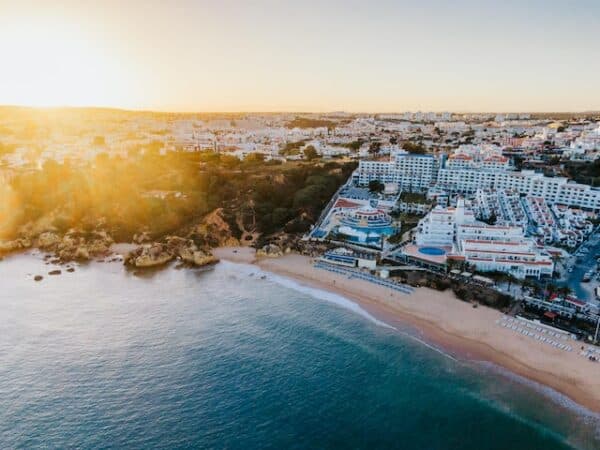
The Algarve is one of Portugal’s most sought-after regions for both living and investment. Portugal News reports that foreign investors and private equity funds are actively buying land in the Algarve, especially in the Golden Triangle and its popular coastal areas.
The top luxury areas for buying land for sale in the Algarve, Portugal, are Quinta do Lago, Vale do Lobo, and Almancil. They are famous for their world-class golf courses, 300+ days of annual sunshine, access to luxury resorts, and golden beaches.
In these prime Algarve areas, land zoned for residential development now offers premium prices with strong upside potential. Developers buy property here to launch new luxury projects, especially luxury hotels, villas, and resorts.
In the western Algarve, particularly in Lagos, Luz, and Sagres, the real estate market is changing. The buildable plots that are available for sale are becoming harder to find. This is pushing land prices higher. Investors are targeting these areas for their coastal appeal, good infrastructure, and long-term appreciation potential.
As a result, over time, the western Algarve is expected to become a hotspot for buyers seeking lifestyle benefits and development opportunities. For information about the latest market trends and property values, check our ultimate guide to Algarve, Portugal, real estate.
Alentejo
If you thought property in the Algarve was good for the wallet, in the Alentejo, just north of the Algarve, you’ll find even more cheap land for sale in Portugal.
Whether you are looking to build a country home from scratch or are looking to invest in agricultural land for sale with a total area large enough to foster wine cultivation, the Alentejo is your go-to.
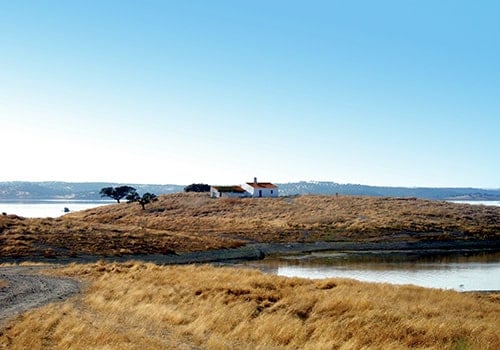
The region is known as the breadbasket of Portugal, making it the ideal place to buy property or land if you are looking to grow your own produce. Some of the best wines in the world also hail from here. From green rolling hills to hidden beaches, this region in Southern Portugal has much to offer.
Should you be looking for land for sale in Portugal by the sea, then the Alentejo, along with the Algarve and Silver Coast, should certainly be on your radar. Working with a buyer’s agent or a real estate agent in Alentejo can come in handy when researching the local market.
Northern Interior
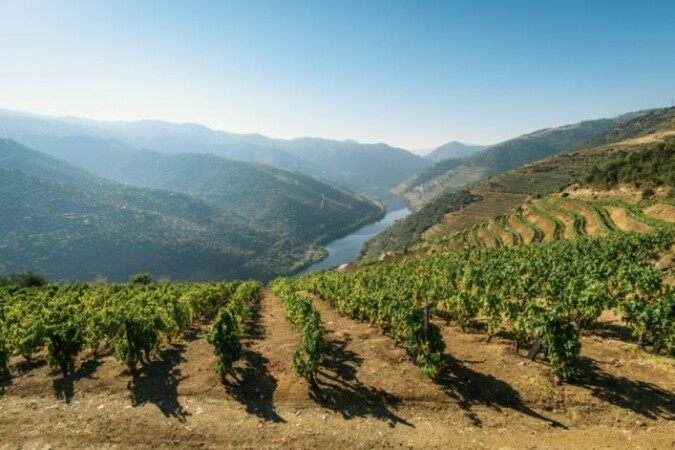
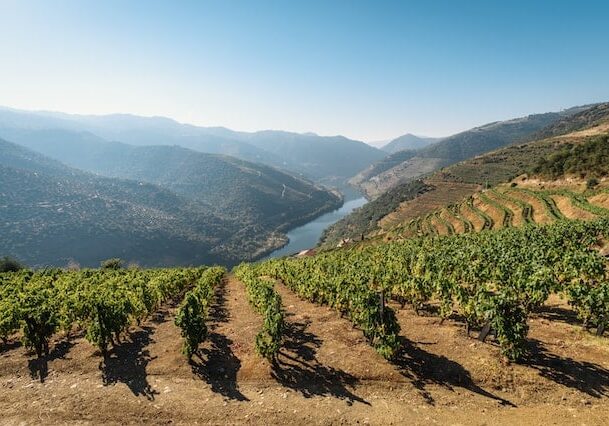
While northern Portugal has a milder climate than Southern Portugal, buying here provides excellent value for money. Much of the north of the county remains undeveloped, with stunning mountains, the Douro River flowing through the heart of the region, and the Gerês National Park, making it the perfect location for nature lovers.
You’ll find many stunning river beaches here, as you also do in central Portugal. The Douro Valley is another stunning location to consider, where you can enjoy unrivaled views and get to grips with the very best of Portugal’s natural world. There is also a wide array of vineyards in this region.
If you are looking for land for sale in Portugal, this is another affordable part of the country to consider buying in. Buying property in Guarda, or land in this part of Portugal, can be an exceptional value for money.
For those interested in cheap rural land for sale in Portugal, popular areas include Trás-os-Montes, the inland Minho region, and the rural interior of the Braga district. Feel free to consult with a real estate agent in Braga to research the local market and find your dream Portuguese property.
Central Portugal
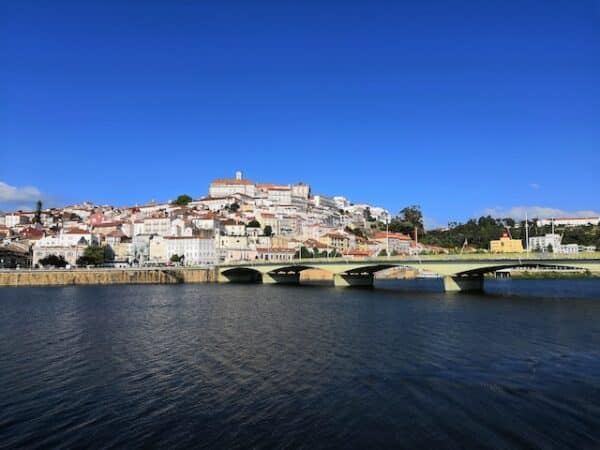
Buying land in central Portugal offers a unique blend of natural beauty, affordability, and cultural richness. Places to consider include Santarém, land close to Coimbra, and along the Silver Coast. The region boasts a temperate climate, picturesque landscapes, and a slower pace of life.
In central Portugal, the best areas for land for sale are often near Serra da Lousã. Many of these lands have stunning mountain views, offer excellent privacy, and large plots at affordable prices. If you move inland, you can find value-driven areas around Tomar and Santarém, where buyers purchase plots for boutique tourism projects, countryside estates, and private retreats.
However, if you prefer more affordable land in the central region, then areas such as Castelo Branco, Coimbra interior, Guarda, and the Leiria districts offer abandoned land for sale in Portugal at reasonable prices.
Its central location allows for convenient exploration of Portugal’s historic cities, including Lisbon and Porto, as well as charming villages nearby and the Silver Coast, which boasts staggering sea views to rival those in the Algarve.
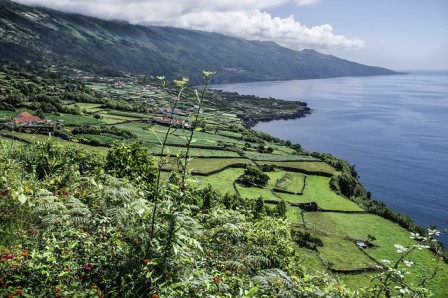
Buying property in Azores or Madeira can be a smart idea, as property prices here are generally very affordable. If you want a unique lifestyle, these autonomous islands can be the perfect space for you. Both have incredible nature, top food choices, and a high quality of life.
Madeira is the more populous of the two, and Funchal, the island’s capital, has a distinctly cosmopolitan feel. The climate of Madeira is a key selling point, with the temperature remaining warm throughout the year. Meanwhile, the Azores, with its green rolling hills, hot geothermal springs, and viewpoints offering stunning views, is the perfect escape for those seeking a more relaxed pace of life.
If you are looking for land for sale in Madeira or the Azores, you’ll find prices to be quite affordable, with options to buy land close to the ocean.
Working with a buyer’s agent or real estate agent in the Azores and Madeira who is well-versed in the market can make the process of finding your ideal property much more straightforward.
Land Zoning & Classification in Portugal
Wondering what types of land you can buy? In Portugal, a diverse array of land types is available, offering opportunities for varied investments and development. These are rustic, urban, and agricultural types of land.
Urban land
Urban land is a type of land that is already developed or designed for you to build residential, commercial, or industrial properties. This is the type of land that is usually the most expensive. You can use it to build a house or a villa, and it is closest to roads, water, and electricity.
Rustic land
Rustic land is land for agricultural, forestry, or other purposes. It is often subject to zone restrictions. It is the least expensive, but lacks access to public utilities. You can often use it to build small structures, like barns or tool sheds. But, in most cases, you can’t use it to build houses or rural properties unless you get municipal approval.
For example, some rustic lands can be used to build an equestrian property in Portugal. But, you must secure a zoning and permit check with the local city hall (Câmara Municipal), so you can expand or build the facilities. Keep in mind that land for sale in Portugal under 10k is almost always rustic.
Agricultural land
Agricultural land is a sub-category of rustic land. You can use it to build properties for agricultural purposes, such as a farmhouse that collects income from the land. Farmhouses for sale in Portugal can be found across the country, which can be relatively affordable. The goal of this land type is to protect the country’s farmland and natural resources.
Restrictions and licensing
Urban planning laws are very important in the Portuguese property market. They matter even more if you plan to build or renovate a home on the land you buy. These rules decide what you can build, where, and how big it can be. They also affect property value, development potential, and long-term investment safety.
Urban planning follows Portuguese laws, but each local area adds its own rules. This means rules are different in Lisbon from those in Albufeira or Tavira. The most important planning document is the Plano Director Municipal (PDM). This is the Municipal Master Plan, the official local planning rulebook for each municipality.
The PDM defines:
Which land is urban and which is rural
What types of buildings can you build, and where
The maximum size and height of buildings
Land use rules (i.e., residential, tourism, or agricultural purposes)
Planning approval is the official confirmation that your project complies with local zoning regulations.
It decides:
The allowed building footprint
The total construction area
The number of floors allowed
How far must the building be from property boundaries
Without planning approval, you cannot legally start building or do major renovations on the land you buy.
Building licenses
After planning approval, you must get a building license. This is the official permit that allows construction work to begin. If you are buying villas or existing homes, always check that any extensions or changes were properly licensed.
To build legally, you usually need three main steps:
PIP – Pedido de Informação Prévia (Preliminary Information Request): This is an early check with the council. It tells you what you are allowed to build on the land.
Licença de Construção (Building license): It confirms that your project meets the technical requirements, including safety, structure, and utility connections.
Licença de Utilização (Use license or occupancy permit): This is the final certificate that confirms you can live in the property.
Environmental protection rules
Some land for sale in Portugal comes with additional restrictions because of environmental protection:
RAN (Reserva Agrícola Nacional): Protected farmland. Construction is highly restricted or not allowed.
REN (Reserva Ecológica Nacional): Protected natural land. Building is limited or prohibited to protect ecosystems and soil.
Tourism zones: In designated areas, it is easier to obtain approval for tourism projects such as guesthouses, Airbnbs, or eco-retreats.
Essential Documents for Buying Land in Portugal
When purchasing land in Portugal, you will need the following documents:
Valid ID or passport
Portuguese Tax Number (NIF)
Proof of address (such as utility bills, bank statement, or driver’s license)
Licensing & building permit
Land registry certificate (Certidão do Registo Predial)
Tax registry document (Caderneta Predial)
Zoning & planning (PDM/Master Plans)
Certificate of pre-payment
Promissory Contract (CPCV)
Final deed of sale (Escritura Pública)
Note: Additional documentation may be required depending on your specific situation.
How to buy land in Portugal?
Purchasing land in Portugal is straightforward, with a couple of legal requirements you should be aware of. From compiling the legal documents to signing the final deed, we’ve prepared a step-by-step guide for the buying process:
Research and define the purpose: Before you buy land, obtain planning information based on the Plano Diretor Municipal (PDM) to check the permitted purpose of the land. Hire a real estate lawyer in Portugal or work with local Portuguese authorities to understand land law and zoning.
Get a NIF and a bank account: The Portuguese tax number is required for all fiscal transactions, including buying property in Portugal, applying for a mortgage from Portuguese banks, or setting up utilities.
Due diligence and encumbrances: To perform due diligence, make sure to verify property tax records (Caderneta Predial), legal ownership (Registo Predial), any debts, liens, or tax backlogs. Check for access to utilities, sewage, internet, and water, and budget any additional costs that come with setting them up.
Sign the Promissory contract (CPCV): Also known as the Contrato Promessa de Compra e Venda, this contract formalizes the sale agreement with a 10-20 percent deposit.
Sign the Final deed (Escritura): The Escritura de Compra e Venda is the step in which the property’s ownership is transferred to the new owner. Both parties sign the deed in front of the Notary, and the remaining payment is made.
Register at the Land Registry: Register the land in your name at the Land Registry (Conservatória do Registo Predial) and the local tax office (Finanças).
Costs, Taxes & Fees When Buying Land
When buying land, either a building plot or rural land, you should budget for one-off fees and taxes in Portugal. They often add up to 6 percent to 10 percent to the purchase price, plus additional construction costs. Here is a detailed guideline.
Property taxes
As a potential land owner, you will need to understand property taxes in Portugal. You pay both at the time of purchase and on an annual basis. During the process, taxes include Property Transfer Tax (IMT) and Stamp Duty (Imposto do Selo), while owning property incurs Annual Municipal Property Tax (IMI).
Notary and registration fees
The Notary is a private entity responsible for providing you with the official certified documents that prove you are the owner of the property. You will sign both the Promissory Contract and the final deed (Escritura) in front of the Notary.
Notary fees usually cost around €500 to €1,000. Legal fees will depend on the lawyers you work with, but will usually cost between €2,000 and €5,000. After you sign the final deed, you must register the property with the Land Registry, where you pay a public fee of €250.
Other potential expenses
Alongside the costs of buying land and construction, you’ll also want to consider other expenses, including legal fees, potentially hiring a surveyor, Notary fees, real estate agent fees, and taxes. Additional costs may also occur, such as the builder needing more materials, etc. You can consult with the builders beforehand to develop a transparent agreement.
Reselling Land in Portugal
In this section, we’ll delve into some key points to be aware of if you are considering reselling land in Portugal.
Market trends and potential for appreciation
The Portuguese land resale market is dynamic, driven by growing tourism and foreign investment. When buying land, coastal regions attract buyers seeking vacation homes, as well as tourists looking to rent out properties.
If you are looking to buy land to rent out, ensure the location you choose has good transport links to attract tourist footfall. There is also the potential for capital appreciation if you purchase land in Portugal, as its value is likely to increase over time. Commit to market research; it will pay off in the long run.
Factors affecting land resale value
Land’s proximity to urban centers, scenic beauty, accessibility to transportation, and potential for development significantly impact resale value. Zoning regulations, infrastructure projects, and nearby amenities such as schools and shopping centers play crucial roles in determining a land’s desirability and subsequent pricing.
Legal considerations and procedures
Reselling land in Portugal requires adherence to specific legal protocols, making it advisable to work with an experienced lawyer. Additionally, capital gains tax in Portugal will also apply when reselling property, although certain exceptions apply.
Finding the Land You Want
There are certain steps that you can follow to ensure the property purchase process runs as smoothly as possible, whether you are looking to buy land to create a stunning country home in central Portugal or a beach house with sweeping views of the Atlantic Ocean. Here are some tips:
Online real estate platforms
The real estate market is fragmented in Portugal, meaning that there is no one-stop shop to find land or properties for sale. However, there are a few good ones that you can use as a starting point to get a sense of land and property prices and to learn more about the real estate market.
However, bear in mind that online real estate websites can only get you so far, and nothing beats getting insights from local real estate experts. Word of mouth can also be a good way to get an idea about potential land for sale at a reasonable price, but be sure to consult with experts in the field.
Local real estate agencies and agents
You can use a property finder in Portugal to narrow down your search. They will also be able to provide you with properties that meet your needs and arrange viewings for you so that you are one step closer to finding the perfect strip of land to build your dream home.
Goldcrest: How We Can Help You
Goldcrest is the first buyer’s agent in Portugal. We provide expert, impartial advice on real estate investments and how to buy property in Portugal. From scouting out the perfect property through to property acquisition, we have you covered throughout the process.
Unlike traditional real estate agents in Portugal who represent the seller, we are dedicated exclusively to protecting the buyer’s interests.
If you are looking to purchase property in Portugal, don’t hesitate to get in touch. Our team of skilled experts is available to solve all your real estate doubts, helping you with the property search and offering insightful expertise and strategic advice.
Why choose Goldcrest?
Local knowledge: With offices located across Portugal, our presence nationwide allows us to assist you personally across the country.
Independent service: As an independent buying agent, we do not represent any development or project. Our service is entirely tailored toward each individual client, providing you with everything you need to secure the perfect property at the best possible price.
Streamlined process: Our real estate agents speak English and Portuguese, and our service is completely focused on providing you with a hassle-free buying experience, saving you time. We can also help you buy property remotely.
Experienced team: Our expert real estate team has a vast local knowledge of the Portuguese property market. We have cutting-edge technology and metasearch tools at your disposal to provide full market coverage, ensuring the best investment choices and negotiated prices.
Network of partners: We have a close network of partners, including lawyers, property management services, builders, architects, designers, and landscape gardeners, again saving you time and hassle by providing you with trusted experts in their field of work.
Frequently Asked Questions about Buying Land in Portugal
How much does land cost in Portugal?
The price of land for sale in Portugal is difficult to estimate, as it varies based on zoning laws, the type of land, and the location. But, overall, you can expect to spend:
€800 – €1,500+ in Lisbon
€400 – €900+ in Porto
€250 – €1,000+ in the Algarve
€2,500 – €3,000+ in premium areas
Can you find land for sale in Portugal under 10k?
Yes, you can find land for sale under 10k. But these land plots are exclusively rustic land in the interior regions. For example, there is cheap land for sale in Castelo Branco, Santarém, Alcoutim, and Castro Marim. After buying land, the construction costs for mid-range projects can range from €1,400 to €1,800 per square meter.
What is the cost of land for sale in Portugal by the sea?
It is difficult to estimate the average price of land for sale in Portugal by the sea, as it varies by zoning laws, demand, and proximity to the coast.
But, on average, you can expect:
€250 to €1,500+ in the Algarve
€80 to €300 in the Silver Coast
€150 to €500+ on Madeira Island
€300 to €1,200+ around the Lisbon Coast
Are there restrictions or regulations on land ownership in Portugal?
There are no restrictions on land ownership in Portugal. Whether you are from the EU or a non-EU country, you can buy land anywhere in Portugal. The main regulations are zoning laws (PDM), which strictly define where you can build, especially on rural or agricultural land.
How can I finance the purchase of land in Portugal?
A mortgage provider can offer finances when you want to buy land or property in Portugal. Anyone can get a mortgage in Portugal, as long as they meet the bank’s financial criteria, provide a sufficient deposit, and secure their Portuguese tax number. Other financing options include home equity loans from a foreign property, private international bridge loans, and outright cash purchase.
How does Brexit affect UK citizens wanting to buy land in Portugal?
Brexit fundamentally changed the residency rights of UK citizens in Portugal, but it had very little effect on their ability to actually buy land or property. You can read more about it in our guide to buying property in Portugal after Brexit.
Related Articles
Luxury Prefabricated Homes in Portugal: Costs & Best Places
We use cookies to ensure that we give you the best experience on our website. Our Terms and Conditions
Functional
Always active
The technical storage or access is strictly necessary for the legitimate purpose of enabling the use of a specific service explicitly requested by the subscriber or user, or for the sole purpose of carrying out the transmission of a communication over an electronic communications network.
Preferences
The technical storage or access is necessary for the legitimate purpose of storing preferences that are not requested by the subscriber or user.
Statistics
The technical storage or access that is used exclusively for statistical purposes.The technical storage or access that is used exclusively for anonymous statistical purposes. Without a subpoena, voluntary compliance on the part of your Internet Service Provider, or additional records from a third party, information stored or retrieved for this purpose alone cannot usually be used to identify you.
Marketing
The technical storage or access is required to create user profiles to send advertising, or to track the user on a website or across several websites for similar marketing purposes.













 Environmental protection rules