

 Barbara Queiróz
 Updated: February 5, 2026
Madeira is an autonomous region in Portugal. Located on the Atlantic Coast, the island is well-known for its crystal-clear waters, lush slopes, and rugged mountains.
Living in Madeira means enjoying a pleasant climate and a high quality of life in one of the most unique islands in Europe. For most expats, Madeira is widely regarded as a wonderful place to live, thanks to its low crime rates and excellent healthcare.
Madeira attracts families, remote workers, retirees, and digital nomads who prefer a quiet lifestyle. In this guide to life in Madeira, we will cover the pros and cons, average expenses, healthcare, and education.
Read more about:
Key Takeaways about Living in Madeira
- Madeira is a beautiful island with a population of about 270,000 inhabitants and a growing expat community, according to the World Health Organization.
- Most of the expat population (52.6 percent) lives in Funchal, followed by Santa Cruz (13.0 percent) and Calheta (9.4 percent), based on DREM reports.
- The average housing costs in Madeira are €3,715 /m2. However, they vary by location, such as €3,861 /m2 in Funchal, €3,024 /m2 in Santa Cruz, and €3,729 /m2 in Porto Santo.
- The main benefits of moving to Madeira stem from its stunning coastal areas, mild climate, friendly locals, and low cost of living compared to many Western European destinations.
Discovering Madeira Island, Portugal
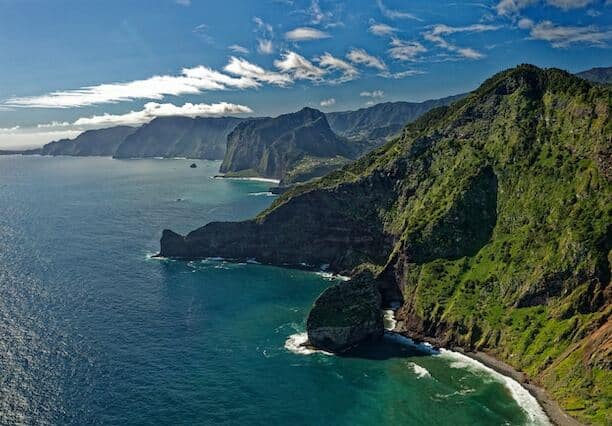 The first Portuguese ships reached Madeira in 1419, discovering a paradise in the middle of the ocean, off the coast of Northern Africa. The island was named Madeira, meaning “wood” in Portuguese, due to its lush, green vegetation that continues to be a massive draw for expats and tourists to this day.
Located in the Atlantic Ocean, about 650km (360 miles) from the Northern African Coast, Madeira boasts a mild and pleasant climate throughout the year. The Madeira archipelago consists of four islands, of which only two are inhabited: Madeira, where around 98 percent of the population lives, and Porto Santa. Desertas and Selvagens are uninhabited and remain points of key ecological significance.
Madeira is home to the Laurisilva Forest, a unique national treasure that was designated as a UNESCO World Heritage Site in 1999, where you can walk along the trails and levadas that cross it, and take in outrageous ocean views of the island.
Is Madeira a good place to live?
Madeira is often viewed as a desirable place to live due to its stunning scenery, mild climate, and friendly community. Although property prices have been on the rise, it is a very safe island with low crime rates and an affordable cost of living compared to many Western European countries and North America.
The overall expenses in Madeira are also lower than in mainland Portugal, especially if you consider taxes and local transport. If you want to experience a rich culture, modern infrastructure, and a variety of outdoor activities, Madeira can be an excellent choice.
Pros and Cons of Living in Madeira
Madeira is a beautiful island with incredible coastal and mountain views. With its unique microclimates, rich cultural heritage, great hiking destinations, the vivid blue oceans, and rugged mountains, the island is hard to miss.
Living in Madeira, Portugal, can have several advantages:
 Great climate: Madeira has a mild, subtropical climate year-round, with temperatures rarely dipping below 15 °C (59 °F) in winter or rising above 25 °C (77 °F) in summer, making it ideal for outdoor activities.
- Outdoor activities: For outdoor enthusiasts, be prepared to be swept away by the sheer choice of options. Leisure activities such as hiking, surfing, scuba diving, and paragliding are popular due to the island’s diverse terrain.
- Safety: Madeira is renowned for being incredibly safe, with Portugal in general ranking in 7th position in the 2025 Global Peace Index. The Madeira island provides a peaceful environment for families, retirees, adventurers, and solo travelers.
- Affordable lifestyle: The overall monthly expenses in Madeira are generally affordable when compared to major cities, such as Lisbon and Porto. Funchal is the most expensive city, while smaller towns along the coast are cheaper to live in. Madeira also has no tolls and lower VAT (Value Added Tax) than mainland Portugal.
- Excellent infrastructure: Despite its remote location, the island boasts a modern infrastructure, including the Madeira Airport with regular flights to mainland Europe. The island provides reliable internet services and co-working spaces, making it a great place for working remotely in Portugal.
- Expat community: Madeira is home to the first digital nomad village. There is a close-knit community with a growing number of expats in Madeira. English is widely spoken, so you shouldn’t face too many language barriers.
- Culture: Madeira has a rich cultural scene with various local festivals, traditional Portuguese cuisine, and world-famous Madeira wine.
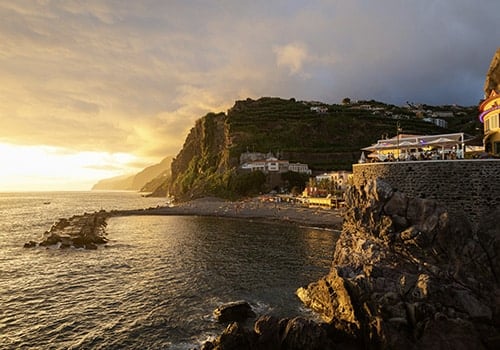 Great climate: Madeira has a mild, subtropical climate year-round, with temperatures rarely dipping below 15 °C (59 °F) in winter or rising above 25 °C (77 °F) in summer, making it ideal for outdoor activities.
However, life in Madeira can also come with some disadvantages:
- The island has a limited job market outside the tourism, healthcare, renewable energy, and technology sectors.
- This is a remote location, which can lead to higher costs for travel and imported goods.
- The rising prices can make it difficult to purchase property or pay for rent due to the high demand.
Where are the best places to live in Madeira?
If your heart is now set on Madeira, you’ll want to have a clear picture of the top locations to consider. In this section, we’ll provide you with a brief rundown of the very best spots on the islands.
 Funchal
 Funchal
If you are looking for luxury property in Madeira, then Funchal, the capital, located on the south of the island, is the best option. You’ll find spacious, modern apartments, stunning villas, and waterfront properties, many of which come with a private pool, gym, or private security.
For expats and long-term residents, Funchal stands out for its excellent infrastructure. Healthcare, international schools, coworking spaces, and reliable public transport make everyday life easy, while the mild, year-round climate encourages an outdoor lifestyle.
Porto da Cruz
Porto da Cruz is a small coastal village known for its natural beauty and relaxed atmosphere. The village has a small, tight-knit community, traditional Madeira houses, and a few cozy cafés and restaurants serving local specialties.
For travelers and expats looking to escape the busier south coast, Porto da Cruz offers fresh air and a slower pace of life.
Porto Santo
Porto Santo is a small island near Madeira, famous for its long, golden sand beach. Life here is slow and peaceful, with quiet streets, small cafés, and a friendly local community. The calm sea is perfect for swimming, and the hills are great for walking or cycling. Less crowded than Funchal, Porto Santo is ideal for anyone looking for a relaxing island escape.
Other locations
Santa Cruz, Câmara de Lobos, and Machico all offer beautiful properties with modern interiors and amazing ocean views. Santa Cruz, on Madeira’s southeastern coast, has rugged landscapes, a seaside promenade, and the stunning Praia das Palmeiras.
Nearby Machico is quieter, with calm beaches and great restaurants, perfect for those who want to live near Funchal but away from the busy city. To the west of Funchal is Câmara de Lobos, a charming fishing village with colorful boats, historic streets, and lively markets that show the island’s traditional side.
Most of the top locations are in southern Madeira, where the weather is warmer and more stable. The north tends to be cooler and wetter. On the southwest coast, Ponta do Sol is another great spot, known for some of the island’s sunniest weather.
Living in Madeira as an Expat
Living in Portugal is becoming more popular for expats, and Madeira is a beautiful choice with many benefits. If you’re looking for an island paradise, Madeira delivers stunning scenery, delicious food, and a wonderful climate.
The modern facilities, excellent healthcare, and a strong property market in Madeira add to the appeal. Whether you’re a retiree, a family, a remote worker, or an investor looking for a holiday home or a permanent move, Madeira is definitely worth considering.
Where do most expats live in Madeira?
 Where do most expats live in Madeira?
According to DREM (Direção Regional de Estatística da Madeira), about 52.6 percent of the total expat population lives in Funchal, the island’s capital. Other popular places include Santa Cruz (13 percent) and Calheta (9.4 percent).
Healthcare in Madeira
 Healthcare in Madeira
Madeira has some of the best healthcare in Portugal, with numerous health centers scattered around Madeira Island and one in Porto Santo. The island also houses the Dr. Nélio Mendonça Hospital, which includes emergency service facilities.
With the fourth-best doctor-to-patient ratio in Europe, Madeira offers one of the finest healthcare systems on the continent. You will also find private and public options, and most medical staff have a good command of English. For Portuguese residents, you will be able to access the public healthcare system at a minimal cost.
Education in Madeira
 Education in Madeira
There are two prominent international schools in Madeira: The International School of Madeira and the International Sharing School of Madeira. Tuition fees vary depending on the school. You will also find several public schools alongside the private schools, which are generally very good, and which will enable your child to be bilingual.
Is Madeira cheap to live?
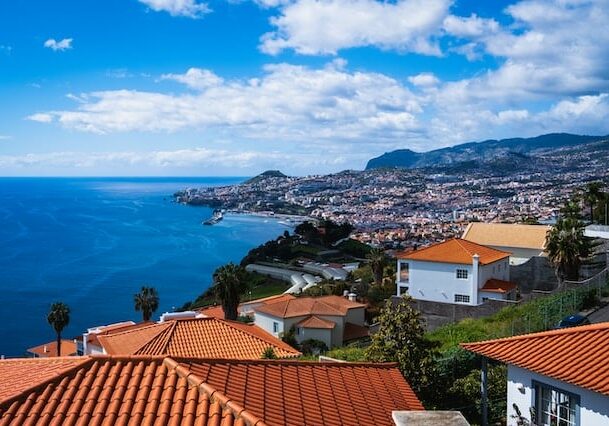 Madeira can be affordable by Western European standards, but it’s not cheap in the way rural mainland Portugal can be, especially if you want to live in Funchal or along the sunny coastal areas.
Compared to Lisbon, the overall monthly expenses are 11.8 percent lower in Funchal without including rent, while rent prices are 4.6 percent lower.
When compared to Porto, Funchal has similar prices with some differences. For example, the cost of living in Funchal is 2.8 percent lower than in Porto, without including rent. Yet rental prices can be 19.9 percent higher compared to Porto.
Overall, in Madeira, the price of groceries and restaurants is fairly typical for Portugal.
Should I buy or rent a property?
Madeira’s real estate market is appealing to foreign buyers, given the continued interest from tourists and expats looking to visit or move to the island. While buying property in Madeira can be a lucrative investment due to the thriving market, where you should be able to get a nice return on your investment, renting offers flexibility and less commitment.
You can also rent out a property while you decide which part of the island is best suited to you. Working with a buyer’s agent or real estate agent in Madeira will also help you find your ideal property.
Cost of Living in Madeira
The overall expenses in Madeira are relatively affordable compared to many Western European countries. A single person living in Funchal spends about €636 on monthly expenses, while a family of four budgets around €2,298.
In the section below, we will outline the cost of living in Madeira, Portugal, including property and rental prices.
Expense in Funchal | Average budget |
Housing costs | €3,861 / m2 |
Monthly rent (for a one-bedroom apartment) | €1,056 - €1,343 |
Basic monthly utilities (for an 85 m2 apartment) | €104 |
A three-course meal for two at a mid-range restaurant | €45 |
Monthly public transport (regular price) | €30 |
Gasoline (one liter) | €1.68 |
Housing prices in Madeira
 Housing prices in Madeira
The average housing costs in Madeira are €3,715 per square meter. Funchal commands higher prices due to high demand, at an average of €3,861 per square meter. Many expats choose Santa Cruz for its affordability, as the average asking price is €3,024 per square meter. Others focus on golden sandy beaches in Porto Santo, where the average housing costs are €3,729 per square meter.
When it comes to Madeira apartments to rent, renting a one-bedroom apartment in Funchal’s city center costs approximately €1,343, while outside the center, the average is around €1,056. For those seeking more space, a three-bedroom apartment in the city center typically rents for €2,198, whereas outside the center, the average is approximately €1,661.
Dining out
 Dining out
An inexpensive meal at a restaurant in Funchal typically costs around €12, while a three-course meal for two people at a mid-range restaurant averages €45. When it comes to fine dining establishments, expect to pay international prices. You’ll find a wide array of incredible restaurants in Funchal, including two Michelin-starred restaurants, Il Gallo d’Oro and William.
Utility costs
 Utility costs
For basic utilities, including electricity, heating, cooling, water, and garbage, expect to pay around just over €104 per month for an 85m2 apartment.
Exploring the Natural Beauty and Attractions of Madeira
Madeira is a perfect haven for nature lovers and outdoor enthusiasts, offering a diverse range of natural landscapes and attractions.
Below, we share some of the top natural attractions that you won’t want to miss.
- Laurisilva forest: This UNESCO World Heritage site is one of the largest surviving areas of laurel forest, offering lush greenery, endemic plant species, and a wide variety of birdlife, such as the Madeiran pigeon.
- Levada walks: Madeira is famous for its extensive network of levadas (irrigation channels) that wind through the island’s landscapes. These scenic walking paths provide easy-to-navigate routes, allowing you to meander through valleys, forests, and mountains.
- Ponta de São Lourenço: This dramatic peninsula on the eastern tip of the island is known for its rugged cliffs, unique rock formations, and panoramic ocean views. It’s a fantastic spot for hiking and exploring diverse geological features.
- Cabo Girão Skywalk: One of the highest cliffs in Europe, Cabo Girão offers breathtaking views from its glass-floored skywalk. Standing 580 meters above sea level, visitors can enjoy sweeping vistas of the coastline and the Atlantic Ocean.
- Pico Ruivo: The highest peak in Madeira, Pico Ruivo, offers an adventurous hike with rewarding views from the summit. At 1,861 meters, it offers stunning sunrises and sunsets, as well as a bird’s-eye view of the island’s mountainous terrain.
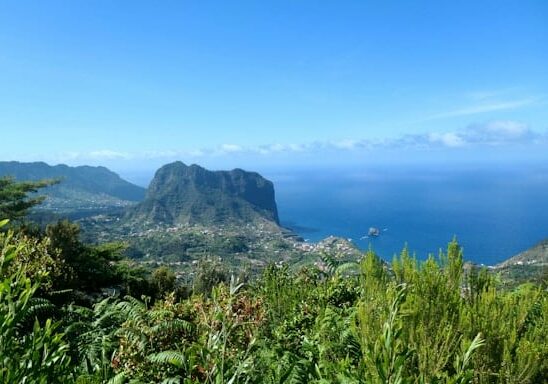 Laurisilva forest: This UNESCO World Heritage site is one of the largest surviving areas of laurel forest, offering lush greenery, endemic plant species, and a wide variety of birdlife, such as the Madeiran pigeon.
Gastronomy in Madeira
Many visitors visit Madeira simply to enjoy the delectable cuisine. From seafood straight from the ocean, tropical fruits, and specialties that include traditional dishes like espetada (meat skewers) and tapas (limpets). Madeira wine, a fortified wine, is also unique and sought after worldwide. Checking out a wine tour to see how this beautiful concoction is made would be a day well spent.
How Can I Move to Madeira, Portugal
Expats have many opportunities to move to Portugal depending on their nationality and income source. If you’re an EU/EEA or Swiss citizen, you don’t need a visa to live in Portugal—you can move to Madeira, start working or studying, and then complete your local registration after arrival.
If you’re a non-EU citizen, such as a US, UK, Canadian, or Australian national, you’ll typically need a residence visa before relocating. Popular routes include the D7 Visa for people with passive income (such as pensions or rentals), the Digital Nomad Visa (D8) for remote workers with income from abroad, or a work or student visa if you have a job offer or a university placement in Portugal.
What can Goldcrest do for you?
Goldcrest is a buyer’s agent based in Lisbon, helping people purchase property in Portugal. We provide expert, unbiased advice and guide you through the entire process — from finding the right property to completing the purchase.
If you’re thinking about living in Madeira and buying property there, contact us today, and we will answer your questions, assist with property searches, and offer strategic advice for your Portugal investment properties.
Why choose Goldcrest?
- Local knowledge: With offices across Portugal, we can help you personally wherever you want to buy.
- Independent service: We don’t represent developers or projects. We work only for you, providing tailored advice and helping you get the best property at the right price.
- Easy process: Our agents speak English and Portuguese and focus on making your property purchase hassle-free, saving you time.
- Experienced team: Our experts know the Portuguese property market inside out. Using advanced tools, we cover the full market to find the best options and prices.
- Trusted partners: We work with a network of lawyers, property managers, builders, architects, designers, and landscapers.
Frequently Asked Questions about Living in Madeira, Portugal
What is it like to live on the island of Madeira?
Madeira is often seen as a great place to live due to its mild subtropical climate, natural beauty, and calm and peaceful lifestyle. It is a safe environment with a growing expat community.
Can US citizens live in Madeira?
Yes, US citizens can live in Madeira, but they need a Portuguese residence visa for stays longer than 90 days. Popular options include the D7 Visa for passive income earners and the Digital Nomad Visa (D8) for remote workers.
How is the safety and crime rate in Madeira?
Madeira is known for its low crime rate and high level of safety. Violent crime is rare, and petty crimes like pickpocketing are uncommon. The island’s friendly and secure environment makes it an attractive destination for families and retirees.
What types of visas are required for expats to live in Madeira?
Expats from the EU do not need a visa to live in Madeira. Non-EU citizens typically require a residence visa, which can be obtained for work, retirement, or investment purposes. Popular visas include the Portugal Golden Visa, the D7 Visa, and the Digital Nomad Visa.
What is the quality of internet and telecommunications in Madeira?
Madeira offers reliable internet and telecommunications, with widespread 4G coverage and growing fiber-optic availability in major towns like Funchal, Santa Cruz, and Câmara de Lobos. Mobile networks are strong, and international calls are easy. While rural areas may have slower speeds, overall connectivity supports remote work, streaming, and daily online needs.
Are there any specific cultural customs or traditions unique to Madeira?
Madeira has rich cultural traditions, including the vibrant Carnival, the Flower Festival, and traditional folk dances like the Bailinho da Madeira. Locals celebrate regional cuisine, winemaking, and crafts such as embroidery and wickerwork.
What are the options for housing and real estate in Madeira?
Madeira offers diverse housing options, from modern apartments in Funchal to charming villas with ocean views. Real estate prices vary, but you’ll find properties to generally be more affordable than those you would find in hotspot locations on mainland Portugal, such as Lisbon and the Algarve.
How accessible is Madeira to the rest of Europe and the world?
Madeira is highly accessible, with regular flights to major European cities and beyond. The island’s airport, the Cristiano Ronaldo International Airport in Funchal, offers numerous direct connections, while excellent ferry services link Madeira to the nearby island of Porto Santo.
What are the pros and cons of living in Madeira, Portugal?
Living in Madeira offers a mild climate, stunning scenery, a relaxed lifestyle, and a welcoming expat community. Outdoor activities and cultural festivals add to the appeal. Downsides include higher costs in tourist areas, limited public transport in rural areas, and fewer career opportunities than in mainland Portugal.
Are there difficulties living in Madeira after Brexit?
Post-Brexit, UK nationals face new residency and visa requirements to live in Madeira. You will need to secure a Portuguese residence visa, such as the D7 Visa, Golden Visa, or Digital Nomad Visa, to live in Madeira for more than three months.

