


Updated: October 30, 2026
Wine production in Portugal’s Alentejo region is estimated to jump 20% in 2026, with forecasts reaching 108 million liters and a capacity for high-quality wines.
As the region recovers from the particularly scarce harvest in 2025, good weather conditions, healthy crops, and new technologies could provide better grape harvesting, explains the Alentejo Regional Wine Commission (CVRA).
For buyers, wine tourism is one of the most attractive ways to invest in real estate in Portugal. Guest rooms, tasting rooms, and event spaces can turn a vineyard for sale in Alentejo into a multiple revenue stream.
Here are the latest forecasts for Portugal’s wine production and the impact it can have on potential property buyers.
Portugal’s Wine Production: Key Takeaways
- The Alentejo region projects a 20% year-on-year increase in wine production.
- The potential output shows a sharp recovery of 108 million liters in 2026 versus 80 million liters in 2025.
- The region leads in certified fine sales, representing 40% of the total value of sales across 14 different regions.
- Alentejo’s booming wine industry can attract property buyers who seek lifestyle assets, capital appreciation, or rental income.
Why Portuguese Wine Production Can Rise in the Alentejo
Alentejo wine producers are expecting a strong recovery in output, with projected 108 million liters this year compared to 80 million liters in 2025, and a year-on-year increase of about 20%.
Alentejo Regional Wine Commission (CVRA) estimates Alentejo wine production to return close to the average value in the past five years. This forecast comes after a particularly poor harvest in 2025.
However, the 2026 harvest is not over yet. These production forecasts, which were also created in partnership with the University of Porto, can go down if the region has an unexpected, long heat wave, which can cause the grapes to shrivel and burn.
Good Weather Conditions
Grape picking continued to take place between August and September, and after that comes the wine-making process. With other varieties, like reds, picking can begin in early October. So, white wines can enter the market in early 2027.
What makes this rise in Portugal’s wine production so interesting is that the Alentejo region faced some challenges for growing grapes. With the recent heatwaves affecting much of the country, rainfall has been sparce, and the summers ferociously dry and hot.
New Technology to Improve Alentejo Wine Production
The 2026 grape harvest will also be used to test new technologies.
One pilot project will track grapes with QR codes from vineyards to wineries, while another will test satellite imagery, so producers can monitor how the crop develops and the conditions of the vineyard.
This harvest is also a valuable part of Alentejo’s tourism industry. Many properties that gravitate toward rural tourism often provide a unique experience for visitors by offering night-time grape picking, wine-tasting, and winemaking traditions.
Founded in 1989, CVRA (Comissão Vitivinícola Regional Alentejana) is the region’s winegrowing commission. This institution verifies, certifies, and promotes Alentejo PDO (Protected Designation of Origin) and Alentejano PGI wines.
Check out the latest trends in Alentejo, Portugal, real estate

Alentejo Leads Portugal in Certified Wine Sales
Alentejo is Portugal’s #1 region for certified wines, representing about 40% of the total sales value across the country’s 14 wine-producing regions. On top of that, more than 35% of all wine produced in this region is certified sustainable.
The Alentejo has about 23,300 hectares of vineyards and exports about 30% of its production. The top five international destinations are: The US, the UK, Switzerland, Brazil, and Poland.
How Alentejo’s Wine Production Affects Property Buyers
Wine tourism and eco-tourism tend to have a steady stream of potential property buyers, mainly for well-located properties with an Alojamento Local (AL) license or renovation potential.
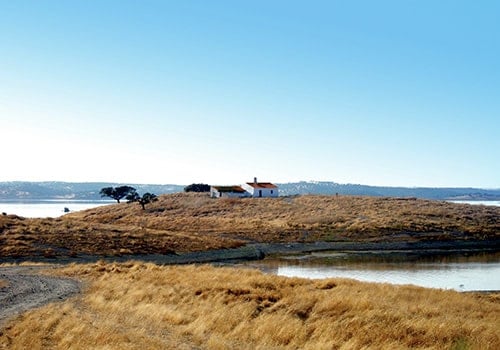
Although house prices in Portugal are increasing, buyers may find more affordable options deeper inland. The Alentejo stands out with its sun-drenched plains with olive groves, cork oaks, and vineyards.
Investment in quintas for a permanent home, agrotourism, or boutique hotels has been increasing. Alentejo offers a calmer, more authentic Portuguese lifestyle than Lisbon, Porto, or the Algarve.
The most desirable locations in the Alentejo property market are Évora (UNESCO World Heritage Centre), Monsaraz, and Estremoz. The Évora, Portugal, real estate market is particularly diverse with a mix of country and city appeal.
Village houses, contemporary villas, traditional farmhouses (montes), and large estates (herdades) can appeal to buyers who prefer larger lands. While the Alentejo Coast can have properties for sale with sea views near less crowded beaches.
Alentejo real estate can have more affordable properties, although prices are increasing near popular beaches and desirable towns. We’ve seen a recent trend in agricultural projects, rural boutique hotels, and sustainable housing in Portugal.
Goldcrest: How We Can Help You
Goldcrest is the first buyer’s agent in Portugal. We provide expert, impartial advice on real estate investments and how to buy property in Portugal. From scouting out the perfect property through to property acquisition, we have you covered throughout the process.
Unlike traditional real estate agents in Portugal who represent the seller, we are dedicated exclusively to protecting the buyer’s interests.
If you are looking to purchase property in Portugal, don’t hesitate to get in touch. Our team of skilled experts is available to solve all your real estate doubts, helping you with the property search and offering insightful expertise and strategic advice.
Why choose Goldcrest?
- Local knowledge: With offices located across Portugal, our presence nationwide allows us to assist you personally across the country.
- Independent service: As an independent buying agent, we do not represent any development or project. Our service is entirely tailored toward each individual client, providing you with everything you need to secure the perfect property at the best possible price.
- Streamlined process: Our real estate agents speak English and Portuguese, and our service is completely focused on providing you with a hassle-free buying experience, saving you time. We can also help you buy property remotely.
- Experienced team: Our expert real estate team has a vast local knowledge of the Portuguese property market. We have cutting-edge technology and metasearch tools at your disposal to provide full market coverage, ensuring the best investment choices and negotiated prices.
- Network of partners: We have a close network of partners, including lawyers, property management services, builders, architects, designers, and landscape gardeners, again saving you time and hassle by providing you with trusted experts in their field of work.
Frequently Asked Questions about Portugal’s Wine Production
What are Portugal’s major wine regions?
Some of Portugal’s major wine regions are Douro Valley, Alentejo, Dão, Setúbal Peninsula, Vinho Verde, Lisboa, and Madeira, to name a few.
What is the most famous wine from Portugal?
Port wine is one of Portugal’s most famous sweet wines from the Douro Valley in Northern Portugal, while the Portuguese Madeira wine is the most renowned wine of volcanic origin, alongside the Pico wine from the Azores.
What are the top Portuguese wine brands?
There are many Portuguese wine brands that sell quality wines, such as Esporão in the Alentejo, Niepoort from the Douro Valley, and Filipa Pato & William Wouter situated in Bairrada. The best choice is purely personal and depends on your taste and budget.
What are the four wines of Portugal?
The four traditional fortified wines in Portugal are Port, Madeira, Moscatel de Setúbal, and Carcavelos. They all have different flavors, unique grape varieties, and brewing methods that make them appealing to wine enthusiasts.
What is the price of a Portugal wine?
According to Numbeo, the price of a bottle of mid-range wine in Portugal is €4.99. Keep in mind that this is the national median cost, and different brands have their own specific prices.
