Home » Living » Transportation in Portugal: Tips to Get Around Easily
Updated: July 30, 2026
Getting around Portugal is easy and affordable thanks to a modern network of trains, buses, and highways, with Lisbon and Porto both having highly reliable metro systems.
In this article, we’ll arm you with everything you’ll need to know about transportation in Portugal, from getting around by train to taking road trips in the country. Read on to ensure a seamless journey in Portugal.
Lisbon and Porto have excellent metro systems, supplemented by good bus and tram links, making it easy to get around.
Efficient intercity trains (Alfa Pendular, CP) make long distance travel affordable and accessible, with local buses the best option to get to more remote towns and villages..
There are three international airports, in Lisbon, Porto, and Faro (Algarve), making international travel seamless.
Public transport in Portugal is reasonaby prices, with monthly passes in monthly cities €40 and there are now e-bikes and e-scooters in major cities, making it easy to get around.
Driving in Portugal is quite straightforward, although it can get congested in major cities in rush hour, with car rental much cheaper than in other EU countries.
What Is the best way to travel around Portugal?
The best way to travel through Portugal will depend on where you are and your destination. To get from city to city, trains are efficient and comfortable and connect all major hubs in the country.
Getting around portugal without a car is totally possible, but exploring more rural or coastal areas, it is best to rent a car. For example, to explore the Douro Valley in Northern Portugal or the lesser-known parts of the Algarve in the south. You also have an extensive bus network under the national bus company, Rede Expressos, and you also have FlixBus.
In Lisbon and Porto, you have a highly efficient metro, buses, and trams. Other cities, such as Braga and Coimbra, also have buses to get around the city easily. It is possible to walk in many cities, while there have been investments in recent years in cities for electric scooters and bikes to rent, such as Gira and Bolt. You also have very cheap taxi services that include Uber and Bolt.
Tips for Navigating the Portugal Transportation System
Tips for getting around in Portugal include:
Book tickets in advance: Book train and bus tickets ahead of time to reduce costs. For some local buses, however, you can only buy from the bus driver.
Consider toll roads: Portugal’s highways are fast, but often more expensive. Check with the car rental company about pre-installed toll passes.
Combining modes of transport: Combining different modes of transport can be cheaper and faster. For example, you may take a train from Lisbon to Porto and then rent a car to explore Northern Portugal at your ease.
Shop around: If renting a car, check a few different rental companies to get the best deal and car. It is often much more affordable to rent a car off-season.
How Much Does Transportation Cost in Portugal?
Public transportation in Portugal is generally quite affordable compared with other Western European countries.
Average ticket prices and monthly passes
Costs for public transport in Portugal will vary depending on the location, although single tickets usually range from around €1.50 to €2.00, while a day pass in Lisbon for the metro and Carris (tram and bus network) will cost €7 for 24-hour access, increasing to €11 for a more extensive train network. You can find extensive ticket price information for Lisbon on the Metro de Lisboa (Lisbon Metro) website.
Prices in other cities will generally be slightly lower than in Lisbon. You can find more about the Metro do Porto (Porto Metro) here.
You also have Zapping, where you fill up a disposable card with an amount of your choice, which you can then use for as many trips as you have credit for. Lisbon and Porto metros also let you pay by card (Visa, Mastercard, etc.) for single journeys.
Monthly passes cost €40 in Lisbon and Porto, but are less in smaller cities, for example, in Coimbra, where a monthly pass will set you back around €30. In contrast, a monthly pass in London is €171 and in Paris is €88, according to Numbeo, highlighting Lisbon’s affordability.
Intercity trains from Lisbon to Porto cost from €16.50 to €34.60, and you can purchase them from CP- Comboios de Portugal. CP- Comboios de Portugal is the national railway company operating regional and intercity trains.
The Alfa Pendular offers high-speed trains so you can easily get around the country and has fewer stops. For example, from Lisbon to Porto, or from Faro to Porto, Intercidades, inter-city trains, also offer a high level of comfort, but the train will stop at more places along the way.
Renting a car usually costs anything from €15 to €45 per day, but it can be higher in peak season and depending on the car you opt for.
Compare bus and train tickets, as FlixBus is often considerably cheaper than taking the train
Using Portugal’s public transport is often cheaper than renting a car, although you can get good rental deals in the off-season
For shorter distances, you can walk or take a city bike to explore the city
Getting Around by Train in Portugal
Getting around Portugal is quite straightforward by train. Portugal’s train network is very reliable and affordable, with it possible to get around the country easily. Whether you are planning a day trip from Lisbon to Sintra or a longer journey, the train is arguably the best way to get from A to B.
A trip from Lisbon to Porto takes around 3 hours and 45 minutes,
A trip from Lisbon to Faro, the capital of the Algarve region, will take you as little as 3 hours.
It’s worth bearing in mind that the train network does not cover the entire country, but the major and best cities in Portugal are covered.
Lisbon and the Algarve are exceptionally well-connected. You will also find international trains running from major railway stations, with many taking you to major cities in Spain.
Prices are reasonable to begin with, but there are also discounts for booking in advance and discounts for families and older people. You can find out more on the official website for CP – Comboios de Portugal (the website is also in English).
If you’re asking yourself “how to move around Portugal,” trains are your best bet – and trains are generally much more affordable than in other Western European countries.
Tips for taking the train
Always make sure you identify where the train station is in relation to the town to avoid last-minute rushing, as some stations can lie outside the town itself.
Compare both trains and buses (including FlixBus, which has extensive coverage across the country and is sometimes incredibly cheap) to find the best deals or for a shorter journey.
The best way to travel in Portugal is to be prepared. Arrive early to make sure that you have time to buy a ticket and find the right platform. To save money, you can also easily buy a ticket online.
Portugal’s safety can be seen firsthand on trains, with trains across the country being efficient, safe, and largely crime-free, with staff available ot answer any questions you may have and who generally speak good English.
Portugal Bus Services
Portugal transportation is well serviced by its massive bus arsenal. You can get almost anywhere in Portugal by bus or by coach, with long-distance buses also being comfortable and modern, and many having air-conditioning and Wi-Fi. Bus services tend to be more extensive than trains and cheaper.
When it comes to local buses, they tend to be older, and each region of the country will have its very own bus network. While some have websites, others don’t, and you probably will only be able to buy your ticket in person from the driver. If you live in remote areas, or on the Silver Coast, while they are serviced by buses, it could be a better idea to have a car, allowing you to get around easily.
Undecided if the Silver Coast or the Algarve is better suited to you? Check out our comparison guide: Algarve vs Silver Coast.
Using the Metro and Trams in Portugal
Lisbon and Porto have excellent metro systems in place and are the quickest way to get around Portugal’s two largest cities. Almost all of the key neighborhoods have good connections to metro stations, and if not, there is usually a tram or bus that will make up the rest of the journey.
Not only are trams beautiful and paint a glorious picture of the past, but they also remain one of the most popular ways to get around the city. Lisbon during rush hour by car is not for the faint-hearted, so taking the metro or tram makes things much easier, whether you are seeking to enjoy luxury shopping in Portugal or head to a charming park to spend the afternoon.
Considering moving to Portugal? Check out our ultimate guide
Driving in Portugal is largely pretty straightforward, and should you choose to rent a car, you’ll find it to be pretty affordable, particularly if you rent one outside the peak Portugal tourism season. A major EU-funded construction program improved roads across Portugal, particularly in previously remote areas such as Central Portugal. As such, looking at a map, a minor route can turn out to be an easy-to-drive highway.
However, you’ll still find plenty of winding roads in the lesser known areas. On the autonomous islands of the Azores, don’t be surprised to find cattle blocking the roads or locals laden with produce in the more rural parts of mainland Portugal.
In the major cities during rush hour, traffic can be a nightmare but, in general, traffic is generally light. Car ownership has been increasing in recent years, and you can expect it to get busy –at certain times for example, heading back to Lisbon on a Sunday evening.
If you are moving to Portugal, the application for a driving license is quite straightforward if you are converting your current license to a Portuguese one.
Motorways and tolls
The motorway in Portugal comprises four or six-lane toll roads that link the Algarve, Lisbon, and Porto, alongside other major cities, inland towns, and the north. Most have toll gates, so you’ll need to take a ticket when you join the motorway and then hand it in at the next toll gate, where you will be asked to pay a small fee. When approaching the toll gates, don’t go down the “Via Verde” route, unless you subscribe to this, as it is an automatic debit payment lane. You can use any of the other lanes that have a green light above them, and you’ll be able to make the payment with cash or card.
Rules of the road
The rules of the road are largely the same as other EU countries, such as:
Traffic drives on the right
Speed limits are 50kph in towns and villages, 90kph on normal roads, and 120kph on motorways and interregional highways
Vehicles coming from the right have right of way (unless there is signage to the contrary)
You must give way to traffic already on a roundabout
Ensure you stop at stop signs
Parking
Many larger cities and major towns, plus the popular beach resorts in the summer months, can become flooded with traffic, and it can be tricky to park. Garage parking is available and is the most secure option to park, but it is more expensive than parking on the street and can set you back around €10 a day. On the street, parking is usually metered during the day at around €0.80, depending on the town, but is generally free from 8 pm until 8 am the next morning on weekdays, on Saturday afternoons, and all-day Sunday.
Car rental
Car rentals are pretty affordable compared with other European countries, particularly if you book in advance and if you plan your trip for the off-season, where you may be surprised by the good deals on offer.
While the public transport system in Portugal is very good, getting to more out-of-the-way spots, hidden gems, and remote beaches is much easier if you have a car.
Tips for renting a car
You can rent a car for just a day or two, but if you rent for longer, you’ll find the price drops.
Be wary of car rental deals that seem surprisingly cheap, as these companies often make up the difference by having pricey insurance.
Taxis, Uber, and Bolt in Portugal
Portugal taxis and ride-hailing services are pretty affordable compared with taxi fares in other Western European countries. You will find taxi ranks outside the airports, major train stations, and in designated taxi ranks, which you’ll find in the city center of larger cities. Taxis in Portugal need to be registered.
For a cheaper option, Uber and Bolt are excellent and can be found in all the larger cities, with drivers often being a fountain of knowledge on top spots to visit, restaurants that you can’t miss, and other local insights.
Tips for Sustainable and Local Travel (Bikes, EVs, Walking)
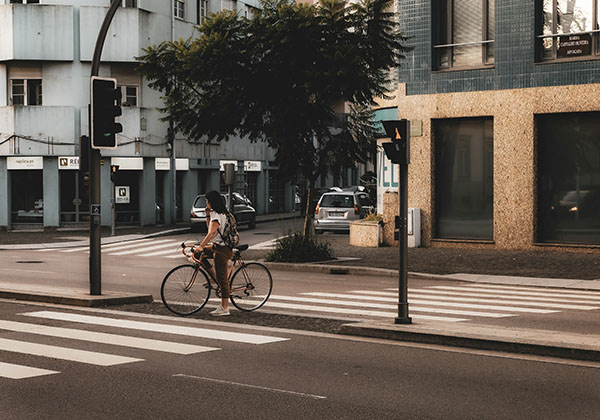
Cycling is becoming increasingly popular in Lisbon, both as a means of getting around the city and as a sport. The only problem is that cities such as Lisbon and Porto are incredibly hilly, making it very tricky to get around if you need to navigate one of the many hills on your way to work.
With this said, municipalities are working on making cities and towns more bike-friendly, with new bicycle lanes cropping up in many places.
The charming city of Guimarães in Northern Portugal, for example, has been busy creating a network of dedicated bicycle lanes to ease congestion and boost quality of life.
Bike rentals
In the major cities, you’ll find many bike rental shops, but it is also very popular to use Gira, a bike-sharing app that is incredibly popular in Lisbon and which now has a hoard of electric bikes that makes navigating the city – and the city’s hills – pretty easy. There are also many different electric scooters that you can use to get around easily, just be careful of the traffic.
Biking has also become a popular hobby, with many heading to the natural park of Monsanto, on the outskirts of Lisbon, to enjoy a weekend ride, or else cycling along the Portuguese Riviera, where you’ll be able to enjoy splendid views of the Tagus River and the impressive Ponte 25 de Abril bridge.
Portugal’s on your mind? Find out about why Portugal’s property market continues to captivate.
Mainland Portugal has three international airports:
Lisbon Airport (Aeroporto Internacional de Lisboa Humberto Delgado)
Porto Airport (Aeroporto Francisco Sá Carneiro)
Faro Airport
Living in Faro, Lisbon, or Porto, you’ll have excellent connections to Portugal’s airports and be able to travel easily across Europe, to America, and beyond. Plus, you’ll find airports on the autonomous islands of Madeira and the Azores:
Madeira Airport
Ponta Delgada–João Paulo II Airport, São Miguel, Azores
Santa Maria International Airport, Azores
The Lajes airfield, Terceira island, Azores
Tap Air Portugal is the major national airline of Portugal and is part of the Star Alliance, the first and largest air alliance in the world, formed in 2005.
Is Public Transportation Safe in Portugal?
Yes, Portugal’s public transportation is generally safe, although petty crime such as pickpocketing can occur in larger cities, although it is not common. Be aware of your surroundings in busy stations and keep your belongings close to you. Portugal is the seventh safest country in the world according to the 2025 Global Peace Index, and even the larger cities, such as Lisbon, have low crime rates.
How We Can Help
Goldcrest is the first property buyer’s agent in Portugal based in Lisbon, Porto, and the Algarve. Should you be on the hunt for that dream property of yours or want to discuss which part of the country could be the right location for you, we’re here to help. Living in Portugal is a dream for many – with more expats heading to this Southern European jewel than ever before. We won’t rest until we have uncovered your ultimate property.
Frequently Asked Questions about Transportation in Portugal
Is transportation in Portugal good?
Portugal has a reliable and well-developed public transportation system, including an extensive train and bus network, and metro systems in Lisbon and Porto. Trams, taxis, and ferries and river transport also help people get from A to B in Portugal. Ferries and river transport are most common in place such as Lisbon to cross the River Tagus.
What are the main modes of transportation in Portugal?
Portugal offers a variety of transportation options, including trains, buses, trams, and taxis. In urban areas, buses and trams are common, while trains and buses connect cities and regions. The Lisbon metro and the Porto metro are very efficient and the easiest way to get around in Portugal’s largest two cities. For flexibility, car rentals are also a popular choice, and you’ll be able to get to hidden gems you wouldn’t be able to get to using regular public transport.
How reliable is public transportation in Portugal?
Public transit and transportation in Portugal are generally reliable, with frequent and punctual services, especially in cities like Lisbon and Porto. Rural areas may have fewer connections, but overall, the system is well-maintained and affordable for both residents and tourists. Rail infrastructure is generally very good and is one of the most popular ways for locals and tourists to get around the country.
Can I use trains to travel between cities in Portugal?
Yes, trains are an excellent way to travel between cities in Portugal. The national railway system, Comboios de Portugal (CP), connects all the major cities such as Lisbon, Porto, Coimbra, and Faro, with regular and comfortable services.
How do I purchase train tickets in Portugal?
Train tickets in Portugal can be purchased online through the Comboios de Portugal website or app, at ticket counters in train stations, or through automated machines. Buying online often provides discounts for advance bookings on longer routes.
What are the main train companies in Portugal?
The primary train operator in Portugal is Comboios de Portugal (CP). They offer a range of services, from regional and intercity trains to high-speed Alfa Pendular services, ensuring comprehensive coverage across the country. Regional trains tend to be slower than the intercity trains.
Is there a high-speed train in Portugal?
Yes, Portugal has a high-speed train service called Alfa Pendular. These express trains connect major cities like Lisbon, Porto, and Faro, offering faster travel times, modern amenities, and a comfortable experience for long-distance journeys.
Are buses a good option for getting around Portugal?
Buses are a convenient and cost-effective option for traveling around Portugal, especially to regions not served by trains. They offer extensive coverage for both intercity and rural travel. For more remote areas and in small towns, bear in mind that buses may be less frequent.
How do I find and book bus tickets in Portugal?
Bus tickets in Portugal for longer trips can be booked online through company websites like Rede Expressos or at bus stations and terminals. For local buses, it is more common to buy your ticket from the driver.
Is train or bus better in Portugal?
The better option depends on priorities. The train is faster and more comfortable, while bus fares are generally lower with access to more remote areas. If speed is of the essence, we recommend taking the train.
What’s the cheapest way to travel around Portugal?
The cheapest way to travel around Portugal is by bus, or by train if you book in advance. FlixBus can be incredibly cheap, with tickets from around €4. In Lisbon and Porto, the metro is an affordable way to get around the cities.
How disability-accessible is public transportation in Portugal?
In major Portuguese cities, such as Lisbon and Porto, infrastructure is increasingly accessible such as in the metro. However, for older infrastructure and modes of transport, access is limited, for example on the historic trams. Check specific routes before traveling. Airports and long-distance train journeys offer assistance and accessability.
How environmentally friendly is public transportation in Portugal?
Public transportation in Portugal is becoming increasingly environmentally friendly, with a national goal to achieve zero carbon emissions from urban buses by 20234 by replacing them with electric and hydrogen buses. There are also initiatives to promote cycling in cities through creating more bicycle lanes and creating more charging stations for EVs. For example, the Azores have implemented an Electric Mobility Plan to expand its network of public charging for EVs.
What is the best way to get around Portugal?
The best way to get around Portugal depends on your location and itinerary. For longer journeys you can get around easily by train or bus, with all major cities having a train station or bus routes. However, having a car allows you to reach more rural or lesser-known places. Lisbon and Porto have reliable metro systems, trams, and an extensive bus network, with other town also having very good bus routes. Taxies, Bolt, and Uber are also available and very affordable.
We use cookies to ensure that we give you the best experience on our website. Our Terms and Conditions
Functional
Always active
The technical storage or access is strictly necessary for the legitimate purpose of enabling the use of a specific service explicitly requested by the subscriber or user, or for the sole purpose of carrying out the transmission of a communication over an electronic communications network.
Preferences
The technical storage or access is necessary for the legitimate purpose of storing preferences that are not requested by the subscriber or user.
Statistics
The technical storage or access that is used exclusively for statistical purposes.The technical storage or access that is used exclusively for anonymous statistical purposes. Without a subpoena, voluntary compliance on the part of your Internet Service Provider, or additional records from a third party, information stored or retrieved for this purpose alone cannot usually be used to identify you.
Marketing
The technical storage or access is required to create user profiles to send advertising, or to track the user on a website or across several websites for similar marketing purposes.







 Costs for public transport in Portugal will vary depending on the location, although single tickets usually range from around €1.50 to €2.00, while a day pass in Lisbon for the metro and Carris (tram and bus network) will cost €7 for 24-hour access, increasing to €11 for a more extensive train network. You can find extensive ticket price information for Lisbon on the Metro de Lisboa (Lisbon Metro) website.
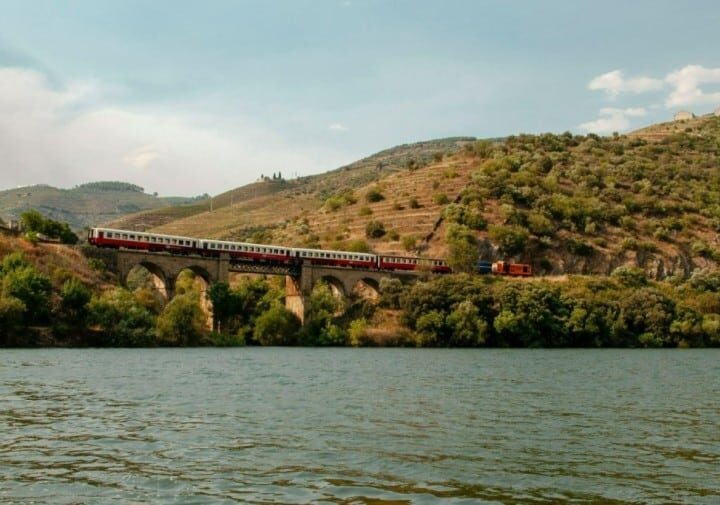 Getting around Portugal is quite straightforward by train. Portugal’s train network is very reliable and affordable, with it possible to get around the country easily. Whether you are planning a day trip from Lisbon to Sintra or a longer journey, the train is arguably the best way to get from A to B.