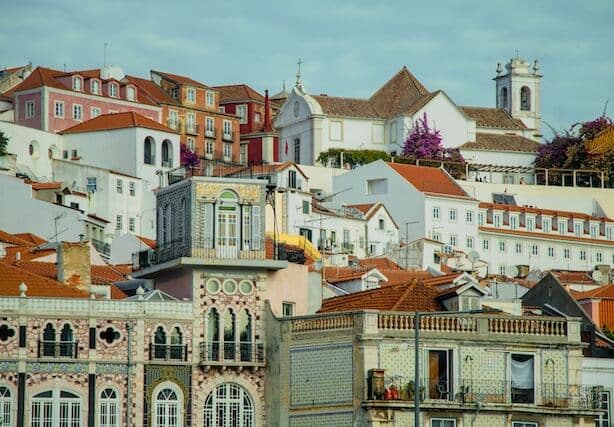
Home » Investment » What Are the Portugal House Prices in 2026?
Updated: July 29, 2026
The property boom in Portugal isn’t going to slow down anytime soon; in fact, it will only keep increasing. After the record-breaking 18 percent surge in 2025, Portugal house prices are estimated to jump another 15 percent in 2026.
For anyone buying property in Portugal, it can feel overwhelming to sift through the latest data, the most expensive and cheapest areas, and market trends. Many factors, such as construction costs, legislation, and supply shortages, can have a drastic impact on the average house prices.
Goldcrest has compiled a comprehensive guide on the house prices in Portugal in 2026. We’ve analyzed the latest data from INE Portugal, the official government agency for statistics in Portugal. We also included data on property prices, rental yields, and market trends from Confidencial Imobiliário, an independent Portuguese real‑estate intelligence company.
As of February 2026, the average asking price for a house in Portugal is €3,076/m², up 12.2% year-on-year from the same time the year prior.
Portugal's property market is heading for an upward spiral, with Lisbon's Metro Area leading the way at €5,045/m2, followed by the Algarve region at €4,550/m2, and the Porto Metropolitan Area at €4,052/m2.
One of the most expensive places to buy a house in Portugal is Cascais, which is part of the Lisbon Metropolitan Area, with an average asking price of €7,327/m2.
The most affordable houses for sale in Portugal can be found in rural areas across Northern Portugal (€2,070 /m2) and Central Portugal (€2,172/m2), where average asking prices tend to be lower.
The main reasons behind Portugal's skyrocketing house prices are urban migration, foreign buyer demand, infrastructure improvement, limited housing supply, tourism, and short-term rentals.
How much does property cost in Portugal in 2026?
Wondering how much does a house cost in Portugal? As of February 2026, the average house price in Portugal is €3,076 per square meter, which marks a 1.0 percent increase from January 2026.
House prices in Portugal show an upward trend, going up 2.5 percent since November 2025 and hitting staggering +12 percent year-on-year growth from February 2026 to 2026. According to Statistics Portugal (INE), Q3 2025 saw record-high prices, up 17.7 percent year-on-year from Q3 2024.
Here is a quick look at the latest statistics on the average home price in Portugal, based on INE transactional data:
The number of family housing transactions in Portugal increased by 4.0 percent compared to Q3 2024.
In Q3 2025, Portugal housing prices increased in 12 of the 24 municipalities with more than 100,000 inhabitants. The Coimbra real estate market (+14.8 percentage points) and Setúbal (+11.4 percentage points) recorded the largest increases.
The largest decreases in year-on-year growth rates occurred in Vila Nova de Gaia (-9.2 percentage points) and Santa Maria da Feira (-8.6 percentage points).
The Lisbon and Porto real estate markets recorded increases of 3.9 percentage points and 6.2 percentage points, respectively, in year-on-year growth rates from the 2nd to the 3rd quarter of 2025.
Where are house prices rising the most in Portugal?
The Portugal real estate market has a thriving luxury market across the entire country. The most sought-after areas are often coastal regions and central locations where you can fetch a house that costs more than the national average.
In Q3 2025, all 26 smaller regions (NUTS 3 areas) saw house prices rise in Portugal. Terras de Trás-os-Montes had the highest year-on-year growth rate (+34.3 percent).
Many other regions in Portugal experienced a growth above that country’s average, such as the Setúbal Peninsula (+25.5 percent), Greater Lisbon (+17.6 percent), Alentejo Litoral (+16.8 percent), and the Algarve (+16.6 percent).
According to Q3 2025 data from Confidencial Imobilario, the Civil Parishes of Cascais and Estoril have some of the most expensive house prices in Portugal, at an average of €8,559 per square meter.
Average House Prices in Portugal by City
Portugal has a diverse housing market across 308 municipalities, 278 of which are on the mainland, while the remaining 19 are in the Azores and 11 in the Autonomous Region of Madeira. The cost of buying a home in Portugal is different for every region, city, or town.
According to the World Population Review, Portugal has two cities with more than a million people – Lisbon and Porto. These major cities have the highest average house prices in Portugal due to their business opportunities, start-up ecosystem, rental demand, employment concentration, and investment demand from both local and international buyers.
The Setúbal real estate market attracts buyers who prefer to be close to Lisbon, while paying slightly lower housing prices. Although Setúbal City is a prime location, it offers proximity to the sea at more affordable rates than many Western European countries.
The Algarve and Madeira real estate markets, especially in cities such as Faro, Lagos, and Funchal, are a popular choice for lifestyle buyers. Not only are these cities commercial hubs, but their stunning coastlines create the strongest dynamics for short-term rentals, driven by booming tourism.
However, the supply can’t keep up with the demand, which means the average cost of a house in Portugal will only keep increasing. The limited land available, combined with higher construction costs, will continue to put pressure on prices across major cities in Portugal.
The table below covers the average Portugal house prices in popular cities:
City
Average total asking price (€/m2)
Average asking price for a house (€/m2)
Average asking price for an apartment (€/m2)
Lisbon
7,086
6,789
7,098
Porto
4,895
4,504
4,941
Setúbal
3,206
3,200
3,209
Vila Nova de Gaia
3,868
3,026
4,042
Cascais
7,327
6,980
7,600
Lagos
5,474
5,501
5,456
Faro
3,988
3,975
3,994
Aveiro
3,377
2,297
3,912
Source: Confidencial Imobilario
Average Portugal house prices by region
Buying property in Portugal is more affordable than in some Western European countries, such as France, the Netherlands, and the United Kingdom. However, the Portuguese housing market has experienced faster value growth than other EU countries.
While the median asking price for a house in Portugal is €3,076 per square meter as of February 2026, costs for luxury properties are significantly higher. Prices for Portugal luxury real estate are well above €1 million.
The table below covers the average house price in Portugal for the country’s main regions.
Region
Average total asking price (€/m2)
Average asking price for a house (€/m2)
Average asking price for an apartment (€/m2)
Lisbon Metro Area
5,045
4,403
5,224
Porto Metro Area
4,052
3,070
4,253
Northern Portugal
2,070
1,777
2,382
Central Portugal
2,172
1,749
2,705
Alentejo
3,958
3,435
4,824
Algarve
4,550
4,323
4,680
Source: Confidencial Imobilario
House prices in Lisbon
The Portuguese capital offers an average asking price of €7,086 per square meter. Across the wider metro area, the average asking price is €5,045 per square meter. On the whole, buying property in Lisbon remains relatively affordable compared with other capital cities in Western Europe.
The city offers modern apartments and houses along its cobbled streets, as well as a great selection of shopping boutiques and vibrant nightlife in areas like Baixa, Bairro Alto, and Príncipe Real.
Lisbon real estate investment attracts buyers who prefer business opportunities, high rental yields of 5.8 percent, and strong capital appreciation. However, the house costs in Portugal vary by neighborhood.
Lisbon neighborhood
Average total asking price in Q4 2025 (€/m2)
Ajuda
5,564
Alcântara
6,966
Alvalade
6,926
Areeiro
7,002
Arroios
6,552
Avenidas Novas
9,397
Beato
5,110
Belém
7,076
Benfica
5,387
Campo de Ourique
7,122
Campolide
7,186
Carnide
5,014
Estrela
7,853
Lumiar
6,432
Marvila
7,432
Misericórdia
7,937
Olivais
5,111
Parque das Nações
8,120
Penha de França
5,096
Santa Clara
4,495
Santa Maria Maior
7,458
Santo António
8,817
São Domingos de Benfica
5,968
São Vicente
6,664
Source: Confidencial Imobilario
House prices in Cascais
Located just a 30-minute drive away, Cascais is a prime location for luxury living on Portugal’s stunning coastline. Cascais is famous for its selection of world-class golf courses, beautiful marinas, and an atmosphere that effortlessly blends refined living with relaxation.
Buying property in Cascais, Portugal, offers an idyllic retreat for those seeking a sophisticated and laid-back lifestyle. In the neighborhood of São Domingos de Rana, apartments and houses cost €4,114 per square meter, while areas like Alcabideche offer homes for €5,717 per square meter.
If you’re looking for pricier investments, consider the neighborhoods of Carcavelos and Parede, where properties start at €7,177 per square meter, or Cascais and Estoril, where you can find your dream home for €8,559 per square meter.
If you are considering Cascais for a holiday home or permanent residence, you’ll want to have a property expert and Cascais real estate lawyer by your side to navigate the buying process and ensure you meet all the legal requirements.
In coveted areas like Faro, Albufeira, and Lagos, average real estate prices in Portugal per square meter reflect the region’s desirability, with average asking prices of €3,988/m2, €4,349/m2, and €5,474/m2, respectively.
The Algarve is one of the best regions to find villas in Portugal and vacation homes with swimming pools.
If you want more affordable Portugal homes, the Eastern Algarve is largely a cheaper alternative than the Central Algarve. For example, Alcoutim homes for sale in Portugal can cost €1,608 per square meter.
House prices in Northern Portugal
In Northern Portugal, the variety of houses is as diverse as the region itself. Porto, the second largest city, where homes are priced at €4,895 per square meter. However, in the Porto wider metropolitan area, costs can reach €4,052 per square meter.
However, for those seeking more affordable options without sacrificing charm, Vila do Conde is a hidden gem where you can find residential property bargains priced at €2,953 per square meter. Matosinhos, with its stunning coastal vistas and bustling life in the city center, is the middle ground in the North of Portugal, where the average Portugal house cost is €4,171 per square meter, catering to those drawn to both tranquility and urban convenience.
Meanwhile, Vila Nova de Gaia, renowned for its port wine tradition and scenic beauty, offers property options at €3,868 per square meter.
The North of Portugal is amongst the most affordable rural regions, with average house prices surprisingly low, particularly in the interior and lesser-known areas. Regional averages can vary widely, with properties close to cities commanding higher prices.
The housing market in Southwest Portugal varies significantly across different areas. Melides and Tróia, nestled within the Grândola municipality, offer homes priced from €8,566 per square meter, while Comporta, situated in the municipality of Alcácer do Sal, offers properties priced at €4,499 per square meter.
Comporta, often dubbed the “Hamptons of Europe,” has attracted attention from celebrities and the elite, adding to its allure as an exclusive destination. Properties here with swimming pools often go far beyond €1 million.
Meanwhile, you will discover more affordable options in the Alentejo region, where the average property price starts from €3,958 per square meter.
House prices on the Madeira and Azores Islands
Portugal property prices on the picturesque islands of Madeira and the Azores are relatively low and offer exciting investment opportunities for international buyers.
Madeira, situated off the coast of northern Africa, offers an average asking price of €3,825 per square meter. Buying property in Madeira, especially in sought-after destinations like Caleta and the Funchal city center, can offer high rental yields and strong returns on investment. In Funchal, Madeira’s capital, a house costs €3,959 per square meter.
Meanwhile, the Azores, located northwest of Madeira, captivate with their unique landscapes, vibrant culinary scene, and lush green hills. On São Miguel, the largest and most populated island, the average cost of a house in Portugal can reach €2,251 per square meter.
House prices on the Silver Coast
Nestled along Portugal’s enchanting Silver Coast, this region offers a blend of natural beauty and cultural richness. Stretching between Lisbon and Porto, it boasts rugged cliffs, golden beaches, and quaint fishing villages, inviting you to immerse yourself in authentic local life.
Aveiro, known for scenic canals navigated by vibrantly colored boats, presents properties starting at €3,377 per square meter, while Figueira da Foz in the Coimbra district offers seaside living at €2,281 per square meter.
Caldas da Rainha, a charming city known for its healing spa waters, showcases properties priced from €2,401 per square meter, blending historical charm with modern comfort. Elsewhere, areas like Nazaré and Óbidos enchant with their unique attractions, offering properties at €3,588 and €3,935 per square meter, respectively.
Discover More in Our Ultimate Guide to Buying Property in Portugal
Additional Cost of Real Estate Ownership in Portugal
When it comes to the financial aspects of buying property, there are also additional property purchase fees and administrative fees that you should be aware of, alongside the cost of buying a home in Portugal.
Property taxes and fees
When buying property, you’ll need to take into account property prices at the time of purchase and on an annual basis.
Property taxes at time of purchase:
IMT (Property Transfer Tax): Generally ranging from 0-8 percent, depending on the price, location, intended use, and property type. 10 percent if the buyer has connections to blacklisted jurisdictions.
Stamp Duty: 0.8 percent
Annual property taxes
IMI (Annual Municipality Tax): IMI is 0-3 to 0.45 percent of the total real estate value for urban properties and 0.8 percent for rural properties.
AIMA (Additional to IMI): Owners of shares in real estate valued above €600,001 will need to pay AIMA, with staggering rates from 0.7 percent to 1.5 percent.
Legal and notary costs
Legal fees: A lawyer will cost you approximately €2,000-€5,000, depending on the type of property, the price, and the complexities of the purchase.
Land Registry Fee: There is a public fee for the Land Registry, amounting to €250.
Notary Fees: Notary fees will cost you around €500-€1,000.
Mortgage: Factor in costs for a mortgage broker, including the application fee of €290 and the bank valuation fee of €280.
It can be tricky to calculate the total cost of ownership, but factoring in fees and taxes alongside the cost of the home in Portugal is essential to avoid unpleasant surprises further down the line.
Factors Influencing Portugal House Prices
High demand in hotspots: Tourism and international buyers have led to increased demand for short-term rentals and properties to purchase that now outpace supply, leading to property price increases, particularly in cities such as Lisbon, Porto, and coastal regions such as the Algarve.
Foreign investment premium: More foreign buyers are attracted to Portugal, including retirees, young professionals, property investors, and families, with the demand for second homes also on the rise.
Limited supply in major cities: The Portuguese government is banking on policy initiatives to boost housing supply to cater to problems surrounding demand outpacing supply, which are particularly an issue in Lisbon and Porto. Regarding resale pricing, resale homes also grow faster due to the limited supply.
Construction costs: Higher labor costs and material costs have pushed up construction costs, making new build properties more expensive as a result.
Tourism and short-term rentals: Tourism and foreign buyers have led to increased demand for short-term rentals and buy-to-let, with a projected 12 percent increase in tourism in 2026. For rental investors, Portugal remains a prime country to invest in, with high real estate investment volume continuing to rise in 2026 and beyond. Investors will need to adhere to short-term rental regulations, such as getting an Alojamento Local (AL License), of which there are restrictions in Lisbon at the moment.
Portugal House Prices vs. Other European Countries
How much does a house cost in Portugal compared to other European countries? Even though Portugal house prices have increased rapidly in recent years – registering some of the highest price rises in the EU – the country still has some of the most affordable property prices in Western Europe.
On average, property prices remain more affordable than in Spain, France, Germany, and teh UK. When compared to France, Portugal is around 30 percent cheaper and 34 percent cheaper than Germany. Lisbon has its own price range compared with the rest of the country, with Portugal’s real estate prices in the capital having increased rapidly over the past five years.
House prices in Portugal outside the prime locations of Lisbon, Porto, and the Algarve are often surprisingly affordable for foreign buyers.
Are Portugal house prices overvalued?
A recent European Commission report published in October 2025 has highlighted that house prices in Portugal are amongst the highest in Europe and overvalued by about 35 percent, with tourism and problems in the construction sector being labelled as the main factors contributing to this situation.
Despite this, Portugal remains one of the most affordable property markets in Western Europe for absolute property prices, with prices lower than those in the UK, France, Germany, and Spain.
How to Buy Property in Portugal as a Foreigner
There are no restrictions on non-Portuguese citizens buying property in the country. Foreign ownership rules are the same as for Portuguese citizens. However, if you are looking to move to Portugal, you will need to obtain residency in the country.
For both Portuguese citizens and foreign investors, the property-buying process takes place in the following five steps:
Step 1: Secure financing: If you plan to take out a mortgage, research various Portuguese banks to find the best interest rates, mortgage conditions, and terms that suit your needs. Ensure that you have a clear understanding of the associated property costs, including taxes, legal fees, and property registration expenses. You can find out how much you can borrow with our Portugal Mortgage Calculator.
Step 2: Find the perfect property: Begin with an idea of where you would like to buy and the type of property that you would like to purchase. Set a budget and conduct thorough research online to get a basic understanding of the Portuguese real estate market. Factor details like location, amenities, proximity to essential services, and potential for rental income into your search. We recommend seeking the assistance of real estate professionals like Goldcrest, who understand the property market and can help you find your ideal property.
Step 3. Make an offer: When you find a property that fits your criteria, it’s time to make an offer. If you work with a real estate professional, they can help you with this, enabling you to secure the property at the best possible price. Negotiation is a customary part of the process in Portugal, so be prepared to engage in back-and-forth discussions with the seller until both parties reach a mutual agreement.
Step 4: The Reservation Agreement and Promissory Contract (CPCV): Once the offer is accepted, you will sign the Reservation Agreement and CPCV. This contract solidifies the intent to purchase and typically requires you to pay a deposit, which is often around 10-25 percent of the property’s purchase price.
Step 5: Sign the Escritura (Final Deed): The final step in the property purchase process is signing the Escritura, also known as the Final Deed, in the presence of a Notary. This is the formal contract that transfers ownership of the property from the seller to the buyer.
If you are asking yourself, “How long does it take to buy a house in Portugal?” the process usually takes one to four months, depending on factors such as the complexity of the purchase, whether the seller wants to sell by a set date, and other variables. Working with experienced local property experts can significantly speed up your buying journey.
Goldcrest: How We Can Help You
Goldcrest is the first buyer’s agent in Portugal. We provide expert, impartial advice on real estate investments and how to buy property in Portugal. From scouting out the perfect property through to property acquisition, we have you covered throughout the process.
Unlike traditional real estate agents in Portugal who represent the seller, we are dedicated exclusively to protecting the buyer’s interests.
If you are looking to purchase property in Portugal, don’t hesitate to get in touch. Our team of skilled experts is available to solve all your real estate doubts, helping you with the property search and offering insightful expertise and strategic advice.
Why choose Goldcrest?
Local knowledge: With offices located across Portugal, our presence nationwide allows us to assist you personally across the country.
Independent service: As an independent buying agent, we do not represent any development or project. Our service is entirely tailored toward each individual client, providing you with everything you need to secure the perfect property at the best possible price.
Streamlined process: Our real estate agents speak English and Portuguese, and our service is completely focused on providing you with a hassle-free buying experience, saving you time. We can also help you buy property remotely.
Experienced team: Our expert real estate team has a vast local knowledge of the Portuguese property market. We have cutting-edge technology and metasearch tools at your disposal to provide full market coverage, ensuring the best investment choices and negotiated prices.
Network of partners: We have a close network of partners, including lawyers, property management services, builders, architects, designers, and landscape gardeners, again saving you time and hassle by providing you with trusted experts in their field of work.
Frequently Asked Questions about Portugal House Prices
Is it worth buying a house in Portugal?
The country’s stable economy, stable rental yields, and opportunity for value growth are some of the most compelling reasons to buy a house in Portugal in 2026.
Does buying a house in Portugal give you residency?
No, buying a house in Portugal no longer grants residency. The Golden Visa real estate investment pathway that could previously make you a resident through real estate investment was discontinued in October 2023 (including the Portugal 280k investment option). While you can still purchase property in Portugal as a non-resident, you must obtain residency through another visa, such as the Golden Visa (remaining routes), D7 (passive income), Digital Nomad Visa (D8), or HQA Visa (for high-net-worth individuals), to live in the country long-term as a non-EU national.
How much does a house cost in Portugal?
The average price of a house in Portugal varies significantly by region, but the average price per square meter in February 2026 is €3,076/m², with the Lisbon Metropolitan Area offering the highest prices at €5,045/m².
How much is a house in Portugal in US dollars?
Since the average house price in Portugal is about €3,076 /m2 that means about $3,300 per m². So, if you buy a 100 m² home it would cost you around $330,000, depending on the location, property type, and market conditions.
Will house prices drop in Portugal?
House prices in Portugal fluctuate as they do in every country’s real estate market. We recommend doing your research and working with real estate professionals, like a buyer’s agent, who can help you find your dream home at the best possible price.
How to find property for sale in Portugal?
To find property for sale in Portugal, start by defining your needs and budget. Make a list of requirements, considering location, size, and amenities. Establish a realistic budget and research neighborhoods that match your lifestyle. Look into factors like schools and future growth potential to make an informed decision. Remember to consider financing options as early as possible if you are looking to get a mortgage in Portugal.
Will the house price growth in Portugal last?
House prices continued to increase in 2026 as a result of increased demand, limited supply, and the strong potential for value growth. However, it is important to note that house prices fluctuate as they do in every country’s real estate market. We recommend doing your research and working with real estate professionals, like a buyer’s agent, who can help you find your dream home at the best possible price.
How do property prices in Portugal differ between major cities and rural areas?
Property prices in Portugal vary significantly between urban and rural areas, with properties in Lisbon and Porto being much more expensive than rural homes. Rural properties in the north, center, and Alentejo are very affordable, with tourism, foreign investment, and infrastructure being key factors that can boost property prices in certain areas.
Related Articles
85% of Housing Demand in Portugal Is Along the Coast: Here’s Why
We use cookies to ensure that we give you the best experience on our website. Our Terms and Conditions
Functional
Always active
The technical storage or access is strictly necessary for the legitimate purpose of enabling the use of a specific service explicitly requested by the subscriber or user, or for the sole purpose of carrying out the transmission of a communication over an electronic communications network.
Preferences
The technical storage or access is necessary for the legitimate purpose of storing preferences that are not requested by the subscriber or user.
Statistics
The technical storage or access that is used exclusively for statistical purposes.The technical storage or access that is used exclusively for anonymous statistical purposes. Without a subpoena, voluntary compliance on the part of your Internet Service Provider, or additional records from a third party, information stored or retrieved for this purpose alone cannot usually be used to identify you.
Marketing
The technical storage or access is required to create user profiles to send advertising, or to track the user on a website or across several websites for similar marketing purposes.






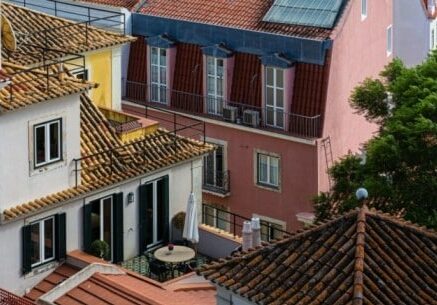 The Portuguese capital offers an average asking price of €7,086 per square meter. Across the wider metro area, the average asking price is €5,045 per square meter. On the whole, buying property in Lisbon remains relatively affordable compared with other capital cities in Western Europe.
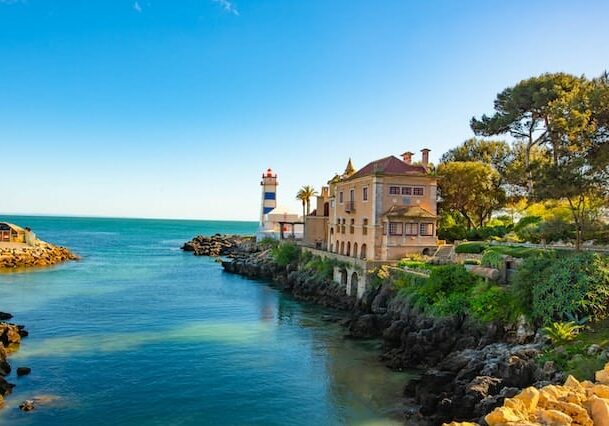 Located just a 30-minute drive away, Cascais is a prime location for luxury living on Portugal’s stunning coastline. Cascais is famous for its selection of world-class golf courses, beautiful marinas, and an atmosphere that effortlessly blends refined living with relaxation.
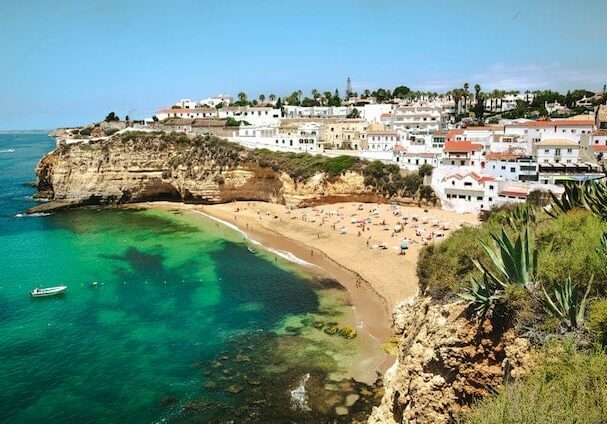 Buying property in the Algarve, Portugal, is a great choice for those who want a prime coastal market, golden beaches, and access to world-class golf courses.




 Legal and notary costs