

 Artur Saraiva
 Updated: January 9, 2026
In the last few years, Portugal has become one of the most crypto-friendly countries in the world. Many investors benefit from the country’s favorable crypto policies, making buying property in Portugal with crypto a popular choice.
In the past, you could technically buy a house with crypto, but it was considered a “gray area” due to the lack of a regulated framework. That changed in April 2022, with the new rules issued by the Order of Notaries (ON). For the first time, investors had a clear, legal roadmap to purchase property in Portugal with cryptocurrency.
Although Portugal is not a tax haven, it remains a worthwhile investment option due to tax exemptions for long-term cryptocurrency holders. In this guide, we will explain how crypto transactions work in the Portuguese real estate market. We’ll also cover the tax implications and the step-by-step process of purchasing property.
Read more about:
Key Takeaways about Buying Property in Portugal with Crypto
- Latest research data indicate that the Portuguese crypto market was worth €5.86 billion ($6.9 billion) in 2024, with a projected yearly growth rate of 9.6 percent.
- After the April 2022 Order of Notaries guidelines and the 2025 MiCA regulations, purchasing real estate in Portugal with cryptocurrency is an entirely legal process.
- In Portugal, you can buy property through direct barter or by converting crypto to fiat. However, as a foreigner, you must secure a NIF number and Portuguese bank account.
Understand the Crypto Regulations in Portugal
 In Portugal, the cryptocurrency market went from an unregulated “tax haven” into a formal economic sector with specific tax revenue streams. Purchasing real estate is a fully legal and regulated process.
According to the latest market research from the IMARC Group, the Portuguese cryptocurrency market size was valued at approximately $6.9 billion (€5.86 billion) in 2024, with an estimated growth rate of 9.66 percent from 2025 to 2033.
A unique driver for crypto revenue in Portugal is the tourism sector. In October 2025, Portugal’s tourism industry reached a total revenue of €691.2 million ($813.5 million), representing a 7.3 percent increase compared to the previous year, published Statistics Portugal (INE).
As of 1 January 2023, Portugal’s Tax Authority (Autoridade Tributária) began enforcing a new tax framework that categorizes crypto income into three specific streams: capital gains (category G), capital income (category E), and business income (category B). These crypto regulations in Portugal are tax-free when selling long-term crypto holdings. You can learn more about how the Portugal crypto tax works in our comprehensive guide.
The Bank of Portugal (Banco de Portugal) supervises stablecoins, prudential requirements, and Anti-Money Laundering (AML) compliance. To operate legally in Portugal, every crypto exchange or wallet provider must be authorized by the Bank of Portugal.
 What are the new laws for crypto in Portugal for purchasing property?
 What are the new laws for crypto in Portugal for purchasing property?
In December 2025, Portugal implemented the EU’s Markets in Crypto-Assets (MiCA) regulation into national law. This replaced the older VASP (Virtual Asset Service Provider) registration.
In Portugal, crypto is not considered legal tender or money. So, a property purchase is legally treated as a barter agreement (Contrato de Permuta). In other words, you are officially trading one asset, which is your crypto, for another asset — a Portugal real estate investment.
Even though the trade is in crypto, the deed must state the property’s value in Euros at the time of the transaction for tax and registry purposes.
How to buy a house in Portugal with crypto?
Foreigners face no restrictions when buying property in Portugal. Buying a house with cryptocurrency is legal, but it follows a specific process that differs from traditional cash purchases. Since the MiCA regulation was implemented, you can purchase real estate in two ways: the barter agreement or the conversion method.
Method #1: The barter agreement
This is the most direct way to buy real estate with crypto. Instead of buying the house with money, you are legally trading your digital assets for the property. First, you find a crypto-friendly seller that can offer different types of properties, such as Portugal luxury real estate.
Because not all sellers accept cryptocurrency, it is best to work with an English-speaking realtor in Portugal or a buyer’s agent, such as Goldcrest, with experience in crypto trading. Have in mind that even if you pay in Bitcoin or Ethereum, the deed must state the house’s value in Euros.
Method #2: The crypto-to-fiat conversion method
Can’t find a seller who will take digital assets? No problem. You can choose to convert the assets by selling your crypto for Euros. However, we highly reccomend you use a a licensed exchange, such as Kraken, Binance, or a specialized crypto-to-fiat broker.
The Euros are transferred to a Portuguese bank account. The transaction works like a regular house purchase using bank transfers. You can find out more about choosing the best bank in our article about banking in Portugal.
Direct barter vs. crypto-to-fiat conversion
Feature | Direct barter (permuta) | Crypto-to-fiat conversion |
Legal classification | Treated as a trade of assets (property for crypto). | Treated as a standard cash purchase. |
Intermediaries | Peer-to-peer, such as a buyer and a seller. | Involves a bank or broker to handle the sale. |
Bureaucracy | High. Requires specialized notaries and intense AML reporting. | Standard. Follows the same path as any bank-funded purchase. |
Volatility Risk | High. The amount of crypto can change in value during the deed process. | Low. The price is locked in Euros once converted. |
Seller acceptance | Limited. Only sellers specifically looking for crypto will agree. | Universal. Every seller accepts Euros. |
Buying Property in Portugal with Crypto: Step-by-Step Checklist
Wondering how to buy a house with cryptocurrency? Whether you choose a direct trade (barter) or a conversion, these are the five essential steps:
Step 1: Get a NIF and hire experts. Obtain a Portuguese tax number (NIF) and hire a real estate lawyer in Portugal who specializes in crypto real estate.
Step 2: Research the property market. A buyer’s agent or a real estate agent can collect the latest data on the latest Portugal house prices, so you can make an informed decision.
Step 3: Verify your source of funds. Collect the documents that comply with crypto regulations in Portugal, such as certified transaction histories from a MiCA-compliant exchange, bank statements, and a signed declaration of ownership of the digital wallet.
Step 4: Sign the CPCV. Make a deposit of 10 to 20 percent when signing the promissory contract, known as Contrato de Promessa de Compra e Venda (CPCV).
Step 5: Pay your taxes and sign the final deed. Pay the IMT and stamp duty to the Portuguese tax authority and sign the final deed (Escritura) in front of a notary. You are now ready to register your new property with the Land Registry (Conservatória).
Read our Portugal real estate ultimate guide by local experts

Portugal’s Tax Implications for Crypto Real Estate Purchases
 In 2026, Portugal’s tax landscape for crypto remains one of the most attractive in Europe. When buying a house, the tax implications fall into two main categories: capital gains on your cryptocurrency and transaction taxes on the property itself.
- Capital gains tax: Your tax liability depends entirely on how long you’ve held the asset before the barter or conversion. For example, if you held the digital assets for over 365 days, then the tax rate is 0 percent. However, for assets held less than 365 days, the flat tax rate is 28 percent.
- Property transaction taxes: The IMT (Municipal Property Transfer Tax) for residents varies from 0 to 8 percent on a progressive scale. For non-residents, as of December 2025, there is a new proposal for a flat rate of 7.5 percent that can apply when purchasing residential properties, unless the intended purchase is meant for long-term rentals.
- Stamp duty (Imposto de Selo): The flat tax rate is 0.8 percent of the property value.
- IMI (Annual Property Tax): Once you own the real estate, you’ll pay between 0.3 and 0.45 percent of the total real estate value for urban properties or 0.8 percent for rural properties. If the property is worth over €600,000, an additional IMI (AIMI) of 0.7 to 1.5 percent applies.
What the New Rules Mean in Practice
 The rules from the ON came into force in April 2022. Under these regulations, notaries must receive, in advance, a series of documents from both parties. Alongside the personal identification documents, they will need to present complete records of the time of acquisition and the storage wallets involved in the transaction.
After this, the information is passed on to Portugal’s supervisory authorities, the Central Department of Investigation and Criminal Action (DCIAP), and the Financial Information Unit to ensure compliance.
Provided there are no objections and after prior communication between themselves, DCIAP and the Financial Information Unit, the notaries can continue to carry out the property deed. For businesses with values that are more than €200,000, there will be an extra stage of communication to the authorities after the completion of the operation.
Notaries need to report the conversion of the value of assets into the recognized currency, such as euros or dollars, given the high volatility of cryptocurrencies. This is done at the signing of the promissory contract purchase agreement and at the time of the sale.
The ON has also implemented a training program for Notary officers so that they are up-to-speed and kept abreast of developments. Since the start of 2022, the sector has received many requests to buy property in Portugal with crypto. The first recorded case of a home being purchased with crypto in Portugal was in the northern city of Braga in May 2022.
In late 2025, Portugal implemented MiCA regulation into national law, creating a unified EU-wide framework for crypto assets and the service providers that handle them. This gives investors and property buyers consumer protection and a regulated environment.
Final Thoughts about Buying Real Estate in Portugal with Crypto
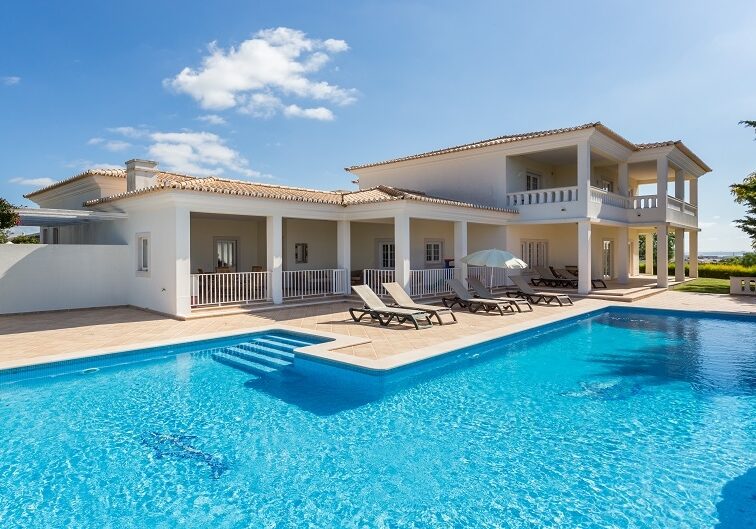 For crypto investors looking to relocate, the rules and regulations regarding crypto make Portugal one of the easiest countries to immigrate to, where they can buy a property with digital assets. Investing in Portuguese real estate can build capital appreciation and diversify your investment portfolio.
Foreign investors are often buying property as a Plan B to tap into Portugal’s booming tourism market, stable economy, and flexible tax incentives.
The first essential thing to bear in mind when using crypto to buy your ideal property in Portugal is that you know where the money comes from. In other words, which bank account are the funds from, and what pathway has the money taken to end up as a digital asset?
You will need to provide information on the digital wallet number, be able to identify the parties involved in the business, and verify that the money goes from one wallet to another at the time of the transaction.
To put this simply, cryptocurrency investors will need to be able to follow the money’s journey to ensure transparency when buying real estate in Portugal. If you are asking yourself how long does it take to buy a house in Portugal? The entire process can take between one and four months.
Goldcrest: How We Can Help You
Goldcrest is a buyer’s agent based in Lisbon. We can assist with buying property in Portugal with crypto and provide expert advice on real estate investments. From finding your dream property to property acquisition, we can streamline the entire process.
If you are interested in purchasing property in Portugal, contact us today. Our team of experts provides market insights, research, and analysis.
Why choose Goldcrest?
A buyer’s agent connects the buyer with regulated crypto partners. We can confirm whether:
- The seller is open to crypto-backed transactions
- The deal will direct crypto payment or crypto-to-euro conversion at closing
- Licensed crypto-asset service providers (CASPs) will be used (required under MiCA)
Our team can collect and organize your documents and coordinate between the notary, seller, and crypto-provider.
Frequently Asked Questions about Buying Property in Portugal with Crypto
Can you buy a house with crypto in Portugal?
Yes, it is possible to buy a house in Portugal with Bitcoin. The first time this happened was in Braga in May 2022, when an investor bought a house in the city with crypto. If you are seeking Portugal apartments for sale and want to make the purchase in crypto, then you should be able to.
Is crypto legal in Portugal?
Yes, crypto is legal in Portugal, with the country being noted as one of the most crypto friendly countries in the world.
Is Portugal a welcoming country for crypto investors?
Yes, Portugal’s high ranking as a crypto-friendly nation and attractiveness to investors are based on crypto-tax incentives, such as investors benefiting from tax exemptions on personal crypto gains and its streamlined approach to crypto.
What are the pitfalls of buying a property in Portugal with crypto?
Cryptocurrencies are very volatile. If you agree to pay in crypto for your real estate purchase in Portugal, but the Euro price of the coin drops between signing and closing, you could end up paying much more (or less) than you first planned.

