Home » Real Estate » Portugal Real Estate Market 2026: Prices, Trends & Forecast
Updated: August 21, 2026
For several years, Portugal real estate struggled with massive demand, limited housing supply, and rising property prices. Homes often sold within days, bidding wars were common, and many buyers feared missing out on their perfect property if they waited too long.
However, the latest market data suggests that this fast-paced environment is beginning to change, entering a more balanced phase. For anyone considering buying real estate in Portugal, it is important to stay up to date with the latest growth trends, average house prices, and the best places to invest.
Goldcrest is a buyer’s agent that has brought together the most relevant data on the Portugal property market in 2026, from the regional performance, market insight, and house price data – all in one place.
To give you a detailed overview of the Portuguese real estate market in 2026, we analyze a mix of official macro data and local insight. For nationwide housing price indices and bank appraisal trends, we use Statistics Portugal (Instituto Nacional de Estatística – INE).
But because the national average doesn’t tell the whole story, we also use Confidencial Imobiliário – a leading private real estate analytics platform – to track exact location-based average asking prices and rental yields, along with other reputable sources.
Based on INE data, Portugal's median house price was €2,337/m2 in Q1 2026, which shows a 19.8% year-on-year (YoY) increase at a local level.
The House Price Index (HPI) showed a 17.8% growth, while property sales dropped by a staggering 10.5%, with 35,953 transactions completed in that quarter.
Lisbon, Cascais, and Oeiras are the most expensive municipalities, where median prices are higher than the national average.
In Q1 2026, the top three NUTS sub-regions for YoY price growth are: Lezíria do Tejo (+30.4%), Setúbal Peninsula (+29.9%), and Greater Lisbon (+20.5%)
Beiras e Serra da Estrela is a region in Portugal with the lowest median price in Q1 2026, at €734/m2, as well as the lowest annual increase at 5.2%.
Bank appraisals for housing went up 16.6% year-on-year in June 2026, reaching €2,228 /m2.
Based on the newest House Price Index (HPI) from INE (Statistics Portugal), published on 23 June 2026, the current real estate trends from Portugal are:
In Q1 2026, the House Price Index increased by 17.8% (year-on-year), which was 1.1 percentage points higher than the previous quarter.
Existing homes saw the strongest annual growth, with prices rising 19.7%.
New build properties also increased in value, with prices reaching 12.6%.
Compared with the previous quarter, the national HPI went up by 3.8%.
Despite rising house prices in Portugal, property transactions dropped by 8.7%, with 37,745 homes sold during the quarter.
Eurostat reported that among EU member states, in Q1 2026, house prices in Portugal recorded the highest increase (+17.8%), followed by Bulgaria (+14.8%), and Slovakia (+14.4%), while Finland registered an annual decrease (-2.0%).
Regardless, investing in Portugal real estate remains a wise choice. Lisbon and Porto provide strong capital appreciation and short-term rental yields. The Algarve often stands out for vacation rentals (Alojamento Local – AL) and luxury villas; meanwhile, regions such as Central Portugal and the Silver Coast provide bigger and more affordable properties.
Where are real estate prices rising the most in Portugal?
After the rapid growth in the years after COVID, the Portugal real estate market continues to register strong yearly house price acceleration, with a YoY growth rate going up from 17.5% in Q4 2025 to 19.8% in Q1 2026 at a local level, based on INE Portugal, published on 17 July 2026.
The five sub-regions with the highest median prices are Greater Lisbon, the Algarve, the Setúbal Peninsula, the Autonomous Region of Madeira, and the Porto Metropolitan Area.
In Q1 2026, the number one NUTS sub-region for year-on-year price growth is Lezíria do Tejo at +30.4%. It replaced the Setúbal Peninsula, the previous title holder, which still remains among the fastest growing regions at +29.9%, followed by Greater Lisbon at +20.5%.
In the Portuguese real estate market, Lezíria do Tejo and the Setúbal Peninsula act as spillover areas for Lisbon. Since more and more property buyers struggle to find affordable real estate in the capital city, prices in the surrounding regions have increased.
In Q1 2026, 11 of the 24 municipalities with more than 100,000 inhabitants recorded house prices higher than the national average, except for one – Matosinhos, at -11.9 percentage points (p.p.). Whereas the biggest price increases were recorded in the municipalities of Funchal (+24.2 p.p.) and Guimarães (+24.1 p.p.)
INE data show that buyers who are not Portuguese tax residents tend to purchase properties at higher median prices than Portuguese residents.
In Q1 2026, the median prices were €3,000/m² for foreign buyers and €2,313/m² for Portuguese residents. Foreign buyers paid around 30% more /m². But, keep in mind that the price difference can vary based on the region or city you choose – considering one can be more popular than the other.
For example, in Greater Lisbon, foreign buyers paid a staggering 34.5% more, while in the Porto Metropolitan Area, the difference was 16.9% more. However, this does not necessarily mean foreign buyers pay higher prices for the same type of property. The difference largely reflects what we call a “buying pattern”.
International buyers often prefer premium locations, mainly Greater Lisbon, the Algarve, Madeira, and the Porto Metropolitan Area. These property markets stand out for a variety of reasons, such as proximity to international airports, established expat communities, and most importantly, consistent demand for vacation, second homes, and real estate investment.
Foreign buyers may also target newer, renovated, or higher-quality properties, which obviously come with a higher price tag.
Note: Portugal introduced a new 7.5% IMT (Municipal Property Transfer) tax for non-resident buyers of urban residential property. The IMT is a key part of the purchasing process, paid before the final deed (Escritura), and it can affect the overall cost of purchasing real estate in Portugal.
New builds vs renovated vs existing properties
When it comes to buying Portugal real estate, new builds continue to have the highest prices, mainly in premium and urban areas.
In Q1 2026, 23 out of 24 major municipalities had much higher prices for new homes than existing properties. The only exception was Amadora, where existing homes were more expensive by €497/m².
Among Portugal’s largest municipalities:
The lowest median price for new-builds: Santa Maria da Feira (€1,777/m²)
The highest median price for new-builds: Lisbon (€6,226/m²) and Cascais (€5,027/m²)
The largest price difference between new and existing properties in Portugal was recorded in Lisbon, which was €6,226/m² for new builds and €4,896/m² for existing properties. That means that the price difference was around €1,330/m².
When you look at Portugal house prices, it’s important to understand the difference between bank appraisals, asking prices, and transaction prices.
Bank appraisals (such as those from INE) show the value that lenders assign to a property when assessing a mortgage. They are generally consistent and reliable, but they often lag behind market trends because banks update valuations more slowly.
Asking prices show what sellers hope to get. These prices are usually higher than the final sale price, as sellers often leave room for negotiation. A buyer’s agent, like Goldcrest, can negotiate prices on your behalf.
Transaction prices come from an official property market index, which shows what buyers actually pay. Since Portugal doesn’t have a single database for house prices, like the MLS (Multiple Listing Service) system in the United States, many buyers consult with a buyer’s agent or a real estate agent in Portugal. Local experts can collect information on the latest costs and market trends.
Where to Buy in Portugal (Prices by Region)
While real estate prices in many major Portuguese cities are rising, they remain more affordable compared to other Western European countries and major US cities.
In this section, we’ll provide information on what you can expect to pay for Portugal property for sale, before delving into the three main areas in greater detail: Lisbon, Porto, and the Algarve.
In the table, you can see the average asking prices for the Portuguese housing market based on Q4 2025 data from Confidencial Imobilario.
Location
Best for
Average asking price
Rental demand type
Risk notes
Lisbon
Luxury lifestyle, first-time expat buyers, capital appreciation
Seasonal rental peaks, growing popularity, but rental yields fluctuate
Alentejo (includes Évora)
Value and affordable properties
€3,958/m²
Long-term
Lower liquidity, slower market growth, and rental demand mainly local
Central Portugal (e.g. Coimbra)
Value and affordable properties, long-term rentals (to accomodate students)
€2,172/m² (average for the center)
Long-term
Slower market growth, and rental demand mainly local
Northern Portugal (e.g. Braga; Castelo Branco)
Value and affordable properties; nature enthusiasts; Braga a tech hub (digital nomads)
€2,070/m² (average for the north)
Long-term
Slower market growth, and rental demand mainly local
Lisbon
Lisbon is the most expensive area in the central region for finding properties for sale. The average asking price per square meter for a home is €7,086 in Lisbon itself, while for the Metropolitan Area, this falls to €5,045 per square meter.
Because it is a capital city, financial hub, and a tourist magnet, Lisbon real estate is the most diverse and the most expensive in the country.
Greater Lisbon is slightly more affordable, while the Lisbon coast also provides inhabitants a great balance between coastal and city life, making for a profitable investment with long-term value.
Lisbon City rental yield: 4.6 percent.
Lisbon Metropolitan Area average rental yield: 5.8 percent
If you are interested in pursuing real estate opportunities in Lisbon, make sure to comply with local laws. Consulting with a real estate lawyer in Lisbon can simplify the legalization process and document filing.
Porto
Porto real estate can be highly profitable. The average asking price per square meter in the Porto Metropolitan Area is €4,052, while in Porto City, this stands at €4,895. Areas like Gondomar and Valongo offer more affordable asking prices at €2,379 and €2,248 per square meter.
There are numerous real estate opportunities in Porto due to the more affordable prices than the Portuguese capital, yet a stable job market.
Porto City average rental yield: 5.4 percent
Porto Metropolitan Area average rental yield: 5.8 percent
Algarve
The second most expensive area in Portugal is the Algarve, with its beautiful beaches, natural beauty, and plenty of golf courses. Algarve real estate offers a wide array of property types, from modern apartments to spacious beachside villas.
To give you some examples, in Faro, the average house price for real estate is €3,988, while in Olhão, the average is €3,702 per square meter. In Lagos, in the western Algarve, the average property price is €5,474, while in Tavira, often referred to as the most authentic part of the Algarve, average real estate prices were €3,938 per square meter.
The average asking price for real estate in the Algarve will vary depending on the location. Keep in mind that by the coastline, you will pay significantly more, while a few kilometers inland, you will pay slightly less.
Algarve average rental yield: 5.2 percent or up to 8 percent in popular tourist resorts
Not sure whether to purchase real estate in Lisbon or the Algarve? Check our ultimate guide about Lisbon vs Algarve.
Cascais & Estroil
Both Cascais and Estoril are among the most expensive areas in the Portugal housing market. Data suggests costs are well above the national average.
The average asking price in Cascais is €7,327 per square meter. Estoril is equally exclusive, commanding an average asking price of €8,559 per square meter. For many luxury buyers, a real estate investment in Cascais can be lucrative, as property values increase over time.
Cascais average rental yield: 4.7 percent
Madeira
Buying property in Madeira offers strong capital appreciation, booming tourism, and stunning coastal areas.
The average asking price in Madeira varies based on the location and proximity to tourist hotspots. For example, Funchal, the capital of the island, is the most expensive, reaching about €3,825 per square meter.
However, the Portugal housing market is more affordable inland, such as in Santana, where the asking price can cost €1,771 per square meter.
Madeira average rental yield: 4.5 percent
Silver Coast
Portugal’s Silver Coast real estate market is booming. It is a popular destination for tourists due to its rugged cliffs, rocky coastline, and beautiful beaches.
The average asking price per square meter in the Silver Coast is €3,588 in Nazaré, €2,803 in Peniche, and €3,935 in Óbidos. Each area has something unique to offer, attracting families, retirees, digital nomads, and young professionals.
Silver Coast average rental yield: Around 5.1 percent
Alentejo
The Alentejo, Portugal, real estate market has one of the most affordable prices. Many budget-friendly expats and families with children choose to invest here due to its relaxing atmosphere and beautiful landscapes.
The average asking price in Alentejo is around €3,958 per square meter. However, the costs vary based on the type of property and the location. Although most of the region is quite affordable, properties can be expensive near the coast, especially in Melides and Comporta.
Which regions outperform the Portuguese property market in 2026?
In Q1 2026, secondary regions outperform Portugal’s major cities. Based on INE reports, the Portugal housing market shows that the strongest growth is happening outside the country’s largest urban centers.
Instead of Lisbon and Porto, many secondary regions and smaller municipalities are becoming more popular for Portugal real estate investment due to their lower entry prices, strong rental yields, and stable capital appreciation.
This trend means that buyers and investors are moving away from expensive city markets for more affordable alternatives, particularly in regions such as Northern Portugal and the Douro Valley, which are famous for their wine production.
Many of the fastest-growing municipalities provide a number of benefits, such as:
Regional economic centers
Good transport connections to Lisbon or Porto
Real estate prices are often a third of those in the main urban markets
Affordable cost of living
Lifestyle advantages that come with living outside of a major city
Funchal is a notable exception, which faces a limited housing stock on Madeira and a high demand from both foreign buyers and locals.
Portugal Real Estate Market Outlook for Q2 2026
The latest Portugal real estate news shows that in Q2 2026, the national average selling price reduced by 3.4% than the quarter prior, also the median rental values fell by 4.2%.
“We’ve seen an uptick in demand for luxury real estate over the past year, particularly for off-plan properties due to their strong appreciation potential, as well as for older homes in highly exclusive locations. These assets continue to represent a secure investment in areas with a consistently upward growth trend, making 2026 look set to be another very busy year in Portugal,” stated Gonçalo Peixoto, Head of Operations at Goldcrest.
Another great advantage is that the average absorption rate and sale period have also slightly dropped in Q2 2026. In other words, you, as a buyer, have more time to research an area you like, negotiate prices, and review the risk assessment before you make a purchase.
When buyers have more time to analyze, and banks evaluate more thoroughly, that’s when property owners have to adjust their expectations and create more realistic offers across the entire Portuguese real estate market.
Check out our expert guide to buying a property in Portugal
Best Portuguese Real Estate Sites for Buying Houses
If you want to enter the Portugal real estate market, you can use major listing sites that collect data across Lisbon, Porto, and the Algarve. But if you prefer a more personalized experience, we can do the legwork and get information on each property for you, provide negotiation services that fit your budget, and offer property management for long-term rentals. A buyer’s agent, like Goldcrest, is a real estate professional who guides you through the buying process from signing and collecting documents to property research and price comparison.
Find Properties for Sale in Portugal
A buyer’s agent can find properties anywhere in the country. At Goldcrest, our team can provide practical advice on the latest real estate trends in Portugal, market forecasts, and average rental yields, so you can decide where to invest.
That being said, luxury properties in Portugal continue to attract attention in high-end areas like Cascais, Estoril, and the Algarve. Limited supply keeps prices strong for villas, mansions, and beachfront homes, making these prime spots for investors and lifestyle buyers.
Residential properties in smaller cities such as Braga, Setúbal, and Coimbra offer value. Country houses in Portugal and suburban homes are ideal for value-conscious buyers seeking lifestyle and affordability outside the main hubs.
Note: If you are a UK national, buying property in Portugal after Brexit has experienced some minor changes. Although the country doesn’t restrict foreign ownership, Brits may require higher down payments.
Goldcrest: How We Can Help You
Goldcrest is the first buyer’s agent in Portugal. We provide expert, impartial advice on real estate investments and how to buy property in Portugal. From scouting out the perfect property through to property acquisition, we have you covered throughout the process.
Unlike traditional real estate agents in Portugal who represent the seller, we are dedicated exclusively to protecting the buyer’s interests.
If you are looking to purchase property in Portugal, don’t hesitate to get in touch. Our team of skilled experts is available to solve all your real estate doubts, helping you with the property search and offering insightful expertise and strategic advice.
Why choose Goldcrest?
Local knowledge: With offices located across Portugal, our presence nationwide allows us to assist you personally across the country.
Independent service: As an independent buying agent, we do not represent any development or project. Our service is entirely tailored toward each individual client, providing you with everything you need to secure the perfect property at the best possible price.
Streamlined process: Our real estate agents speak English and Portuguese, and our service is completely focused on providing you with a hassle-free buying experience, saving you time. We can also help you buy property remotely.
Experienced team: Our expert real estate team has a vast local knowledge of the Portuguese property market. We have cutting-edge technology and metasearch tools at your disposal to provide full market coverage, ensuring the best investment choices and negotiated prices.
Network of partners: We have a close network of partners, including lawyers, property management services, builders, architects, designers, and landscape gardeners, again saving you time and hassle by providing you with trusted experts in their field of work.
Frequently Asked Questions about the Portugal Real Estate Market
What is the outlook for Portugal real estate?
The market outlook for Portugal real estate in Q2 2026 is positive. The national average selling price dropped by 3.4% than the previous quarter, while the median rental values fell by a staggering 4.2%, creating a more balanced market for property buyers. These changes were more pronounced for luxury properties and mid-range real estate.
How is the housing market in Portugal in 2026?
The housing market in Portugal in Q2 2026 is picking up speed as home sales on the mainland rebound 7%. Between April and June 39,210 properties were sold, which reversed the 12.1% decrease in Q1 2026 when 36,650 homes changed hands.
Can foreigners buy real estate in Portugal?
Yes, foreigners can freely buy real estate in Portugal with no restrictions, whether they are EU or non-EU citizens. One of the first steps to purchasing property is obtaining a Portuguese Tax Identification Number (Número de Identificação Fiscal, NIF), which you need for all fiscal activities in Portugal, mainly opening a Portuguese bank account, doing property transactions, and setting up utilities.
What is the latest news on Portuguese real estate?
The latest news on Portuguese real estate is the new Portuguese property tax system for non-Portuguese residents. The country introduced a new 7.5% IMT rate for non-resident buyers seeking second homes, investment properties, or holiday homes, making it more expensive for non-residents to purchase real estate.
Is the Portugal real estate market going to crash?
Based on the current Portugal property market forecast, the real estate sector is very unlikely to crash anytime soon. The market is overvalued and continues to attract buyers from around the world.
Is the Portuguese property market experiencing migration?
Yes, the Portugal property market is affected by migration, with rapid population growth from expats and lifestyle buyers, such as digital nomads, retirees, families, and young professionals. Housing valuations in Portugal are on the rise, driven by high demand from foreign and local buyers.
Is the Portugal Golden Visa real estate option available?
No, with the implementation of the new legislation that came into force on 7 October 2023, real estate options and capital transfers no longer serve as qualifying investment avenues within the program. Nevertheless, numerous alternative investment pathways remain eligible for the program, including the Portugal Golden Visa Investment Funds route.
What types of real estate investment properties are available in Portugal?
Portugal boasts a wide selection of property types. Properties for sale in Portugal range from quaint cottages to luxurious villas, from modern apartments by the ocean to rural estates, catering to diverse tastes and budgets.
What taxes and fees are involved in purchasing real estate in Portugal?
You’ll need to settle taxes both upon purchase and annually. Initial taxes comprise the Property Purchase Tax (IMT) and Stamp Duty. Subsequently, you’ll be responsible for the Municipal Property Tax (IMI) and potentially the AIMI, if your property exceeds a valuation of €600,000. Additional fees include Notary fees, land registration fees, and legal fees.
Related Articles
Exploring Luxury New Homes in Portugal’s Golden Triangle
We use cookies to ensure that we give you the best experience on our website. Our Terms and Conditions
Functional
Always active
The technical storage or access is strictly necessary for the legitimate purpose of enabling the use of a specific service explicitly requested by the subscriber or user, or for the sole purpose of carrying out the transmission of a communication over an electronic communications network.
Preferences
The technical storage or access is necessary for the legitimate purpose of storing preferences that are not requested by the subscriber or user.
Statistics
The technical storage or access that is used exclusively for statistical purposes.The technical storage or access that is used exclusively for anonymous statistical purposes. Without a subpoena, voluntary compliance on the part of your Internet Service Provider, or additional records from a third party, information stored or retrieved for this purpose alone cannot usually be used to identify you.
Marketing
The technical storage or access is required to create user profiles to send advertising, or to track the user on a website or across several websites for similar marketing purposes.



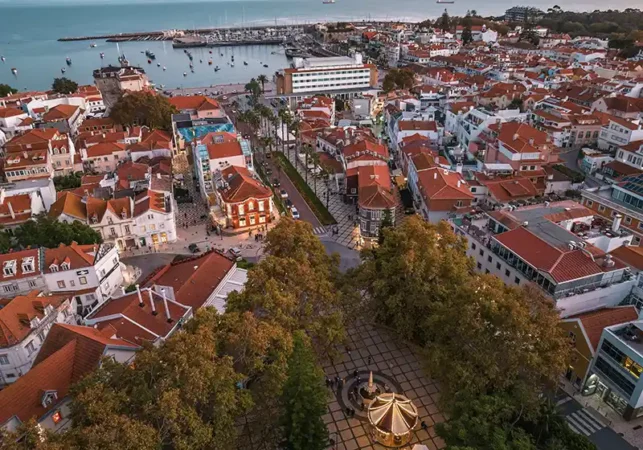 After the rapid growth in the years after COVID, the Portugal real estate market continues to register strong yearly house price acceleration, with a YoY growth rate going up from 17.5% in Q4 2025 to 19.8% in Q1 2026 at a local level, based on INE Portugal, published on 17 July 2026.



 In Q1 2026, secondary regions outperform Portugal’s major cities. Based on INE reports, the Portugal housing market shows that the strongest growth is happening outside the country’s largest urban centers.