Barbara Queiróz
 Updated: December 23, 2025
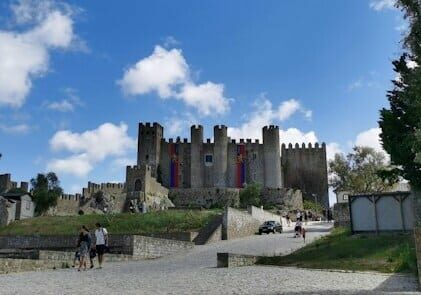
Portugal has a military history. The Portuguese have built forts, towers, and walls for centuries, fortifying their lands from the east to the north.
Although Portugal has a smaller territory compared to other European countries like France, Spain, and Germany, it has 400 to 500 castles and fortifications scattered across the country.
Here, investors an opportunity to own a piece of the country’s rich history and enjoy the sublime climate the year-round sunshine. Buying a castle could be the right option if you are searching for a more adventurous investment alternative to a luxury villa or a modern city apartment.
This article will provide practical information about searching for the perfect chateau for sale in Portugal. It will also provide a step-by-step guide to buying your dream luxury residence and insight into essential considerations about investing in and owning historical sites.
Why buy a castle in Portugal?
Because of their constant use, the castles in Portugal for sale are in excellent shape compared to some of their European counterparts. In the 1930s and 1940s, the most ruined castles underwent reconstruction, allowing Portugal to rescue its heritage and display its history. A property professional can help you find the most famous and fitting location-specific listings to meet your needs.
Historical property such as manors, palaces, and estates are synonymous with Portuguese culture and history. Alongside this, other luxury properties in Portugal, including the architectural style of luxury villas, estates, high-end apartments and houses, and even a quaint chalet or small town farms, still offer prestige, comfort, and a unique Portuguese living experience.
An Overview of Luxury Historical Property in Portugal
 The oldest castle in Portugal dates back to the eighth and ninth centuries—the Castle of the Moors (Castelo dos Mouros). This Moorish fortress lies in the middle of the forest in Sintra and stands atop a peak in the Sintra Hills. The castle proudly displays the rich depth of history in Portugal and offers a magnificent view that extends from Sintra to the ocean. Sintra is also home to The Pena Palace (Palácio Nacional da Pena) and the Quinta da Regaleira.
Finding a castle for sale in Sintra may be challenging. Still, if you are interested in this area, it is best to speak with an experienced professional who can provide you with tailored advice on where to find Portugal castles for sale. You will also come across stunning historical property on the Silver Coast, at locations such as Caldas da Rainha. A professional like a buyer’s agent or real estate agent will also be able to advise you on investment and ownership laws on historical residences and give you the information you need to buy real estate as a foreigner in Portugal.
With the help of local experts, you will have access to castles for sale in South Portugal and other regions of the country, such as Alentejo, Douro, Algarve, and areas near Lisbon. If you are more interested in agricultural property located in the countryside, our guide to finding farms for sale in Portugal has you covered.
In the section below, we will look at the diverse cultures that have influenced and added unique character to architecture and properties in Portugal, from palaces in Mainland Portugal to castles on the Azores and Madeira Islands. If you are considering the Azores, check out our guide: The Azores Houses For Sale In Santa Maria.
Islamic influence
 The first castles were built in the country (and perhaps even Europe) in the 8th Century following the arrival of Berber and Arab Muslims to the Iberian Peninsula. These castles, known as Hsin, followed the designs of Roman forts found in Syria and the Levant.
More castles in this design were built over the following centuries, coinciding with the Cordoba Caliphate, until the Hsin gradually evolved to match traditional medieval designs. Surviving Hsin castles are still found in many areas of Portugal. Examples of such include Sintra, Alcoutim, and Aljezur.
During the 12th Century, the Almohads brought innovations to castle construction. Some of the best-preserved castles in the country are from this period, and these Moorish designs can still be seen in the Cerca Velha (old wall) of Lisbon and Évora, with the horseshoe gates. Some places in the country where you can find castles in this design are Faro, Silves, and Alandroal.
 Early medieval castles
 Early medieval castles
The area surrounding the Douro River was well-fortified during the ninth and tenth centuries. However, few of these structures remain because of their relatively basic wood and stone construction. Nonetheless, you can still see signs of this period in a few areas, such as Gestaçô, Penha Longa, and Baião.
From the beginning of the 10th Century, medieval castles became more widespread in the north as feudal lords established control over the Moors. For example, they built more robust castles that can still be seen today in the motte-and-bailey design.
Gothic and Romanesque castles
 Gothic and Romanesque castles
The next few centuries saw a shift from early medieval castles to Gothic and Romanesque designs. As new attack methods arrived, castles were built with strength in mind, more complex designs, and were larger. The rise of Romanesque castles ran alongside local and foreign military and religious orders such as the Knights Temple. Designs increasingly matched the constructions built in the holy land, which can be seen in Minho and Beira.
French influence can be seen in the castles from the 13th Century. This saw the arrival of Gothic architecture. Examples can be seen in the capital, Lisbon, at the famous Castelo de São Jorge (Castle of São Jorge) and in Óbidos. You can also see the Gothic design in the north, in Guimarães and Bragança.
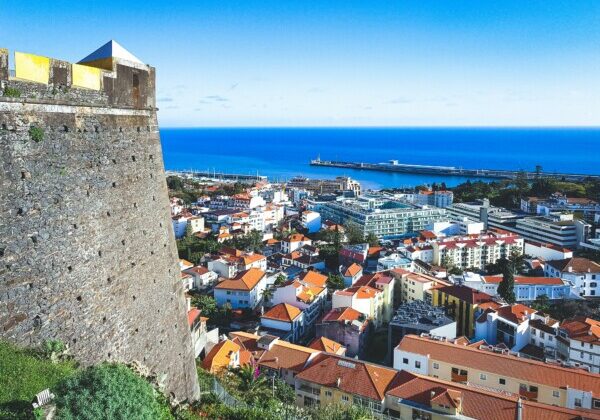
You will find a wide selection of architectural styles on mainland Portugal, on the Madeira islands, and on the Azores, reflecting the rich history of the country. For example, the São João Baptista do Pico Fortress, built in the 17th Century, has preserved its original Mannerist architectural design, featuring four pentagonal-shaped bastions. If you are seeking out a castle in Portugal for sale, ensure you choose one that is striking for you. A castle is a significant investment, and you will want to ensure you take time to think through your options.
If you are considering Pico, you can find out more: Houses For Sale In Pico, Portugal.
Types of Coastal Properties
Original, centuries-old medieval castles for sale directly on the coast are very rare and hard to find. Those that are left are often protected historic monuments. Instead, the real estate available for purchase is grand properties with similar architecture and style. Here are the types of coastal properties that fall into these categories.
Forts or fortresses
Portugal has many historic forts that served as defenses, especially around the coast, like in the Lisbon area or the Algarve. You can find some castles for sale in Portugal that have been converted or built on such historic fortifications, usually for commercial use, like a hotel.
Palatial coastal estates
Portugal has high-end real estate near the coast, such as palaces or manors. These are often grand, ornate, noble residences that look like they were built in the 18th, 19th, or early 20th century. They can have grand architecture, large gardens, towers, or other decorative elements. These luxurious properties can be found in the Algarve, Lisbon, or Cascais area.
Interested in buying an intricate palace in Portugal? Check out our article: Best Places to Find Palaces in Portugal.
Coastal quintas
A quinta in Portugal is a traditional estate that often comes with large land, an olive grove, or a vineyard. In some coastal areas like Sintra or Setúbal, quintas may have historic main houses large enough for the property to resemble a castle or a manor. While it is difficult to find abandoned castles for sale in Portugal, coastal quintas can create a similar imposing appearance.
You will find stunning villas in Portugal, many of which come with beautiful ocean views and private swimming pools. You can find out more in our aritcle: Villas with Pool, Portugal.
Average Prices of Castles in Portugal
The cost of Portuguese castles for sale depends on their size and history.
In 2025, palaces and castles are priced between €1,198,953 ($1,284,629) and €12,500,000 ($13,440,860).
On the more affordable spectrum, cheap castles for sale in Portugal are still a significant investment. It is, therefore, essential to determine the size and type of castle you would like to purchase and what you will use it for.
This will help you find castles for sale in Portugal that fall within your budget and meet your needs. If you have the finances, you could also consider buying land for sale in Portugal to build a castle from scratch. However, this will require careful planning and take a long time for the project to come to fruition.
View Our Comprehensive Guide to Buying Property in Portugal

Best Regions to Find Portugal Castles for Sale
The best areas to find castles, chateaus, and grand historic estates are:
- Central Portugal: Coimbra, Castelo Branco, Santarém, and Viseu
- Alentejo: Évora and Portalegre
- Lisbon and nearby areas: Sintra, Cascais, and Estoril
- Northern Portugal: Braga, Viana do Castelo, Minho, and the Douro Valley
Find out more about Santarém in our guide: Santarém, Portugal, real estate.
Buying Process for Castles in Portugal for Foreign Buyers
When buying a castle in Portugal, the same process will need to be followed as when purchasing any other property here. It is highly recommended that you contact agencies who can assist you throughout the buying process. Buyer’s agents and real estate agents in Portugal will have expertise in the local real estate market and be aware of the latest trends concerning castles and historic properties in Portugal.
This step-by-step guide will provide all the information you need to find castles for sale in Portugal and how to invest in or buy the property.
Step 1: Find a good lawyer
 Step 1: Find a good lawyer
When you are looking to buy a castle, it is highly recommended to have an experienced Portugal real estate lawyer to help you navigate the process. It is worth scouting out a professional who has specific experience in dealing with historic properties. The process may be more cumbersome as you invest in sites of historical importance to Portugal.
A good lawyer will be able to assist you with the legal aspects of buying a historic site, such as a castle for sale in Portugal, ensuring that you have all the documents that you need and practicalities and deadlines to be aware of in the process.
Step 2: Find the right property
 Step 2: Find the right property
You will need to determine the castle that you would like to invest in or buy. First, do some initial research. A quick online search for “castles for sale Portugal”, “castle for sale Portugal”, “abandoned castles for sale in Portugal”, or “cheap castles for sale Portugal” will give you an overview of the market, properties available, and ballpoint property prices.
Following this, as an independent buyer’s agent, Goldcrest can help you refine your search and provide you with viable options for your situation. They will be able to shortlist properties that meet your requirements and guide you through the entire buying process.
Check with DGPC to ensure everything runs seamlessly when purchasing the castle and the rules you must follow in renovation projects. It is also probable that there are other stakeholders involved, so bear this in mind and ask relevant questions to determine what you can and cannot do with the property. Your lawyer will be able to help you with this.
You must also check with your council (Câmara) about restoring the historic property. You will need their approval for any significant changes and upgrades to the property. Read our article, Portugal Property Finder, for some top tips.
Step 3: Do your due diligence
Visit the castle and make sure that everything is in order. This is a substantial investment, so hire a surveyor and triple-check everything to ensure everything is as it should be. Old properties often require considerable maintenance, so bear this in mind when doing your due diligence checks. Also, there will likely be additional maintenance costs with historical properties after the purchase.
Step 4: Taxes and additional costs
 Step 4: Taxes and additional costs
You must be aware of the taxes associated with buying property in Portugal. Your lawyer will be able to help with this. Before you make a purchase, you will need a NIF (tax identification number in Portugal), and it is also a good idea to have a Portuguese bank account so there are no transfer costs. As with all property purchases in the country, the following taxes must be accounted for.
At the time of purchase:
- Imposto Municipal sobre Transmissões Onerosas de Imóveis (IMT) (Municipal Tax on Onerous Transmissions of Real Estate)
- Imposto de Selo (Stamp Tax)
Ongoing taxes:
- Imposto Municipal sobre Imóveis (IMI) (The Municipal Property Tax)
- Notary fees
- AIMA (tax on properties over €601,000)
- Maintenance costs
 Step 5: Purchase the property
 Step 5: Purchase the property
The exact process of purchasing any property will be in place. You must sign the Promissory Contract (we recommend that this is done in front of the Notary) and Escritura (Final Title Deed), which you will need to sign at the Notary, and the final contract is then sent to the Land Registry, which will record you as the latest legal owner.
If you and your family are considering becoming Portuguese residents, there are several visa options to consider, including the Portugal Golden Visa Program, the Portugal D7 Visa, and the Portugal Digital Nomad Visa.
Goldcrest: How We Can Help You
Goldcrest is a buyer’s agent based in Lisbon, Porto, and the Algarve. Equipped with local knowledge, exclusive networks, and international experience, we provide expert, impartial advice on real estate investments and how to buy property in Portugal. From scouting out the perfect property to property acquisition and beyond, we have you covered throughout the process.
Whether you are seeking out the best homes for sale in Lisbon or a luxury property by the coast, we are here to guide you to your ideal property.
You can find out more about the most exclusive properties in our article, Luxury Properties Portugal.
Frequently Asked Questions about Castles for Sale in Portugal
Where can you find castles for sale in Portugal?
Portugal is home to many castles, from the south to the north. For your property search, we recommend doing some research on the market. A quick online search for “castles for sale Portugal” or “castle for sale Portugal” will give you an overview of options available and ballpoint property prices.
What is the average price of a castle in Portugal?
In 2025, a palace or castle in Portugal will cost between € 1,198,953 ($1,284,629) and € 12,500,000 ($13,440,860). Prices will vary depending on the castle’s size, features (such as whether it has a swimming pool, elaborate dining room, elaborate entrance hall, etc.), and location (a castle with sea views, for example, will likely hike up the price). You will also find Portugal properties with tennis courts and golf properties in Portugal.
How many castles are in Portugal?
There are far too many castles in Portugal to count them all. About 400 to 500 fortresses and castles can be found in the country, many of which have been preserved over the years.
Are there specific rules for buying a castle in Portugal?
Like other countries in the world, Portugal has property laws and cultural heritage regulations regarding foreign property purchases. You should check with the Câmara (local chamber) regarding any renovations you want to make to the castle. Castles are part of the fabric of Portugal’s history, and the Câmara must be informed when making any significant changes or upgrades to the property.
Is a castle a good investment opportunity?
Purchasing a Portugal castle for sale can have significant investment potential for you. There are several possible avenues for returns on investment. Consider, for example, whether the castle would be a good option for vacations, hunting, hiking, weddings, etc. Make sure you consider each before investing in a castle. You will, however, be able to find abandoned castles for sale in Portugal, and it could prove to be the investment of a lifetime.
Are there any legal restrictions on foreigners buying castles in Portugal?
There are no legal restrictions on foreigners buying castles in Portugal. The castle’s size, type, and cost will depend on whether it is an investment on which you would like returns or if it is an opportunity to live in a unique home. It is essential to consult with your lawyer or a realtor who is an expert in this area to determine whether you can buy a castle.
Is it worth buying a castle in Portugal?
This will depend on why you want to purchase a castle in Portugal. A castle can be an excellent investment with potential avenues for returns. For example, enabling the castle for vacations, hunting, hiking, weddings, or other tourist ventures would allow you to see a return on your investment. It is essential to consider all options before investing in a castle.
What are the most common locations in Portugal to find castles for sale?
With the help of a professional, you can access castles for sale in Portugal’s Alentejo, Douro Valley, Minho, Lisbon, and Tagus Valley regions.
What are the typical maintenance costs associated with owning a castle in Portugal?
Owning a castle in Portugal is a substantial investment, and ongoing maintenance costs should be a key consideration. Due to their age, historical properties like castles frequently require renovation, construction, and repair costs to preserve their structural integrity. Additionally, the upkeep of the extensive garden and land surrounding the castle can add to the overall maintenance burden. Regular maintenance of the property’s roof and mortar, the medieval cement used in construction, is also essential to prevent deterioration.
What financing options are available for buying a castle in Portugal?
Foreign investors interested in buying a castle in Portugal for sale can get a mortgage. Portuguese lenders are able to offer permanent residents, expats, or property investors from abroad mortgages if you have a good credit score and history and a reliable income.
How does the process of buying a castle in Portugal differ from buying other types of property?
The property search and buying process are fairly similar to buying any kind of property in Portugal. However, there are specific rules for investing in heritage buildings. In Portugal, the DGPC (Direção Geral do Património Cultural or Directorate General for Cultural Heritage) is responsible for protecting cultural heritage areas. Before making a purchase, check with the DGPC to ensure that there are no specific rules for the historic property that you are interested in.
What kind of permits might be required to renovate a castle in Portugal?
Before you begin your renovation, you will first need to acquire two permits: A planning permit and, after that, a building permit. You can acquire the planning permit by submitting an architectural project to the local municipality, the Camara Municipal. When you receive permission to build, you will be eligible to apply for a building permit through the IMPC.
Are there any tax benefits or implications when purchasing a castle in Portugal?
There are no tax benefits associated with purchasing a castle in Portugal; however, there are ongoing taxes associated with property ownership. These Ongoing taxes include Imposto Municipal sobre Imóveis (IMI) (The Municipal Property Tax), Wealth Tax, and maintenance costs.
Can you find castles for sale in the Algarve?
Yes, it is possible to find luxury properties, including castles, in the Algarve. You will also find land for sale in the Algarve, should you want to build your dream home from scratch.
Lagos, Portugal, land for sale and properties in this part of the Algarve are proving popular at the moment, alongside Central Portugal, Aljezur in the west, and close to Tavira in the east.