

 Barbara Queiróz
 Updated: March 19, 2026
In recent years, an increasing number of Americans have been relocating to Portugal, and it’s easy to understand why. With its mild Mediterranean climate, vibrant culture, and lower cost of living compared to the United States, Portugal presents an attractive opportunity for a new life abroad.
This comprehensive guide addresses all the questions you may have about moving to Portugal from the USA, and it is also helpful for those considering relocating from any other country.
We will cover everything you need to know, including visa options, cost of living, taxes, healthcare, and what life is truly like as an expat in Portugal.
You’ll also find out about:
Key Takeaways about Moving to Portugal from the USA
- As an American expat, you can lower your cost of living by 30% to 40% by moving to Portugal. You will also enjoy more than 300 days of sunshine per year and access to high-quality healthcare at a fraction of the cost in the US.
- Americans can enter Portugal without a visa for up to 90 days within a 180-day period for tourism or business. If you want to stay longer, you need to apply for a residence permit that matches your lifestyle.
- The most popular visas in Portugal for US citizens are the D7 for retirees, the D2 for entrepreneurs, the D8 for digital nomads, and the Portuguese Golden Visa for investors.
- When applying for residency, you will need proof of income, a valid passport, health insurance, and a clean criminal record. Processing times take about 12 months, based on the visa you apply for.
- About 74% of Portuguese people own their homes, and there're no restrictions on foreign property ownership, making the property market popular with expats.
- Moving costs in Portugal range from €7,560 to €10,920 ($9,000 to $13,000), depending on your location and lifestyle.
- Portugal and the US have a double tax treaty. Important property taxes include stamp duty (0.8%), IMT (0–8%), and annual IMI (0.3–0.45% urban, 0.8% rural).
Why move to Portugal from the US?
 The number of US citizens living in Portugal has increased sevenfold between 2017 and 2024, according to the US Embassy, and based on records from AIMA, the Portuguese Agency for Integration, Migration, and Asylum.
But why consider moving to Portugal? There are a wide range of reasons for moving, including:
- Safety and political stability, ranking seventh in the 2025 Global Peace Index
- Affordable and high-quality healthcare and education
- Lower living costs compared to the USA and other Western European countries
- Rated the best retirement destination in the world
- Stunning natural beauty, including golden beaches and gorgeous landscapes
- One of the most LGBTQ+ friendly countries in the world
- Rich cultural environment
- High global ranking in the 2025 English Proficiency Index (ranking sixth globally)
- Top choice for US citizens seeking a second passport, offering EU membership, a fast and straightforward pathway to citizenship, and flexible visa options
Requirements to move to Portugal
The basic requirements for moving to Portugal that apply to all foreigners are:
- A valid passport (with a minimum of six months remaining)
- Completed application forms (available on the website of the Portuguese consulate website in the United States)
- Proof of financial means or income that meets the minimum threshold (different for every visa)
- Certificate of a clean criminal record
- Private health insurance that’s valid in Portugal
- Proof of accommodation in Portugal (property deed or lease contract rental)
How much does it cost to move to Portugal from the US?
The cost of moving to Portugal varies from €7,560 to €10,920 ($9,000 to $13,000), which includes flights, shipping, visa fees, and initial housing deposits. However, the total expenses are different for each person based on their lifestyle.
For example, a one-way plane ticket from the US to Portugal costs about €336 and €1,008 ($400 to $1,200) on average. If you are shipping any household goods or furniture, you can expect to spend around €5,040 to €8,400 ($6,000 to $10,000), based on the size of the containers.
How to move to Portugal from the US?
 Portugal continues to be one of Europe’s most desirable destinations for Americans seeking a new life abroad. With its mild climate, stable economy, high safety standards, and affordable cost of living, the country offers a strong quality of life that rivals any in Western Europe.
Obtaining the right visa or residency permit is the essential first step for US citizens who want to make Portugal their home.
Portugal’s immigration system is known for being transparent and relatively accessible, especially compared to other EU countries. Americans can enter visa-free for up to 90 days within 180 days, but those planning to stay longer — whether to retire, work remotely, start a business, or invest — must apply for a Portugal residency visa.
Depending on personal circumstances and financial means, several pathways are available. The most popular among US citizens include the D7 Visa, aimed at retirees and those with passive income; the D8 Digital Nomad Visa, ideal for remote workers; and the D2 Visa, designed for entrepreneurs and independent professionals.
Portugal also offers several visa options tailored to different purposes of stay. These include the Startup Visa for foreign nationals who plan to establish and develop a business in the country, student visas for individuals enrolled in a higher education institution in Portugal, and the D1 Visa for those who have been offered employment by a Portuguese employer.
For high-net-worth individuals, the Golden Visa offers residency through select investment routes.
Each program grants legal residency in Portugal and provides access to healthcare, education, and the Schengen Area for travel throughout Europe. After five years of continuous residence, holders can apply for permanent residency or Portuguese citizenship, provided they meet language and legal requirements. For more details, check our article on how to get residency in Portugal.
Visa Options for US Citizens
To move to Portugal from the US or another country outside the EU, you will need a visa and a residence permit. The Portuguese government makes it easy to immigrate to Portugal from the US and other countries around the world through its various visa options.
 D7 Passive Income Visa
 D7 Passive Income Visa
 The Portugal D7 Visa, also known as the Passive Income Visa or Portugal Retirement Visa, is a popular residency option.
This visa is for non-EU nationals moving to Portugal who earn a regular passive income from pensions, rental income, financial investments, or other sources. The D7 Visa is perfect for those who wish to retire in Portugal.
To be eligible for the Portugal Retirement Visa, you must be able to meet the requirements outlined below:
- Be a non-EU/EEA/Swiss national
- Earn a passive income of at least €920 per month (as mentioned above, this passive income can come from different sources)
- Have a clean criminal record
- Show proof of a residential address where you will be living in Portugal
- Reside for more than 183 consecutive days per calendar year in Portugal
Digital Nomad Visa (D8 Visa)
 Digital Nomad Visa (D8 Visa)
The Portugal D8 Visa is an increasingly sought-after option for moving to Portugal as an American or from another non-EU country. Also known as the Digital Nomad Visa, this option is designed for individuals who want to live and work remotely in Portugal.
Portugal Digital Nomad Visa requirements include:
- Being from a non-EU or a non-EEA country
- Be self-employed or employed by a business that is not a Portuguese company
- Earn four times the minimum wage in Portugal, which currently amounts to around €3,680 per month
D2 Entrepreneur Visa
 D2 Entrepreneur Visa
 For entrepreneurs and business owners, the Portugal D2 Visa provides an opportunity to launch or relocate your business to Portugal.
It caters to entrepreneurs, freelancers, and independent service providers, offering them a pathway to reside in Portugal while pursuing their business ventures.
Portugal D2 Visa requirements include:
- Having a Portuguese tax number (NIF)
- Opening a Portuguese bank account
- Proof of a self-employment agreement with a company based in Portugal (if applying as a freelancer)
- A business plan (if applying as an entrepreneur starting or expanding a business in Portugal)
- Proof of sufficient financial means to support your business venture and yourself in the country
- Hold a clean criminal record
Portugal Golden visa
 Portugal Golden visa
The Portugal Golden Visa residence permit enables you to settle, work, and study in Portugal.
To qualify for residency by investment, the Golden Visa requires:
- Have a clean criminal record
- Be either non-EU, non-Swiss, or non-EEA national
- Minimum investment of €250,000, with a range of investment routes to choose from, including investment or donation in the arts or reconstruction of national heritage, scientific research, and the creation of ten jobs
- Meet all legal requirements, including an average of seven days spent per year in Portugal, guaranteeing a total of 14 days during the validity of each residence card (two years)
While there is no way to get Portuguese citizenship by investment, the Golden Visa offers the next best thing – residency by investment. However, you can no longer purchase real estate to qualify for the Golden Visa.
The Portuguese Golden Visa allows family members to join you. Eligible family members include spouses, dependent children, and financially dependent parents. Check our article if you are wondering whether you can buy property in Portugal and get citizenship.
Regardless of the visa you choose, you can apply to obtain permanent residency or Portuguese citizenship after holding your residency permit for five years. If you would like advice on which is the most appropriate visa for you, chat to our immigration partner, Global Citizen Solutions, for expert guidance.
Below, we summarize and compare each visa mentioned:
Visa type | Best for | Financial requirements | Path to citizenship | Family inclusion |
D7 Visa | Retirees, passive income earners | Passive income of at least €920 per month (€11,040 per year) | Eligible for citizenship after 5 years of residency | Yes |
Digital Nomad Visa (D8) | Remote workers | Income of at least €3,680 per month | Eligible for citizenship after 5 years of residency | Yes |
D2 Visa | Entrepreneurs, freelancers | Business plan + sufficient funds | Eligible for citizenship after 5 years of residency | Yes |
Golden Visa | Investors | Minimum €250,000 – €500,000 (about $291,000 – $582,000) investment | Eligible for citizenship after 5 years of residency | Yes |
Can American expats in Portugal obtain Portuguese citizenship?
Portugal also provides a straightforward pathway to citizenship for a US citizen moving to Portugal. Citizenship by naturalization is achievable through maintaining residency in Portugal. Becoming a citizen by descent or through marriage is a possibility, too, and some visa options allow for family reunification.
Naturalization
You can become a Portuguese citizen by legally residing in Portugal for five years. This can be achieved through any of the Portuguese residency visas, including the Portugal Golden Visa residency by investment program.
In addition to the five years of residency, you will also need to demonstrate basic Portuguese language proficiency (A2 level) and maintain a clear criminal record. New changes to Portugal’s nationality laws have been proposed, where the residency requirement before applying for citizenship may increase from five to ten years (or seven years for CPLP nationals). This is currently a draft proposal and is not yet officially law. Read the latest update of the Portuguese Nationality Law.
Marriage to a Portuguese citizen
You can become a Portuguese citizen if you are married to a Portuguese citizen for three years. There is no need to live in Portugal, but you must prove a genuine connection to the Portuguese community and the marriage must be legally recognized in Portugal and the European Union.
Citizenship by descent
You may be eligible to claim Portuguese citizenship by descent if a parent or grandparent was born in Portugal. This may also be extended to great-grandparents soon.
You’ll need documents proving your parental lineage, like a birth certificate of yourself and your Portuguese grandparent or Portuguese parent. Knowledge of the Portuguese language or proof of cultural ties may be requested for grandparent-based claims.
Dual citizenship in Portugal
Portugal allows you to become a citizen without giving up your original citizenship. However, you will need to check that your home country allows dual citizenship, too.
If it does, you can keep your citizenship status in both countries. If not, you may have to choose one. For example, both Portugal and the US allow for dual citizenship, making it possible for US citizens to gain a Portuguese passport without giving up their original citizenship.
How to apply for a Portuguese residence permit?
 While the documents may vary depending on which Portuguese visa you opt for, you will generally need the following.
- A completed application form for your visa type
- Valid passport, ID, or other valid travel document
- Proof of sufficient funds in your bank account to support your stay in Portugal
- Proof of accommodation, such as a lease agreement or invitation letter
- Health insurance or private health care
- Police clearance certificate or document to show no criminal record
Depending on the visa, other required documents may include an official job contract, business plan, etc.
Once you have gathered your documents, the process to apply for residency is quite simple:
Step 1: Apply at a Portuguese Consulate
Book an appointment at a local Portuguese consulate or embassy. Submit your documents, pay the visa fee around €110 ($130) , and wait for your application to be processed. Some visas may take longer to process than others.
Step 2: Receive your entry visa
If approved, you’ll get your Portuguese residency visa, which allows you to enter the country and begin the Portugal residence permit process.
Step 3: Enter Portugal and book an AIMA appointment
After arriving in Portugal, schedule an appointment with the Portuguese immigration authority, AIMA, as soon as possible. On some occasions, your appointment will be scheduled when your visa is processed.
Step 4: Attend your appointment and get your residence permit
At your AIMA appointment, submit the required documents, your biometric data (like fingerprints), pay the fee around €160–€170 ($189–$201), and receive your residence card.
Where to Live: Best Places in Portugal for Americans
If you are moving to Portugal from US cities, you are going to need a place to live. Portugal vs US real estate has some similarities, but there are also many differences.
Portugal’s regions and homes are embedded with rich culture and history, and each place has its own unique atmosphere and charm. Here are the best places to live in Portugal.
Lisbon
 Lisbon, the cosmopolitan capital of Portugal, is the country’s bustling business center. Americans moving to Portugal enjoy the charming historical architecture, modern amenities, excellent public transportation, and growing startup scene in Lisbon.
Most Portuguese people, particularly the younger generations, speak English in Lisbon, which makes it a favorite among American retirees and expats who have yet to learn Portuguese.
Avid travelers will also be able to jet around easily, with Lisbon Airport facilitating easy international travel, including flights to the USA. With the stunning Tagus River and the Atlantic Ocean nearby, you have many waterside properties and excellent beaches to enjoy.
It’s important to note that Lisbon is also Portugal’s most expensive city. Because living here is so sought after, property prices and living costs are quite high. There are also many retirement communities in Portugal that can accommodate foreigners.
Discover Lisbon real estate in our ultimate guide!

Porto
 Porto in Northern Portugal, is the second largest city in the country after Lisbon. Porto is a safe and gorgeous Portuguese city on the banks of the Douro River, known for its signature port wine, rolling hills, historic buildings and bridges, and vibrant creative scene.
It is less expensive compared to Lisbon, making it very affordable for US expats. Porto is a trending spot for Americans too, who enjoy the affordable cost of living and healthcare, as well as the relaxed and culturally-enriched lifestyle.
The Ribeira district offers waterfront houses in the historic quarter, while Foz do Douro is home to spacious properties that could be the perfect choice for families. There are countless best places to live in Porto, Portugal, and we recommend visiting the city to see which is the ideal option for you.
Algarve
 The Algarve in southern Portugal is home to one of the most sensational coastlines in Europe, famous for stunning beaches such as Praia da Rocha close to Portimão and the captivating Benagil Caves near Lagos.
Many foreign nationals choose cities such as Faro, Albufeira, and Tavira, and Lagos. Americans can buy property in Lagos without any restrictions.
The region is also home to many English-speaking locals, making it easy for a US citizen moving to Portugal to integrate into their new surroundings.
The Algarve is a favorite among US retirees because of its sunny climate (over 300 days of sunshine), outdoor coastal lifestyle, excellent healthcare system, and golden beaches. You will also find many of the best luxury care homes in Portugal in the Algarve region.
Discover the allure of buying property in the Algarve.
Cascais and Estoril
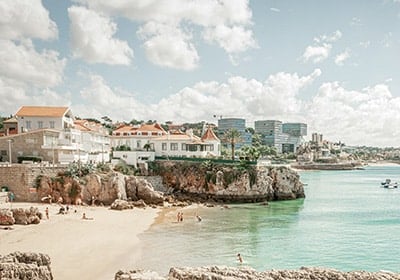 Cascais and Estoril, charming upscale seaside towns, offer stunning spacious properties, terrific beaches, and a relaxed pace of life.
Families will find some of the best international schools in the country close by, while retirees will be able to embrace a high-quality lifestyle, enjoying their golden years in style.
Living in Cascais, you are just a quick train ride from Lisbon, too, bringing you the ultimate mix of seaside luxury and city convenience.
Coimbra
 Once the capital of Portugal, Coimbra is now a stunning city that offers something for everyone at a significantly lower cost of living compared to Lisbon.
Coimbra has interesting historical architecture and culture on offer to make it the ideal option for Americans moving abroad to Portugal.
The city is also home to Portugal’s oldest university, providing a lively, youthful atmosphere.
The countryside in the surrounding area would also make an exceptional home, with property prices that are very attractive to prospective buyers. Read our Coimbra real estate guide to get to know the property available in the area.
Madeira
 Madeira, the birthplace of Cristiano Ronaldo, is a Portuguese archipelago known for its natural beauty. Living in Madeira is an absolute dream for American expats, particularly for retirees looking for a perpetually fabulous climate.
Funchal is Madeira’s main city, with a magnificent location and mild weather year-round. It is the best option for American retirees seeking an island paradise to settle in that still offers modern amenities, Portuguese charm, and gorgeous properties.
Read our Madeira real estate guide if you would like to learn more about the homes available on the island.
Location | Monthly rent (one-bed apartment) | Cost of living | Weather | Expat community | Best for |
Lisbon | €1,023 - €1,367 | High | Warm, bright summers and mild winters | Very large | Job opportunities and business investment |
Porto | €834 - €1,081 | Medium | Cooler, more rain than south | Large | Culture-rich city with friendly locals |
Faro (Algarve) | €795 - €912 | Medium | Hot summers and mild winters near coast | Very large | Coastal living, retirees, and a luxury lifestyle |
Cascais | €993 - €1,460 | Very high | Sunshine with gentle sea breezes | Large | Family living and refined seaside life |
Estoril | €1,200 - €1,400 | High to very high | Mediterranean warmth with long sunny periods | Medium | Upscale beach town near Lisbon, relaxed coastal life |
Coimbra | €568 - €772 | Low | Mild but slightly rainier inland | Small | Students, affordable lifestyle |
Funchal (Madeira) | €1,089 - €1,335 | Medium | Year-round mild and lush | Medium | Comfort, outdoor activities, and relaxed island living |
Accommodation for Americans in Portugal: Rent or buy?
In Portugal, accommodation costs are generally much lower than those in major US cities like San Francisco or New York, regardless of whether you rent or buy a home. If you compare Portugal with accommodation costs in another European country, you will also find prices to be quite reasonable.
Below, we provide an overview of rental costs and costs related to buying property in Portugal.
Renting vs buying in Portugal
 Renting vs buying in Portugal
The rent of a one-bedroom apartment outside the city center in Lisbon is €1,023 ($1,206), while a three-bedroom apartment in the city center is €2,559 ($3,018). Lisbon, the Portuguese capital, is by far the most expensive city in Portugal. And living in Porto or the smaller cities, you will find prices much lower, although prices have been increasing steadily in Porto in recent years.
If you’re thinking of moving to Portugal to retire or relocate long-term, then real estate investments in Portugal will be a smart decision. There are no restrictions for an American citizen buying properties in Portugal.
One good thing to know is that, with some financial planning, housing prices in Portugal are more affordable than what you would spend on property in the USA.
Average asking prices for property in Portugal are:
- Lisbon Metropolitan Area: €5,054 per square meter
- Porto Metropolitan Area: €4,052 per square meter
- Algarve: €4,550 per square meter
- Alentejo: €3,958 per square meter
- Northern Portugal: €2,070 per square meter
- Central Portugal: €2,172 per square meter
Seeking the assistance of a real estate agent, or preferably a buyer’s agent, is one way to ensure a smooth process. They will be able to guide you through the steps, from sourcing through to acquisition and beyond.
Chat with our team at Goldcrest, Portugal’s oldest buyer’s agent, to find out how we can help you buy property to relocate. We will also be happy to help you find a fantastic home to rent.
Getting a mortgage as a foreigner
 Getting a mortgage as a foreigner
Getting a mortgage in Portugal as a foreigner is relatively easy, as long as you can prove your affordability and financial stability.
Foreigners, including Americans, can get mortgages from banks in Portugal, usually up to 60 to 80 percent of the property’s value, with a deposit required to make up the rest of the amount.
Cost of Moving and Setting Up in Portugal
The cost of relocating to Portugal varies depending on lifestyle, location, and the type of visa pursued, but it remains significantly lower than in most Western countries — particularly the United States.
For most US citizens, the initial setup includes visa application fees, legal assistance, document authentication, and travel expenses. Renting a furnished apartment in Lisbon or Porto typically costs between €1,400 and €2,300 ($1,512–$2,484) per month in 2026, while smaller cities and inland regions offer quality housing for €800 to €1,300 ($864–$1,404).
When retiring in Portugal, daily expenses such as groceries, dining out, and transport are notably affordable, with most individuals spending 30–40 percent less than in the US for a comparable standard of living.
Once in Portugal, setting up essential services like healthcare, banking, and telecommunications is straightforward and inexpensive. Private health insurance plans start around €50 to €150 ($54–$162) per month, while utilities — electricity, water, internet, and mobile — average €170 to €240 ($184–$259) monthly for a two-person household.
Many newcomers also budget for an initial outlay on local registrations, furniture, or vehicle purchase if settling long-term. Overall, a single person can live comfortably in Portugal on €2,000 to €2,800 ($2,160–$3,024) per month, while couples often manage well on €3,000 to €4,000 ($3,240–$4,320), depending on location and lifestyle choices.
The combination of manageable setup costs and long-term affordability continues to make the cost of living in Portugal vs the US one of the most cost-effective destinations for relocation.
Cost of Living Portugal vs the US
Below is a table that compares the average costs of products and services between Lisbon and New York City.
Expense | Lisbon | New York City |
Water bottle 1.5-litre | €1.17 ($1.38) | $2.52 (€2.14) |
Imported beer 0.33-litre | €3.00 ($3.54) | $10.00 (€8.50) |
Bottle of mid-range wine | €5.00 ($5.90) | $18.00 (€15.30) |
Public transport (monthly pass) | €40.00 ($47.20) | $134.00 (€113.90) |
Meal at an inexpensive restaurant | €11.50 ($13.57) | $25.00 (€21.25) |
Meal at mid-range restaurant for two (three courses, no drinks) | €45.00 ($53.10) | $140.00 (€119.00) |
Primary international school, tuition fee for one child per year | €10,580.03 ($12,484.44) | $58,729.88 (€49,920.40) |
Preschool, private, full-day, for one child per month | €454.22 ($535.98) | $3,397.83 (€2,888.16) |
Basic utilities for 85m² apartment per month | €116.18 ($137.09) | $194.25 (€165.11) |
Apartment monthly rent (one bedroom) outside of the center | €714.46 ($843.06) | $2,769.00 (€2,353.65) |
Apartment monthly rent (one bedroom) in the city center | €899.73 ($1,061.68) | $4,477.96 (€3,806.27) |
Apartment monthly rent (three bedroom) outside of the center | €1,150.57 ($1,357.67) | $5,102.63 (€4,337.24) |
Apartment monthly rent (three bedroom) in the city center | €1,504.40 ($1,775.19) | $9,051.32 (€7,693.62) |
Source: Numbeo
Healthcare in Portugal
 Many US citizens believe Portugal is the best country to live in due to its strong public healthcare system, which offers quality services at affordable prices.
The Serviço Nacional de Saúde (SNS) offers comprehensive medical care to both residents and citizens, including general practitioner visits, hospital treatments, and emergency services.
Once you obtain legal residency, you can register at your local health center and obtain a Portuguese health number (número de utente, which is different from a social security number), which provides access to the SNS network. Routine appointments are reasonably priced, and many services are either free or significantly subsidized.
Additionally, many expatriates choose to enhance their healthcare with private health insurance for quicker access to specialists or English-speaking doctors, with premiums generally ranging from €50 to €150 per month.
Portugal’s healthcare standards consistently rank among the best in Europe, allowing residents to receive high-quality medical attention at a fraction of the cost found in the United States.
Working and Income When You Move to Portugal
Portugal caters to a variety of lifestyles and goals, whether you are moving to Portugal from the US as a digital nomad, career-seeker, or entrepreneur.
The most common jobs in Portugal
Here is a list of the most sought-after jobs in Portugal for expats and their average yearly salaries.
Job | Annual average salary |
Marketing manager | €35,688 ($38,800) |
Receptionist | €16,788 ($18,250) |
Software engineer | €43,700 ($47,500) |
Architect | €45,228 ($49,150) |
Doctor, general practitioner | €84,557 ($91,900) |
Hotel manager | €74,577 ($81,050) |
Note: These are just general estimates and vary based on the location and employer.
Remote work and digital nomads
 Remote work and digital nomads
Portugal is a top choice for remote workers and digital nomads, thanks to fast internet, a great lifestyle, and accessible visa options. High-speed fiber is widely available, and coworking spaces are common in cities like Lisbon, Porto, Braga, and Aveiro, making working in Portugal remotely easy.
Active digital nomad communities host regular meetups, making it easy to network and settle in. Many US citizens in Portugal continue working remotely for American companies, allowing them to earn US-level salaries while benefiting from Portugal’s lower cost of living. The cost of living in Braga, for example, offers Americans a beautiful city where everything, from healthcare to transportation, is a fraction of the cost they would find in the USA.
The job market for English speakers
 The job market for English speakers
Portugal’s job market is quite diverse, and while some industries can be competitive, there are still many opportunities available.
The tourism and hospitality industries are quite prominent in the Portuguese job market, along with tech and IT jobs.
Speaking English also gives you the upper hand when applying for these jobs, as strong communication skills are highly sought after.
If you are moving to Portugal from the USA, check out our guide: Jobs in Portugal for Americans.
Starting a business in Portugal
 Starting a business in Portugal
Starting a business in Portugal can be a good idea, particularly in the technology and tourism sectors, due to the country’s supportive environment, strategic location, and access to the EU market.
Portugal offers a business-friendly environment with various funding opportunities for startups. Lisbon, in particular, has a thriving startup and entrepreneurial scene and plays host to the Web Summit, the world’s largest tech conference, each year.
Californians are moving to Portugal in high numbers due to Portugal’s booming tech scene, with Lisbon coined the Silicon Valley of Europe for tech startups, with similarties in climate to America’s Golden State another pull factor.
Minimum wage and average salary
 Minimum wage and average salary
Most Americans can live a comfortable life in Portugal on an average US salary. That’s because the average monthly salary in Portugal is about €1,741 ($1,890), compared to the minimum wage of €920 ($1,080).
Education and Family Life in Portugal
Education in Portugal follows the European model and includes a mix of public, private, and international schools. Public schools are free and provide a solid academic foundation, although classes are conducted in Portuguese.
International schools
Many American families prefer international schools in Portugal, especially in Lisbon, Cascais, and Porto, where tuition can range from €8,000 to €20,000 annually. Portugal is also home to several respected universities and vocational institutions, many of which offer programs taught in English.
In addition to healthcare and education, residents enjoy efficient public services, including well-developed transportation networks, accessible banking systems, and modern digital government platforms for handling taxes, registrations, and visa renewals.
Universities
Portugal offers high-quality education at top-tier institutions, such as the University of Lisbon, the University of Porto, and the University of Coimbra.
To study here, students spend about €1,000 – €7,000 ($1,100 – $8,000) per year. The tuition fees are a more affordable alternative to those of many programs in other European countries or the US.
You can also apply to undergraduate and graduate programs that are widely available in English. This makes it easier for international students to adjust to daily life while they settle into a new specific location.
Your degree will meet European standards, which means you can explore career opportunities across other European capitals after graduation. For more information, check our article on universities in Portugal.
School system overview
When you move to Portugal as a legal resident or begin the residency process, your children can access free education through the public school system.
The system includes preschool (ages 3–6), primary education (ages 6–15), secondary education (ages 15–18), and higher education.
Most public schools teach in Portuguese, but many in urban areas now offer bilingual support.
Cultural Integration and Language in Portugal
While many locals speak English, especially in major cities like Lisbon and Porto, learning Portuguese is the best way to get a deeper and more rewarding experience.
Basic language skills help with everyday tasks, and locals are usually patient and appreciative of any effort to speak Portuguese.
You can learn through language schools, apps like Duolingo or Babbel, or by joining local language exchange events.
Cultural etiquette and social norms
 Cultural etiquette and social norms
Portuguese culture places a strong emphasis on personal relationships and family, with multi-generational gatherings being common.
A relaxed approach to time is typical in social settings, and meals are enjoyed at a leisurely pace.
Politeness and formality are valued, with titles like “Senhor” or “Senhora” used for professionals and elders. Common greetings include handshakes or two kisses on the cheeks, starting with the right.
Integrating and connecting with the people
 Integrating and connecting with the people
Building connections is easy in Portugal, with lots of opportunities to meet and get to know new people.
Expat groups on platforms like Facebook are good places to start, where you can find events for newcomers.
Volunteering, attending local festivals, joining sports clubs, or taking cooking classes are also excellent ways to meet locals and immerse yourself in the culture.
Banking, Taxes, and Financial Setup in Portugal
Moving to Portugal from USA soil, or any other country for that matter, means new banking systems, tax filing, and ways to handle your finances. Below, you’ll find the basics to get you started.
Opening a Portuguese bank account
 Before opening a local bank account, you will need your own NIF number in Portugal. The NIF is a tax identification number required for any financial transactions, including setting up a Portuguese bank account. To get a NIF, non-EU citizens, including US nationals, will need to have a fiscal representative.
When you have secured your NIF number, opening a Portuguese bank account is usually easy and straightforward. When banking in Portugal, you have a range of options, from online banks to more traditional banks, including many that offer mortgages to foreigners.
Some of the best banks in Portugal to consider are Millennium BCP, Novo Banco, Banco BPI, and Banco Santander Totta.
You can check out our article on how to get a NIF number in Portugal.
Currency, cards, and money transfers
Portugal uses the euro (€). In urban cities, credit and debit cards are widely accepted, but in smaller towns or local markets, cash is often preferred. Generally, it’s always good practice to carry a bit of cash on you, just in case.
When exchanging your foreign currency, Multibanco ATMs are easy to find and generally offer better exchange rates than currency exchange offices. To save on international transfers or spending, you can use services like Revolut or Wise.
US Tax Obligations While Living in Portugal
When relocating to Portugal, your taxes will follow you, too. No matter where you are moving from, it is always best to consult a tax professional to understand how your tax obligations will change.
In general, when living in Portugal as an American, the following tax implications will be important to know:
Portuguese vs USA tax residency and filing
 Tax rules differ when moving to Portugal from US tax systems. In Portugal, you become a tax resident if you spend at least 183 days in Portugal in a year or have a habitual residence in the country. If you are a tax resident, you will be expected to complete annual tax returns in the country.
Residents are taxed on worldwide income at progressive rates from 12.5 percent up to 48 percent. Non-residents pay a flat rate of 25 percent on Portuguese-source income.
Americans moving to Portugal also remain subject to US tax laws, including the requirement to file annual tax returns on worldwide income. However, the following provisions and tax benefits are available:
- Foreign Earned Income Exclusion (FEIE): You can exclude up to $132,900 of foreign income from US taxes in the 2026 tax year, if you meet certain residency rules.
- Foreign Tax Credit (FTC): You can reduce your US tax bill by claiming credit for taxes you pay in Portugal.
- FBAR (FinCEN 114): If your foreign bank accounts total over $10,000 at any point in the year, you must report them.
- FATCA (Form 8938): If your foreign assets exceed certain amounts, you must report them to the IRS.
- Social security: A USA-Portugal agreement decides which country you pay into, depending on how long you stay and where you work.
- Tax treaty: There is a US–Portugal income tax treaty designed to avoid double taxation, but the United States saving clause often means American citizens still need to use FEIE or FTC to reduce their tax.
If you’re looking to relocate from the USA, check out our guide on How to Move out of the US.
Moving to Portugal From the USA: Practical Life Setup
In addition to setting up your finances, there are a few other logistics to navigate when making Portugal your permanent residence, like getting your pets and belongings into the country and setting up essentials like your internet and Portuguese driver’s license.
Below, we provide an overview of what to expect when you relocate to Portugal.
Internet and mobile services
Portugal has a reliable internet infrastructure, with high-speed fiber internet. Coverage is excellent, especially in urban cities, with 4G/5G networks reaching over the majority of populated areas. Public Wi-Fi is also common in cafes and public spaces.
For an unlimited internet plan at a speed of 60 Mbps or more (Cable/ADSL), you’ll spend about €35–€70 ($38–$76) per month, depending on the contract you choose.
Driving and getting a license
If you are a US citizen, driving in Portugal with an American license is allowed for 185 days, thanks to a bilateral agreement between the US and Portugal. You can then exchange your US license for a Portuguese one without having to take a driver’s test in Portugal.
If you have a license from another non-EU/EEA country, you can generally drive in Portugal for up to 90 days. However, it’s a good idea to carry an International Driving Permit (IDP), especially if your license isn’t in English or Portuguese. After that, you’ll need to exchange it for a Portuguese one. Depending on your home country, this may involve taking a driver’s test in Portugal.
Bringing pets when moving to Portugal
 You can move to Portugal with pets as long as you meet these requirements:
- You will need a European pet passport issued by an authorized veterinarian from the US.
- The pet must have a microchip.
- The pet must be vaccinated against rabies. If you have just vaccinated your pet, there is a 21-day waiting period before you can move your pet into the country.
- There are some breeds considered dangerous. In such cases, you need to sign a liability term and get a special permit from a local veterinarian.
Shipping belongings to Portugal
When transporting your belongings to Portugal, shipping by sea is the cheapest and slowest option. It will take one to three months to reach you. Air freight is the fastest and most expensive option, costing up to twice as much as sea freight. By air freight, your items will reach you within a week or two.
For a complete guide to buying property and relocating to Portugal, check out our E-Book: Your Expert Guide to Buying Property in Portugal.
What are the pros and cons of moving to Portugal?
Before you relocate, you should know the good and bad things about living in Portugal.
Pros of moving to Portugal
- Portugal offers a welcoming environment with friendly communities and welcoming locals.
- The country’s slower pace of life, rich history, and culture make daily life more enjoyable.
- You get access to popular tourist destinations and beautiful beaches year-round.
- You can benefit from tax treaties that help prevent double taxation on foreign-sourced income.
- You can choose between vibrant city life or peaceful homes in rural areas.
- Many Americans living in Portugal say the work-life balance is a major upgrade.
- You get visa-free travel across the Schengen Zone once you obtain citizenship.
Cons of moving to Portugal
- The local salaries may be lower than what most Americans expect.
- The monthly fees for renting can be expensive in places like Lisbon, Funchal, Cascais, and Estoril.
- Bureaucracy can be slow at the local government offices during the visa process.
- Some tourist areas and urban areas have higher living costs.
- Shipping personal household goods can take up to six months in some cases or longer.
Goldcrest: How We Can Help You
Goldcrest is a buyer’s agent that is based in Lisbon. We provide expert, impartial advice on real estate investments and how to buy property in Portugal. From scouting out the perfect property through to property acquisition, we have you covered throughout the process.
If you are looking to purchase property in Portugal, don’t hesitate to get in touch. Our team of skilled experts is available to solve all your real estate doubts, helping you with the property search and offering insightful expertise and strategic advice.
Why choose Goldcrest?
- Local knowledge: With offices located across Portugal, our presence nationwide allows us to assist you personally across the country.
- Independent service: As an independent buying agent, we do not represent any development or project. Our service is entirely tailored toward each individual client, providing you with everything you need to secure the perfect property at the best possible price. As an impartial advisor on the market, we work solely on behalf of our client and provide a service tailored to your needs and requirements.
- Streamlined process: Our real estate agents speak English and Portuguese, and our service is completely focused on providing you with a hassle-free buying experience, saving you time.
- Experienced team: Our expert real estate team has a vast local knowledge of the Portuguese property market. We have cutting-edge technology and metasearch tools at your disposal to provide full market coverage, ensuring the best investment choices and negotiated prices.
- Network of partners: We have a close network of partners, including lawyers, property management services, builders, architects, designers, and landscape gardeners, again saving you time and hassle by providing you with trusted experts in their field of work.
Frequently Asked Questions about Moving to Portugal
How hard is it for a US citizen to move to Portugal?
As an American, moving to Portugal is straightforward but requires paperwork. You need a residency visa, proof of income or savings, health insurance, and a local address.
Is it cheaper to live in Portugal or the USA?
Portugal is significantly more affordable than the USA. Groceries, properties, rent, dining out, and healthcare cost less than in most US cities. Lisbon and Porto are pricier, but smaller towns are very affordable.
How long can I stay in Portugal without a visa?
Americans can stay in Portugal for up to 90 days within a 180-day period without a visa, for tourism or short visits. If you plan to stay longer, you’ll need to apply for a residence visa.
What's the best city for families moving to Portugal?
Cascais, just outside Lisbon, is very popular with expat families due to its safety, international schools, and outdoor lifestyle. Porto and Coimbra are also great family-friendly options. The best cities to live in Portugal will depend on your lifestyle and preferences, with schools clustered in Lisbon (8 international schools), Cascais and Estoril (12), Porto, and the Algarve (12).
Is Portugal safer than the US?
Yes, Portugal is safe and consistently ranks as one of the safest countries in the world, with low crime rates and a peaceful, relaxed lifestyle. For comparison’s sake, Portugal ranks as the 7th safest country in the world on the 2025 Global Peace Index, while the USA ranks 128th out of 163 countries.
Is an American driver’s license valid in Portugal?
Yes, temporarily. You can drive with a US license for up to 185 days. After that, you must get a Portuguese license.
How many American expats live in Portugal?
About 19,258 American citizens live in Portugal, most of which settle in the Lisbon Metropolitan Area, Porto, and Braga. For more details, see our article on where American expats in Portugal choose to live.
Is healthcare accessible for US expats in Portugal?
Yes, Portugal has an excellent public healthcare system and affordable private healthcare. Residents can access public healthcare, and many expats also use private insurance for faster service and specialized care.
Is it possible to move to Portugal without a job?
Yes. Visas like the Portugal D7 Visa, which allow for retirement or passive income, are a great choice for foreigners. You need sufficient savings or a steady income to support yourself. No job offer required.
Is moving to Portugal a good idea?
For many, yes. The quality of life in Portugal is high, with great weather, safety, affordable healthcare, and a welcoming culture. However, it’s important to plan your move carefully and understand the residency requirements.
How much money do you need to live comfortably in Portugal?
A single person can live comfortably on around €1,500 to €2,000 ($1,770–$2,360) per month, depending greatly on location and lifestyle. Lisbon, Porto, and the popular Algarve areas are the most expensive, while smaller towns and inland areas are more affordable and can significantly reduce your monthly budget.
What are the disadvantages of moving to Portugal?
Bureaucracy, language barriers in rural areas, and high rental prices in major cities like Lisbon or Porto can be your biggest hurdles, but not something that would significantly affect your quality of life.

